So it is now the end of January 2019, and I honestly can’t believe I have still managed to keep updating with this blog (I thought I would get bored after the first year). I am now entering my third year of writing, and despite missing a few months, I feel I can keep going for many years more.
So what did I learn last year in regards to numismatics? Honestly, I feel I learnt more about different country’s histories more than the hobby itself. But the one major thing which has stuck with me was during my trip to Japan early in 2018. Discovering Hansatsu notes was a novelty in itself and I felt an instant interest due to my love of unusual forms of currency (as can be seen about my post a few years ago in regards to German Notgeld). Furthermore, as was seen in the series of posts I made about that trip, I was actually able to procure one for my collection. Which I will happily admit is now sitting pride of place amongst other unusual items from my collection in a glass cabinet. Hopefully this year I will be able to match it with something equally unusual and interesting.
Now despite not updating the blog at the end of December (Christmas got all my budgetary attention), I decided to get something a little more expensive than I usually go for to make up for it.
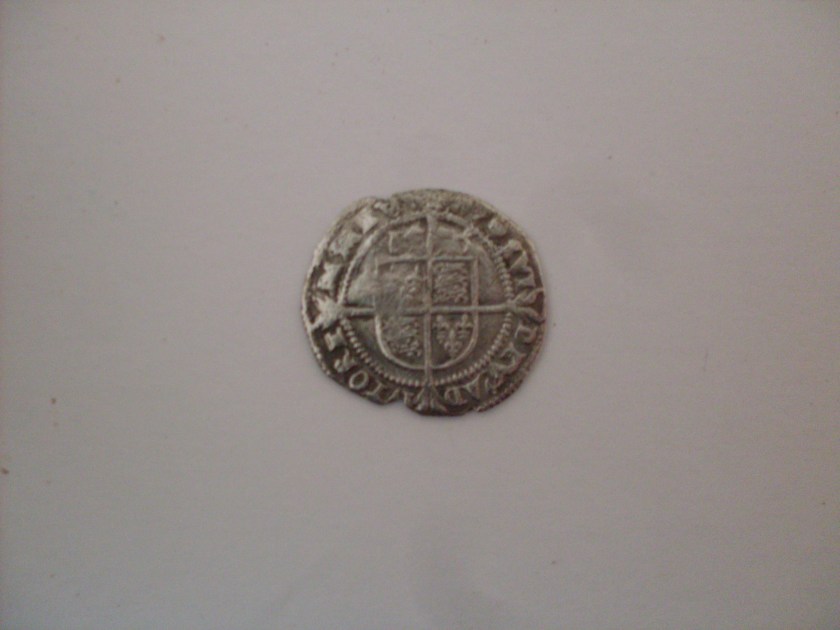
So in the picture above, and the one below, we have a silver sixpence from the reign of the well known Elizabeth I. Measuring 19mm diameter at it’s widest point and only 1mm thick, it is not a particularly large coin. Minted in 1575, it has the rose mint mark to the right of the portrait which denotes it was struck at the Tower of London.

Elizabeth’s reign has commanded libraries worth of literature. With many Tudor historians writing reams about her. Along with her father Henry VIII, she has typified the Tudor dynasty, especially after the short and brutal reign of her sister Mary I.
Her 44 year reign added much needed stability after the two short reigns of her brother and sister, and the political chaos surrounding the reformation in England put into motion by her father. I could go into much detail about her reign, but the amount of information out there is too much for such a small blog post as this one. But in short, her reign was one of precarious balance. Defending England against the Catholic powers on the continent, whilst balancing society back at home. The upheaval caused by the protestant reformation would cause no end of headaches for Elizabeth, with the threat of the Spanish armada in 1588 (and the equally catastrophic English armada the following year) and the Nine Years War from 1594-1603 in Ireland to name just a few.
She would survive these problems until her death in 1603, when the crown would pass to her cousin, James VI, King of Scotland (ironically the son of Mary Queen of Scots who Elizabeth had executed in 1587). Thus ending the Tudor dynasty, and starting the Stuart one.
 Numismatic Exploits