Bonjour mes amis.
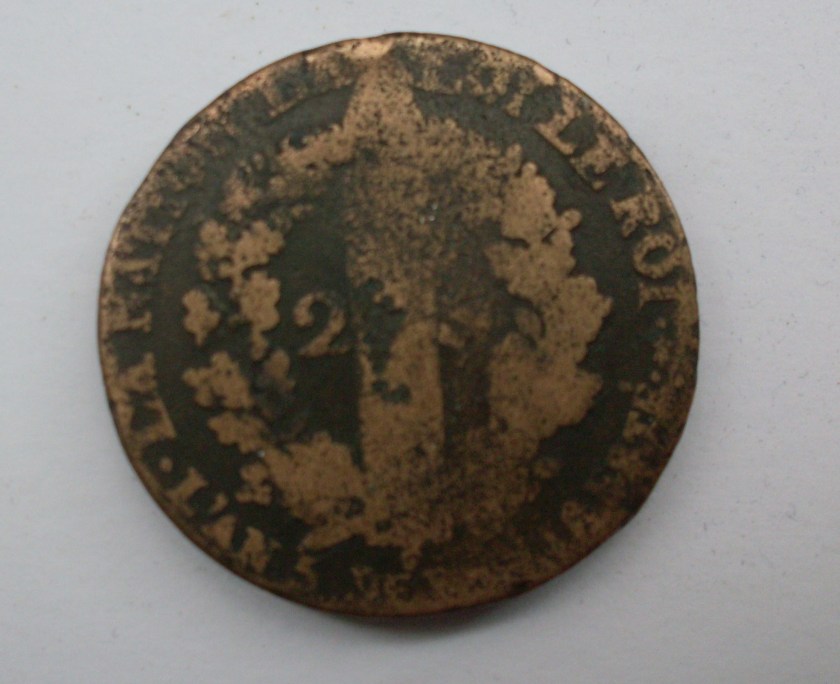
This month for my collection update we travel to revolutionary France of the late 18th century. Dating from 1793, the piece I have recently acquired is a 2 Sol coin. Made out of bronze, and highly worn.
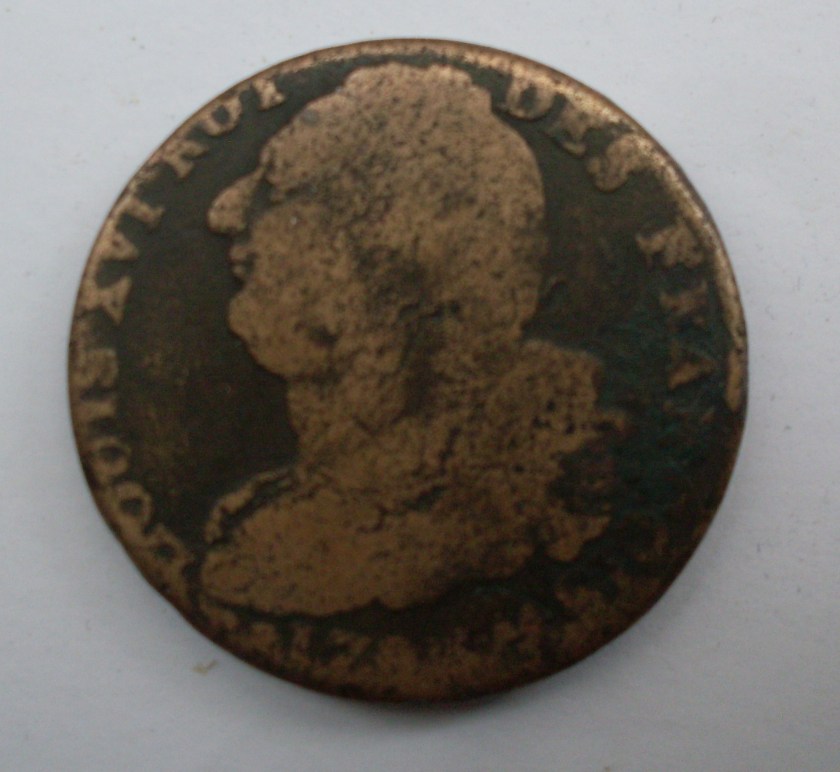
Now the more historically knowledgeable of you are asking “Wait, why is Louis’ portrait on the coin when he was executed in 1793?” And that is a very good question. Although Louis was beheaded in January 1793, the revolutionary government would still issue coins with the king’s portrait on them. Along with keeping the same weight and value of the coins. They would also keep Louis’ titles such as ‘king of the French’ but they would be featured alongside revolutionary mottos on the reverse.
Towards the end of 1793, there would be a continuation of the monetary system of the old regime but the portrait of Louis would be removed, along with his titles, and be replaced by a stylised figure along with the value of the coin.
Eventually by 1795 the Republican authorities replaced the old monetary units that were in use (which were almost identical to the pounds, shilling, and pence of the UK) with a more rationalised decimal system. Gone were the livres, sols, and deniers. They were succeeded by centimes, decimes, and francs. The original franc in 1795 was set as 5g of 90% silver, which was similar to the old livre. However, the struggling republic was unable to ensure such a quality for it’s coinage, and instead was reduced to issuing paper ‘Assignats’ at a much depreciated value.
Assignats were a sort of paper bond issued by the revolutionary government backed by precious metals they had in the treasury. It was an effort to reduce cost and keep the economy going during the subsequent crises which befell France in the following years.
Assignats themselves were issued during 1791-97 when Revolutionary France found itself attacked on all sides by the other European powers. Forced to use what precious metal it had to fund the ongoing wars, the reliance on the paper assignats increased where eventually they became compulsory paper money. By 1796, the number of assignats were twenty times that of the current value of precious metals the government had to back up the value of the issues. This led to an increase in prices, with many items seeing a 500% price rise compared to what they were in 1790.
The financial situation would not stabilise until Napoleon would start winning conquests in neighbouring countries and send the captured loot back to France.
 Numismatic Exploits