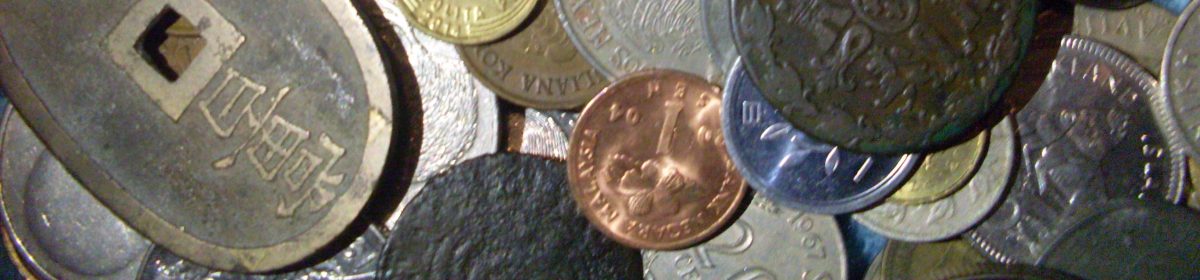
Well… Not actually an octopus man, but the design of this months coin certainly does fit the bill. 
This small copper coin, dating from around the beginning of the 11th century, hails from the Chola empire which dominated the southern part of the Indian sub-continent for centuries. The Chola dynasty is known as the longest recorded dynasty in history, with written records dating as far back to the 3rd century BC. It survived and thrived until it’s eventual decline and collapse in the 13th century.
The chola empire had much influence within SE Asia, with the majority centred around what is now modern day Malaysia. It was further extended north, when strong trade links were established with China.
The Cholas left a lasting legacy after their long rule. Their patronage of literature and their zeal in the building of temples has resulted in some great works of Tamil literature and architecture. The Chola kings were avid builders and envisioned the temples in their kingdoms not only as places of worship but also as centres of economic activity. They pioneered a centralised form of government and established a disciplined bureaucracy. The Chola school of art spread to SE Asia and influenced the architecture and art of the region.

The image on the coin itself shows the king Raja Raja I standing with the traditional garment called a ‘dhoti’. The garment depicted is when gives the design it’s unique look and the apparent appearance of extra appendages. The other side of the coin shows the king sat upon his throne surrounded by dancers.
After the empires decline, there is an oral tradition that a rebel branch of the dynasty fled and thrived in the Philippines until the 16th century. It created a small ‘Indianised’ kingdom in the region until Spanish conquistadors under the command of Miguel Lopez de Legaspi conquered the region after sailing from Mexico.
 Numismatic Exploits