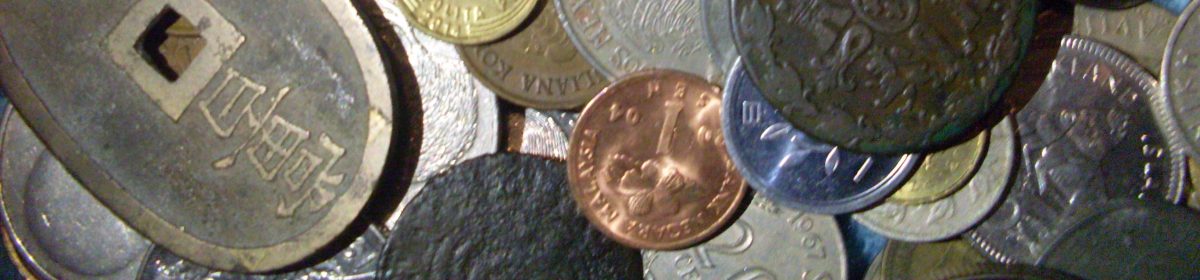
Back in January during my usual aims for the year I mentioned that I would like to pursue attaining more Asian coins for my collection. Well this month I have finally achieved what I set myself. Grabbing myself 12 Chinese cash coins to add to my growing hoard.
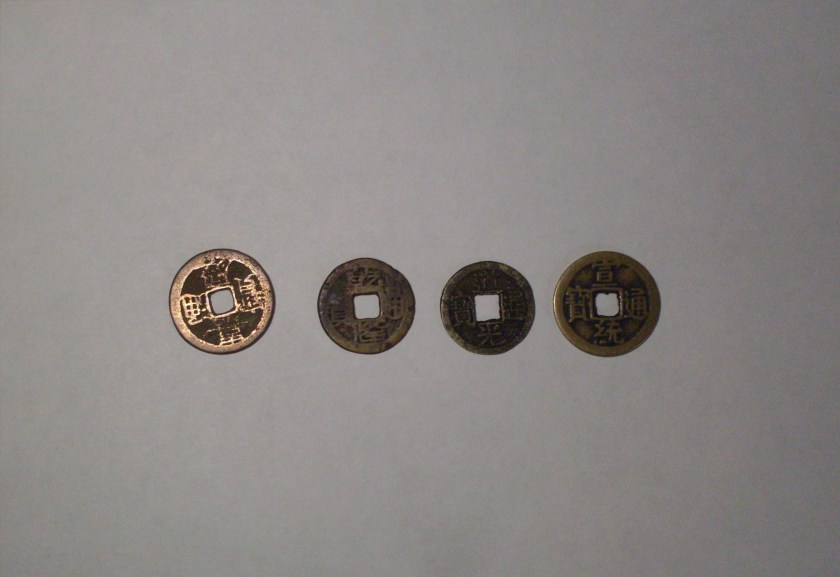
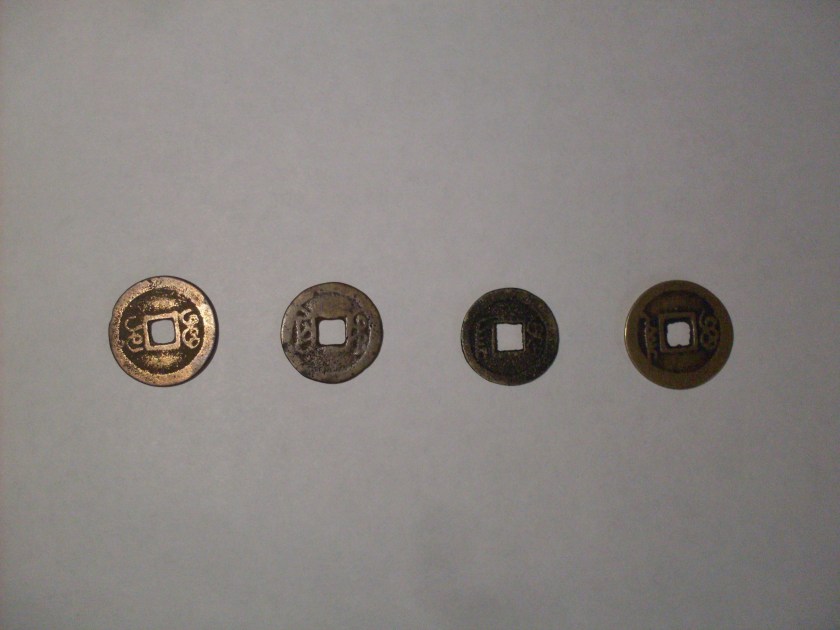
The first four coins from the group I have were identified by the person I purchased them from. From the pictures, going from left to right, they are in date order.
1st – Dating from the Emperor Jiaqing of the Qing dynasty, this coin was cast from between 1796-1820.
2nd – Another coin from the Emperor Jiaqing, and dating from the same period as the first. This coin however is known as a Boo Jin.
3rd – From the Emperor Daoguang of the Qing dynasty, this coin was cast between 1821-45
4th – From the Emperor Puyi (also known as Xuantong) who was the last emperor of China. This coin was struck around 1908-09.
The other coins I acquired sadly are difficult to identify. Mainly because I have no idea how to translate the Chinese characters on the coins themselves.


I did however learn a few new things about Chinese cash coins during my attempts at researching them. They were first made during the 4th century BC, and were in use continuously until their final casting in the first year of the Republic of China in 1912. During this period the design remained pretty much the same, with the round shape and square hole most of us known them for. This meant that many coins which had been struck during the Northern Song Dynasty (AD960-1279) were equally valid and in circulation up until the early 20th century!
Finally, despite the majority of the cash coins being manufactured through the process of casting. During the latter periods of the Chinese Empire, it was also known for several of the coins to be machine milled similar to most coins are today. Two of which can be seen in the bottom row of the last set of pictures above. You can easily tell them apart from the ones which have been created via casting due to the crisper edges and lettering.
 Numismatic Exploits