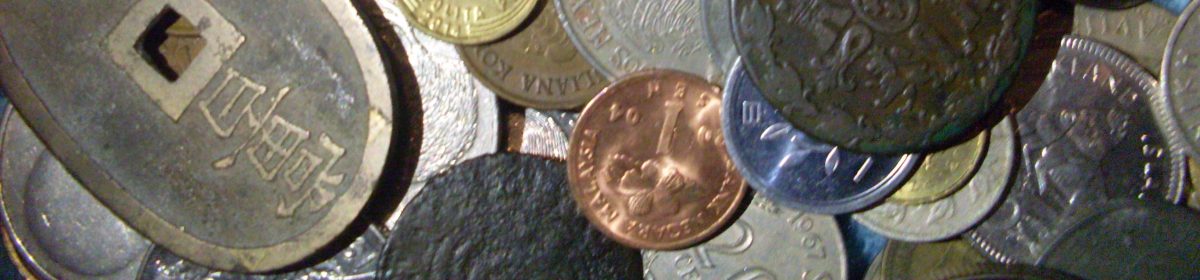
Day 16 and we once again return to SE Asia. This time the coin from the calendar is from the Philippines.

A small copper plated steel coin, it dates from 1996. On the obverse we have the value of the coin above the date of mintage. Whilst on the reverse we have the coat of arms of the National Bank of the Philippines above another date. The date on the obverse actually relates to the year the National Bank was established.
However, the history of a Philippine central bank stretches back further to the start of the 20th century.
It was in the year 1900 when an act was passed by the First Philippine Commission (a body established by the United States as the Philippines were under colonial control of the US after their victory in the Spanish-American war) to place all banks under the supervision of Bureau of the Treasury. This was further consolidated in 1929 when the Department of Finance took over this role.
By 1933 an idea of a Philippine central bank was beginning to take form, and with the mounting moves for Filipino independence from the US a proposal was made to the US to help establish a central bank and grant Philippine independence after 12 years. This proposal however would be rejected by the then Philippine president Manuel Quezon. A decade later, after the combined events of WWII, a new bill was proposed by the Philippine senate which gained support from the US president Roosevelt, and the Philippines were granted independence in 1946.
Immediately after gaining independence plans were drawn up to establish a central bank as a desire to create their own fiscal monetary policy and move away from reliance on the US Dollar was great. A central bank would be formerly inaugurated before the decade was out in 1949.
Over the next few decades, a series of acts were passed to keep monetary policy and reform in line with changing economic conditions. However, it would not be until 1993 when the current iteration of the Philippines central bank would take form.
 Numismatic Exploits