A returning coin design this month. We head back to medieval Sri Lanka and another meeting with the octopus man.
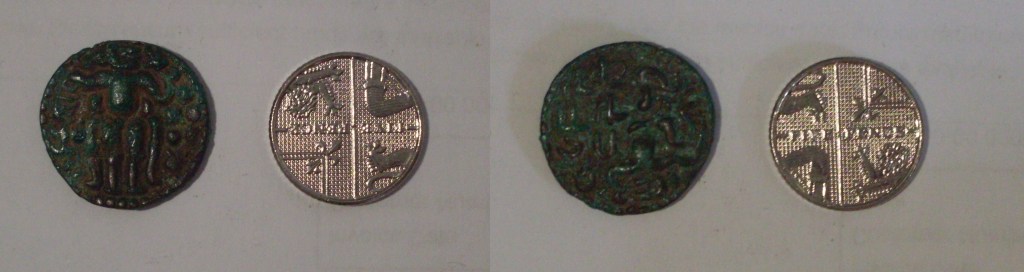
Similar to the coin I wrote back in July 2019, this one dates from the end of the Chola empire. From the Singhalese script on the reverse of the coin it denotes that it comes from the reign of Queen Lilavati. Most notably from the first of her reigns. This can be determined due to the clearness of the lettering, and the crispness of the design. Coins dating from her later reigns tend to suffer from quality issues.
Lilavati came to her first reign after the death of her husband Parakramabahu I in 1197. Most of her reign was written in the Culavamsa, a record written by Buddhist monks from the 4th century until 1815 covering all of Sri Lanka’s monarchs. Her first reign is described as “three years without mishap” as much of the Chola empire would start to chaotically decline in the years after Parakramabahu’s death.
Lilavati’s next two reigns would be substantially shorter than her first. Her second would start in 1209 after the current ruler was assassinated. It would last for just a year, when in 1210, she would be deposed again when Chola territory was invaded by a force from southern India. The general who dethroned Lilavati would reign for just nine months before he was deposed by another general. This general, called Parakrama, would reinstate Lilavati as queen in 1211.
Lilivati’s third reign would last for just seven months before she would be dethroned again by the same general who reinstated her. After this point she would leave the historical record, although it is believed she was not put to death by the general who overthrew her. However, scholars are in agreement that she very may well have by the tyrannical Kalinga Magha (1215 – 1236) who invaded and conquered Sri Lanka some time in 1215.
 Numismatic Exploits