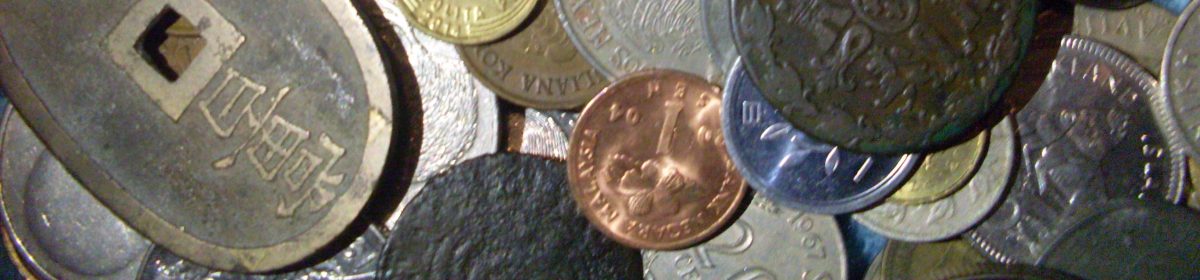
This week, to celebrate my birthday, I spent it this year in Oxford. Whilst there I got a chance to visit the Ashmolean museum, which has been on my to do list for a while now since I graduated from university. As well as seeing some Anglo-Saxon artefacts I have been wanting to see since my days of study, I also got the chance to visit the museum’s coin gallery.
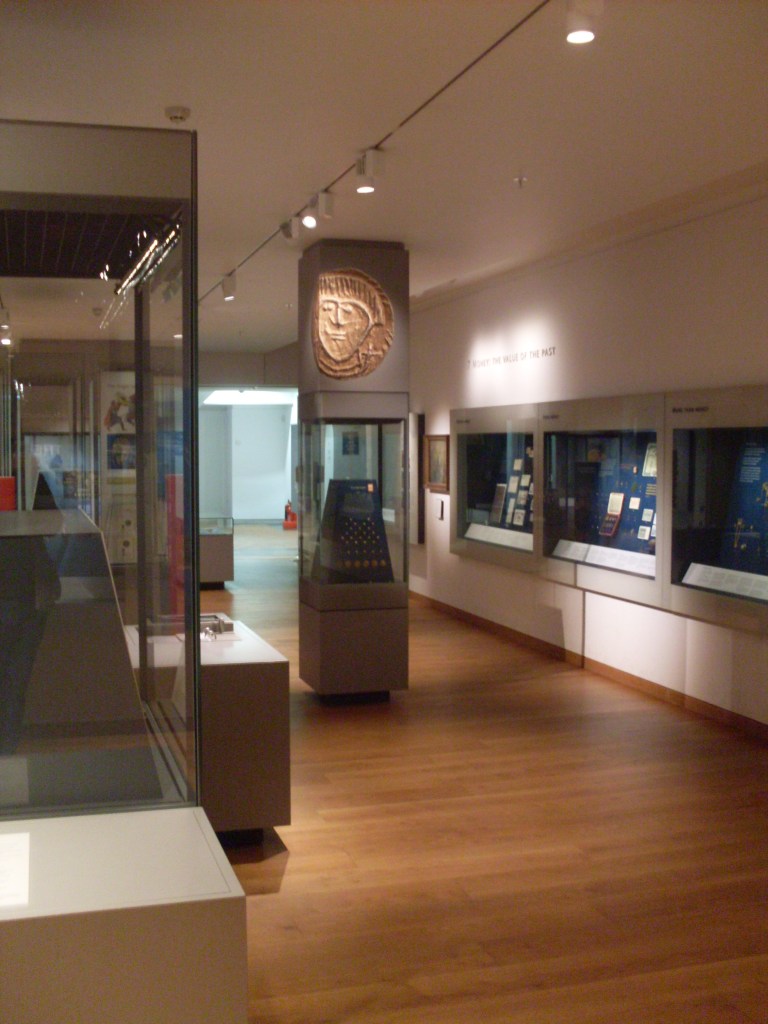
The coin gallery of the museum was not particularly large, encompassing a small hallway about 20 metres long. Similar to one of the rooms in the Kunsthistoriche Museum I visited in Vienna back in 2017.
Along one side of the hall there was a series of displays explaining the different types of coins and the evolution of coinage throughout history. Ranging from the weird and wonderful shaped coins from the early history of China, to modern banknotes and the eventual digitisation of currency.
Within the displays there was also examples of non-conformal types of currency, such as the infamous stone rings from the Isle of Yap to bundles of cloth from Nigeria. There was also a brief mention of fiat currencies which have been used by countries during periods of hyperinflation and the extreme devaluation of the national currency. Germany was the main example used here.
On the opposite side of the hall was a running timeline of coins throughout history showing multiple examples of pieces from different periods. Of course with a heavy focus on the British Isles.
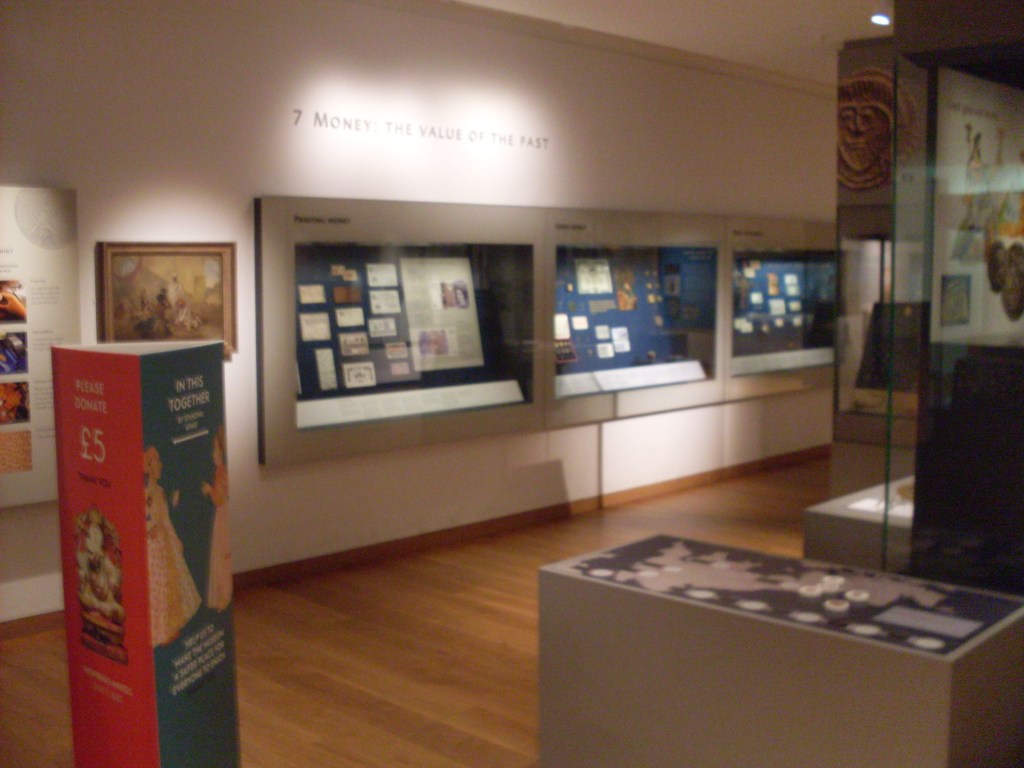
Along the centre were multiple display cabinets showing influential coins and hoards found throughout the British Isles. These varied from parts of the Cuerdale Hoard (the majority of which is in the British Museum in London) to gold galleons from the reign of Henry VIII.
There was also interactive exhibits showing a variety of topics such as where coins have been minted, how they are designed and made, to games that were often played in the past here in the UK (see picture below).

Overall, the coin hall of the Ashmolean was not the worst I have seen, but was far from the best. I understand that the main aim of the museum is a broader depth of history rather than just coins. So of course it would fall far short of those presented by the likes of the museums I visited in Tokyo, Frankfurt, Brussels, etc which were run and operated by the country’s central bank. However, on the scale it has presented the information seem more involved and described that what I have seen in Vienna, Helsinki, and London.
Although not something I would suggest you would go out of your way to visit. It makes a nice small addition to the rest of the museum if you ever find yourself in Oxford. Furthermore, the Ashmolean is free to enter which makes the option to visit even more enticing.
 Numismatic Exploits