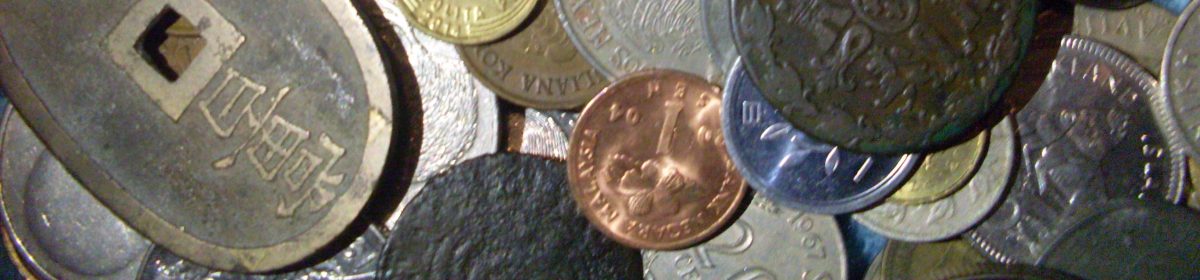
It has been a couple of months since I have added anything new to my collection. Fairly recently I managed to spend a few days away in sunny Germany where ironically I bought some interesting items from France.
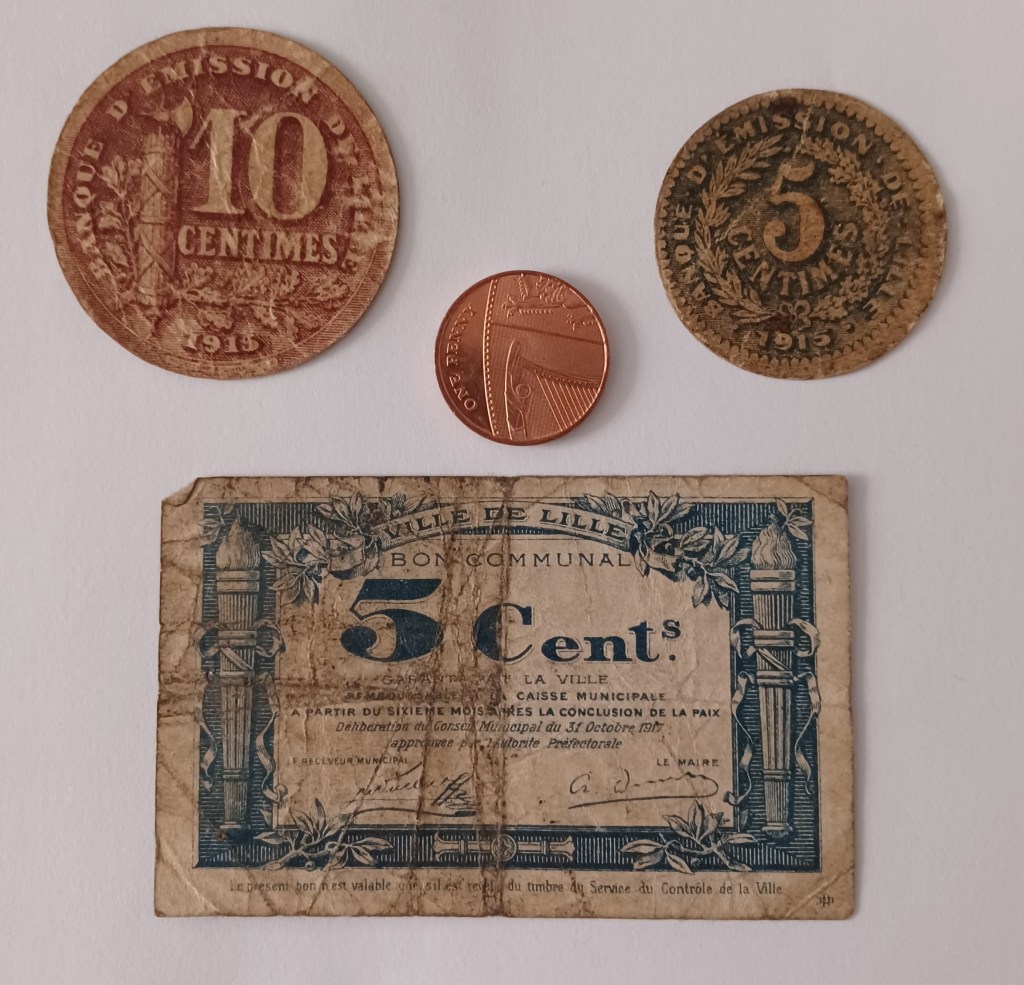
Dating from WWI these notes are the Gallic equivalent of those issued by Germany during the same period. Although not known locally as Notgeld, this necessity money functioned much in the same way.
Issued by local towns and villages it sought to fill the vacuum left by the central government during the unprecedented conflict at the time. These necessity money were a plan to keep local economies going during a time of great upheaval.
During the outbreak of the war in 1914 the central bank of France suspended the use of gold coins and any conversion of banknotes into gold. As a result rampant inflation begin to occur with many hoarding any coins with gold or silver content.
Merchants, unable to process small transaction due to a lack of small coinage, began to issue bonds in small amounts to get around the problem. In August of 1914 the Chamber of Commerce of Paris was authorised to issue these small denomination bonds on behalf of the state as legal tender for any merchants who agreed to use them. These small bonds were backed with an equivalent amount of cash on deposit with the Banque de France.
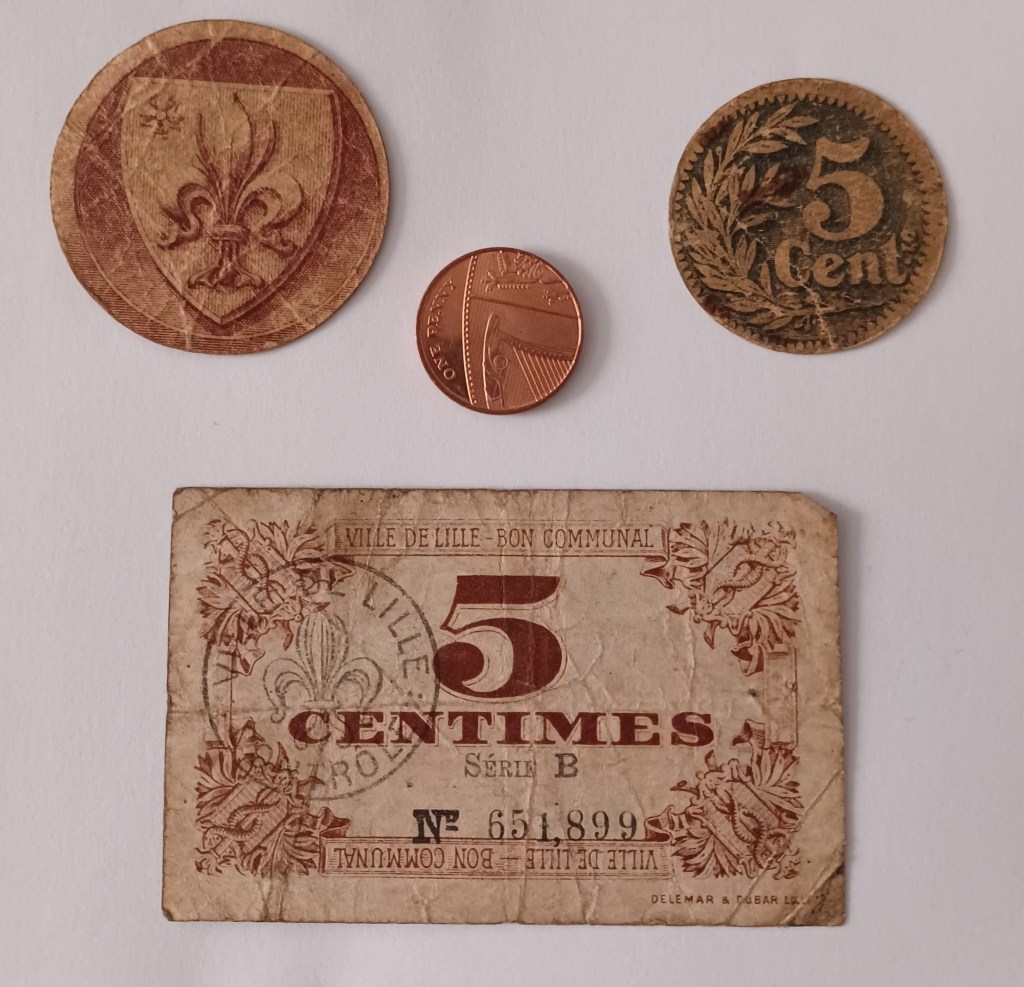
Soon thereafter other Chambers of Commerce around France would begin to issue bonds in a similar manner to the one in Paris. The specimens added to my collection hailing from the town of Lille which sits close to the Belgian border.
The bonds would be issued for 5 years after which they would be swapped to more durable materials, such as bronze plated aluminium, as paper was not able to withstand the constant handling of day to day life. The last paper issues were phased out in most of France by 1921.
 Numismatic Exploits