Day 21

Another return to the Pacific today as the coin behind door 21 is a 2 vatu coin from Vanuatu. A small island archipelago southeast of the Solomon Islands which I got back on the 8th.
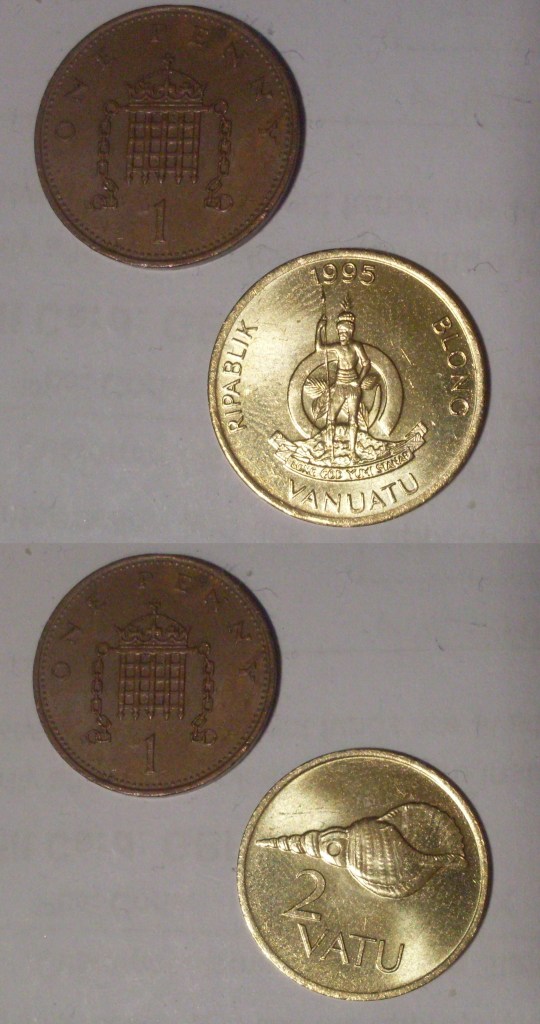
On the obverse side of the coin we have an image of the coat of arms of Vanuatu. It is a depiction of a Melanesian warrior standing on a mountain superimposed on a boar tusk and two crossed namele fern fronds.

The warrior is a depiction of Walter Lini the first prime minister of an independent Vanuatu (Vanuatu gained it’s independence from France and Britain in 1980). The boar tusk and namele leaves represent prosperity and peace respectively and are actually part of the national flag of Vanuatu.

On the reverse side of the coin, along with the value, there is a design showing charonia tritonis (also known as a triton) shell. The triton is a large sea snail found throughout the Indo-pacific oceans. The shell of the triton is well known and often seen as traditional decorative object evocative of the ocean. The shell is also sometimes used as a trumpet, as shown by the shell on the coin due to the presence of a hole carved near to the tapered end of the shell.
Day 19 & 20

So two days at once today because to be honest I completely forgot to update the blog yesterday.

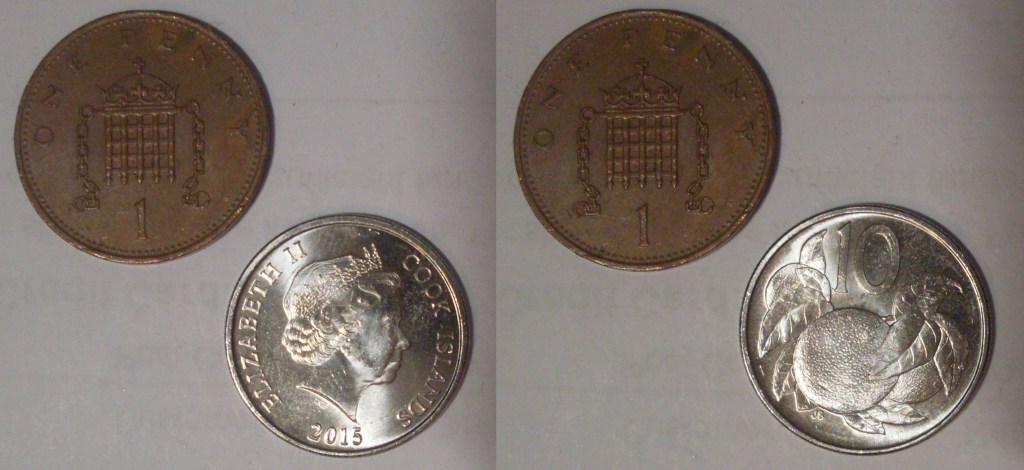
Yesterday, the coin behind door number 19 was a small 10 cent coin from the Cook Islands:

On the obverse of the coin we have a re-appearance of Lizzie, whilst on the reverse we have a depiction of an orange. Oranges grow naturally on the Cook Islands and are one of the main fruits used for export. Although tourism accounts for nearly 65% of the country’s economy. Traditionally, oranges was used to brew beer on the islands, along with banana’s, paw paws, and hops.

The coin I got for day 20 was a 10 cents coin from the Seychelles.

On the obverse of the coin there is a representation of the coat of arms of the Seychelles. This coat of arms dates from 1976 when the Seychelles gained independence from Britain and the colours were updated slightly in 1996 to represent the colours on the flag. Although of course they can’t be seen on the coin.

On the reverse there is a stylised picture of a tuna fish. Tuna is one of the many species of fish caught in the Seychelles, wish fishing making up to 82% of the country’s economy in 2013. Despite this, growth in tourism is the main driver of the economy in the Seychelles as it employs at least 30% of the population compared to just 3% for fishing and agriculture. Other exports from the Seychelles also include coconuts and vanilla.

Day 18

Day 18 and we head to the Balkans to the country of Serbia for our calendar coin.

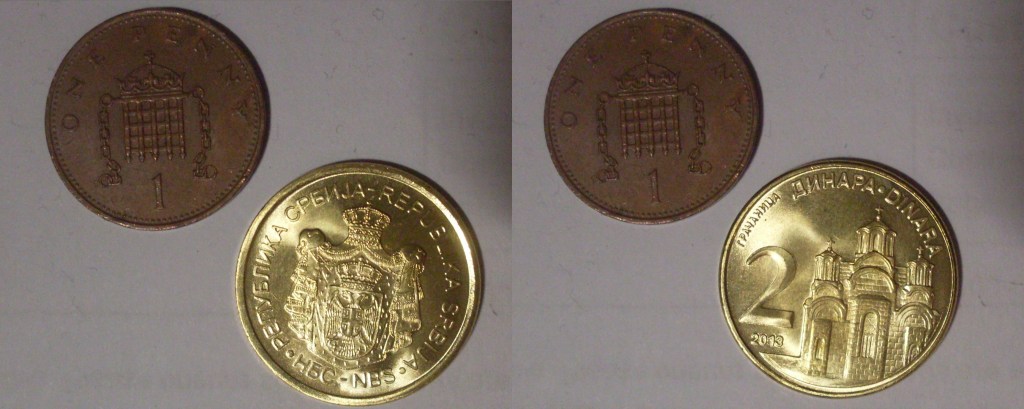
On the obverse we have the coat of arms of Serbia which was officially adopted in 2004, and was modelled on the design used in the royal coat of arms of the Kingdom of Serbia which was abolished at the end of WWI in 1918.

The reverse side of the coin has a depiction of the Gracanica Monastery next to the value of the coin itself. The monastery is a Serbian Orthodox monastery located in Kosovo. It was built by the Serbian king Stefan Milutin in 1321 on the ruins of a much older 6th century Christian basilica. Over it’s life, the monastery has been heavily damaged by foreign powers in the region. For much of the medieval period it was due to invading Ottoman forces, with the final act happening during the Ottoman retreat after the second siege of Vienna in 1683.

During WWII, the monastery was partially destroyed, and the building was restored by local nuns. It has been serving as a convent ever since. Finally, the monastery received bomb damage during the Kosovo War (1998-99) by NATO forces, and has again been renewed and restored.

In 2006 the monastery was placed on UNESCO’s world heritage list.

Day 17

Today I got a coin from a country I genuinely have no modern coins from, which is becoming a rarity these days as my collection grows larger.

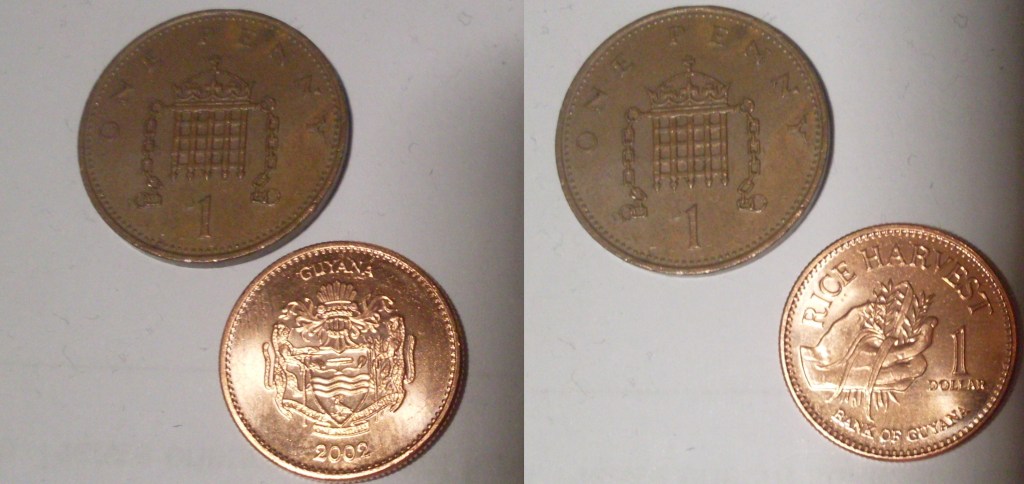
Today’s coin is a small copper coin from Guyana. Dating from 2002, on the obverse is the coat of arms of Guyana which was created for the country in 1966 when it gained independence from Britain.

On the obverse, along with the value of the coin, is a hand gathering rice which is one of the main agricultural products of the country. The other is the production of demerara sugar which accounts for 28% of the country’s export earnings.

Along with agriculture, Guyana also exports gold, bauxite, shrimp, timber, and minerals. In 2015, Guyana was further able to broaden it’s exports when deep water oil wells were discovered.

Day 16

Day 16 and we once again return to SE Asia. This time the coin from the calendar is from the Philippines.

A small copper plated steel coin, it dates from 1996. On the obverse we have the value of the coin above the date of mintage. Whilst on the reverse we have the coat of arms of the National Bank of the Philippines above another date. The date on the obverse actually relates to the year the National Bank was established.

However, the history of a Philippine central bank stretches back further to the start of the 20th century.

It was in the year 1900 when an act was passed by the First Philippine Commission (a body established by the United States as the Philippines were under colonial control of the US after their victory in the Spanish-American war) to place all banks under the supervision of Bureau of the Treasury. This was further consolidated in 1929 when the Department of Finance took over this role.

By 1933 an idea of a Philippine central bank was beginning to take form, and with the mounting moves for Filipino independence from the US a proposal was made to the US to help establish a central bank and grant Philippine independence after 12 years. This proposal however would be rejected by the then Philippine president Manuel Quezon. A decade later, after the combined events of WWII, a new bill was proposed by the Philippine senate which gained support from the US president Roosevelt, and the Philippines were granted independence in 1946.

Immediately after gaining independence plans were drawn up to establish a central bank as a desire to create their own fiscal monetary policy and move away from reliance on the US Dollar was great. A central bank would be formerly inaugurated before the decade was out in 1949.

Over the next few decades, a series of acts were passed to keep monetary policy and reform in line with changing economic conditions. However, it would not be until 1993 when the current iteration of the Philippines central bank would take form.

Day 15

We return to Africa on the 15th day of the calendar run, and this time the little known enclave country of Swaziland (Now officially known as Eswatini since 2018).

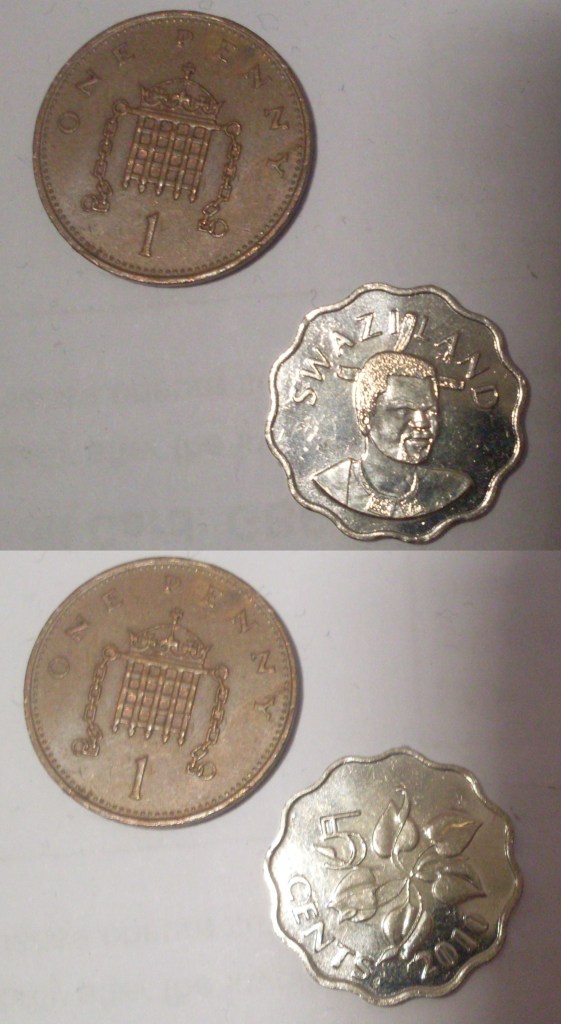
On the obverse of the coin we have a portrait of the current king of Swaziland, Mswati III. On the reverse we have the value of the coin as well as a depiction of the arum lily plant.

The arum lily is a plant native to the southern part of the African continent, most notably South Africa, Lesotho, Mozambique, and Swaziland. It has been naturalised in other countries further north in Africa, as well as Madeira, New Zealand, coastal California, and Australia. In Australia it has been classified as an invasive species and therefore a toxic weed and pest.

The flower of the plant is the national flower of Saint Helena where it now grows widely. The flower is also a symbol of Irish republicanism and nationalism as it is used in commemorate those who died in the 1916 Easter uprising and afterwards.

Day 14

Day 14 and we are heading back to South America, this time to Paraguay.

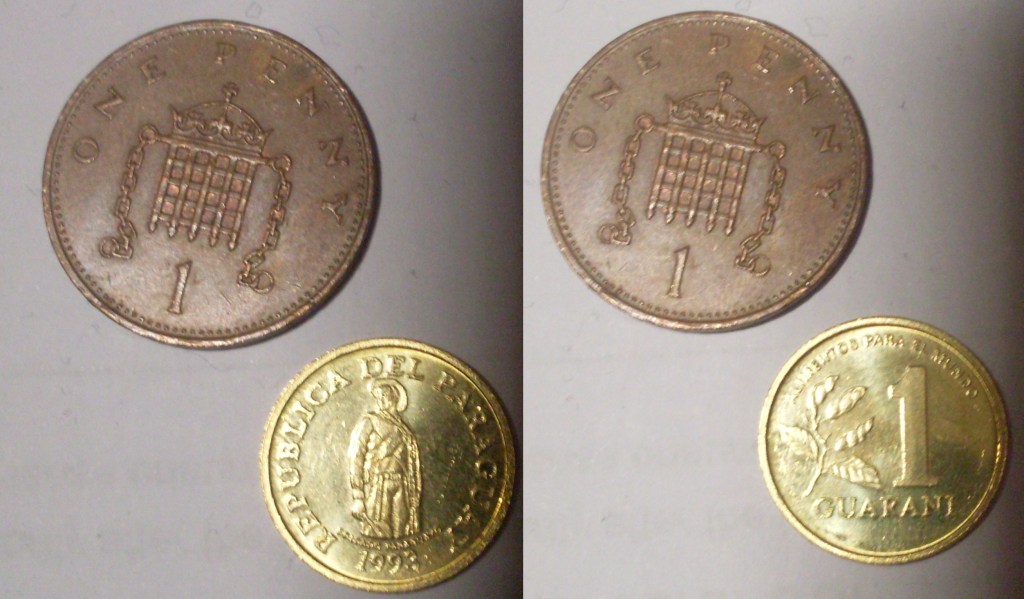
Today we have a tiny brass 1 guarani coin from 1993. On the obverse we have a depiction of a Paraguayan soldier, whilst on the reverse we have the value of the coin and a tobacco plant. Along the top we have an inscription, which when translated into English says ‘Food for the World’.

This coin is a FAO (United Nations Food and Agriculture Organisation) issue, as part of a program initiated worldwide to raise awareness of the work the organisation does, as well as galvanise people to help eliminate food scarcity in the developing world. Seignorage and profits from the sale of the coins would also be used to help fund these programs.

FAO coins were first struck in 1968 when the initiative was first started. Around 20 different countries participated, with many different designs being minted. The US, and many of the other NATO states did not participate, but mints such as the San Francisco mint, the Royal mint, several mints in Germany amongst others helped strike coins for nations which did.

The program would run for 40 years until it was ended by the FAO itself in 2008.

Day 13

Returning for more sun today, behind door number 13 was a 10 cents coin from the Bahamas.

Featuring the coat of arms of the country on the obverse, on the reverse there is the value of the coin followed by a small scene featuring several bonefish.

Bonefish have nine different distinct species, with six inhabiting the Pacific and three in the Atlantic. The bonefish on the coin is of the Albula Vulpes species which is the largest and most widespread of the Atlantic species.

Bonefish tend to live inshore in tropical climes, mainly in shallow waters and mudflats. This has caused them to become one of the prime fly and tackle game fish. A popular sport has developed in the Bahamas, Puerto Rico, and Southern Florida called bonefishing. Despite it’s popularity, many just do it for the sport, and many of the caught bonefish are released back into the sea, although there are some recipes which use bonefish as a main ingredient.

Day 12

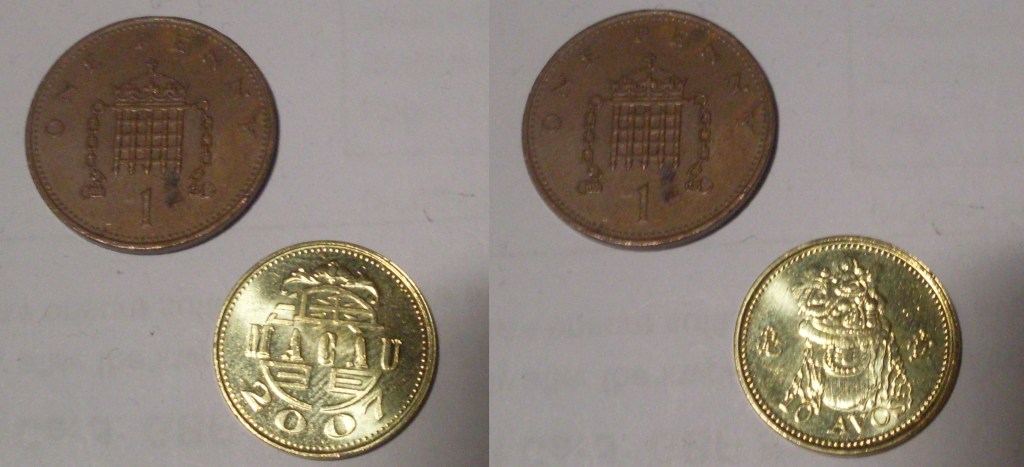
Half way through the calendar and we are arriving back in Asia, fully rounding out the number of coins from each continent (except Antartica) to two each. This time we are heading to Macao.

Dating from 2007 and made out of brass, on the obverse of the coin is the name of the territory in Portuguese with the date below it. The Portuguese name is surrounded by Chinese characters which spell out Macao in Chinese. The design of the Chinese characters are positioned in such a way that they also symbolise “shou” or longevity in Chinese. Finally, at the top, is a bat with it’s wings stretched out in flight. In Chinese customs bats are the harbingers of 5 blessings: Life, Wealth, Health, Love of virtue, and death after achieving one’s destiny.

On the reverse of the coin is a depiction of a lion headdress often used in the traditional lion dance throughout China. The lion dance is often performed at Chinese New Year as well as other important Chinese festivals and celebrations. The lion dance is distinguishable from the well known dragon dance due to the fact it is operated by just two dancers compared to teams of people holding poles representing the snaking body of the dragon.

Day 11

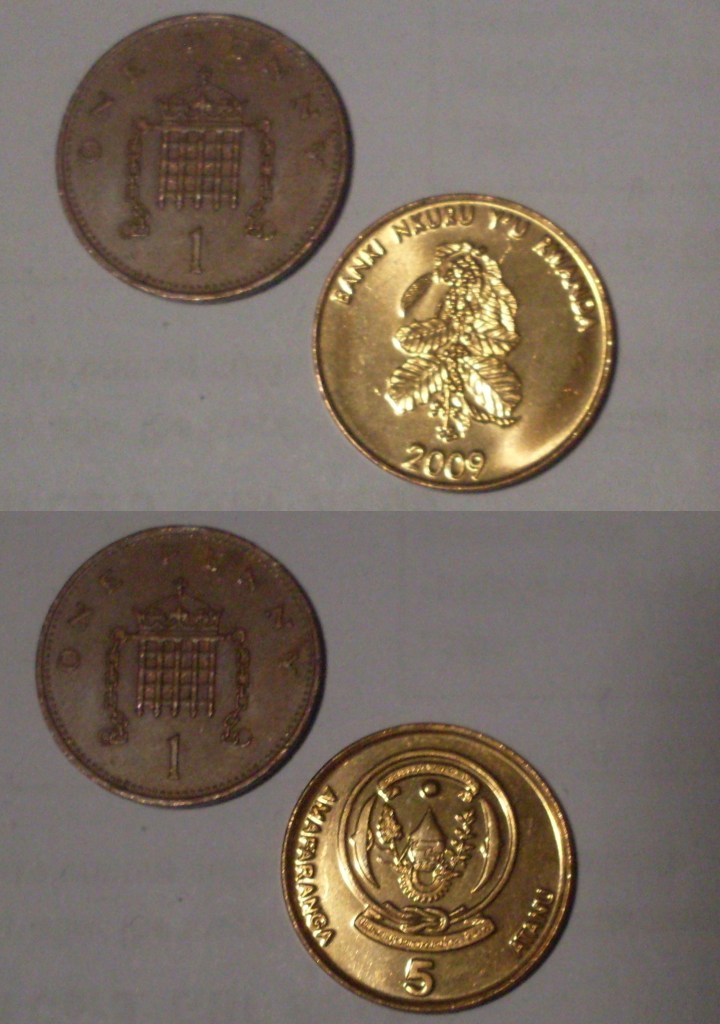
We head much further south today after our showing in Malta yesterday. Today’s coin comes from the sunny country of Rwanda.

Today’s coin is a 5 atanu coin, also known as a 5 Rwandan Franc. On the obverse of the coin is the national coat of arms of Rwanda, whilst on the reverse is a depiction of a coffee plant with coffee beans.

The coffee bean itself is an important part of the Rwandan economy. This landlocked country has few natural resources, so 90% of the country’s working adult population work in the agriculture industry due to Rwanda’s fertile soil. Apart from crops grown for local consumption, Rwanda grows tea and coffee mainly for export.

Coffee was first introduced and grown in Rwanda during the 1930’s when it was a Belgian colony. Belgium imposed the planting of coffee trees on the natives of Rwanda, which became a yoke for the country for much of the 20th century. Partly due to the main source of income for the country being so reliant on and vulnerable to the shift in prices of the commodity. However, due to outward investment in the production of coffee, quality of beans produced in Rwanda has increased exponentially causing it to become one of the more sought after coffees in the world.