Nécessités de Guerre

It has been a couple of months since I have added anything new to my collection. Fairly recently I managed to spend a few days away in sunny Germany where ironically I bought some interesting items from France.
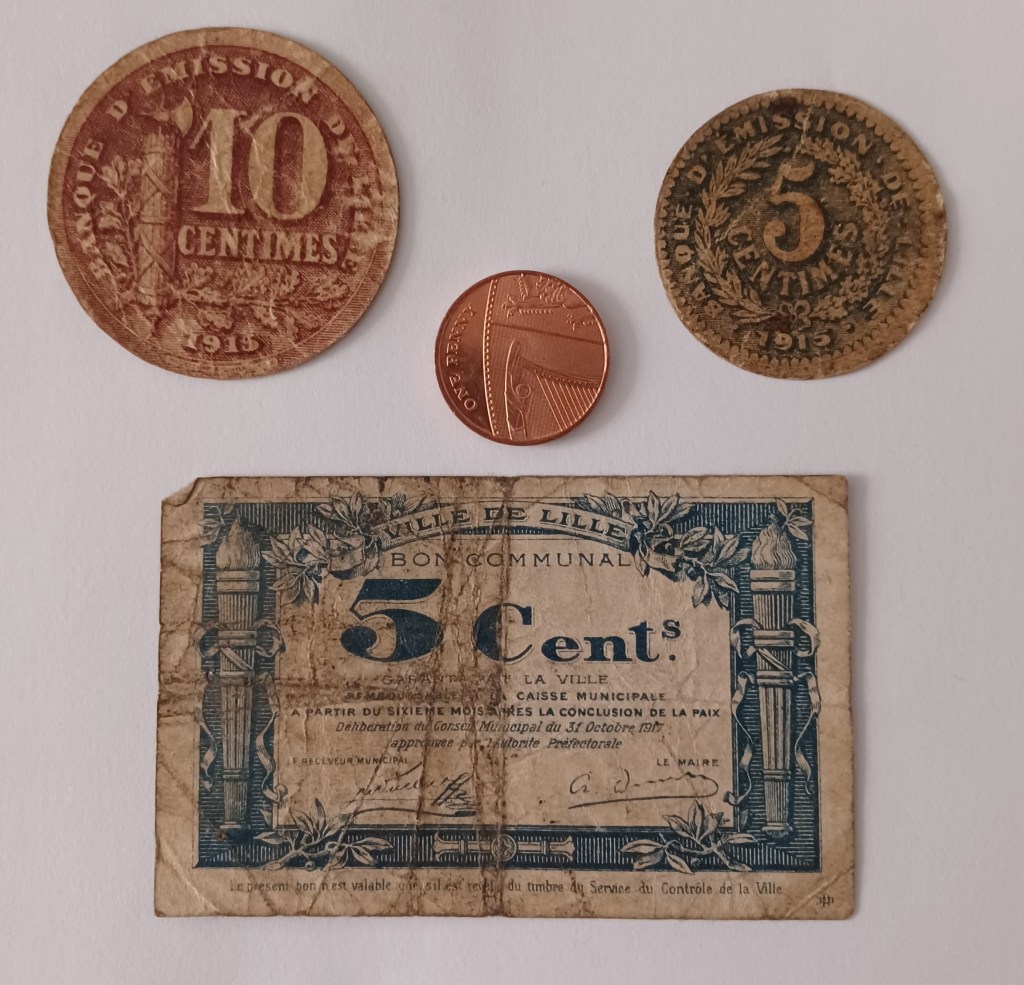
Dating from WWI these notes are the Gallic equivalent of those issued by Germany during the same period. Although not known locally as Notgeld, this necessity money functioned much in the same way.

Issued by local towns and villages it sought to fill the vacuum left by the central government during the unprecedented conflict at the time. These necessity money were a plan to keep local economies going during a time of great upheaval.

During the outbreak of the war in 1914 the central bank of France suspended the use of gold coins and any conversion of banknotes into gold. As a result rampant inflation begin to occur with many hoarding any coins with gold or silver content.
Merchants, unable to process small transaction due to a lack of small coinage, began to issue bonds in small amounts to get around the problem. In August of 1914 the Chamber of Commerce of Paris was authorised to issue these small denomination bonds on behalf of the state as legal tender for any merchants who agreed to use them. These small bonds were backed with an equivalent amount of cash on deposit with the Banque de France.
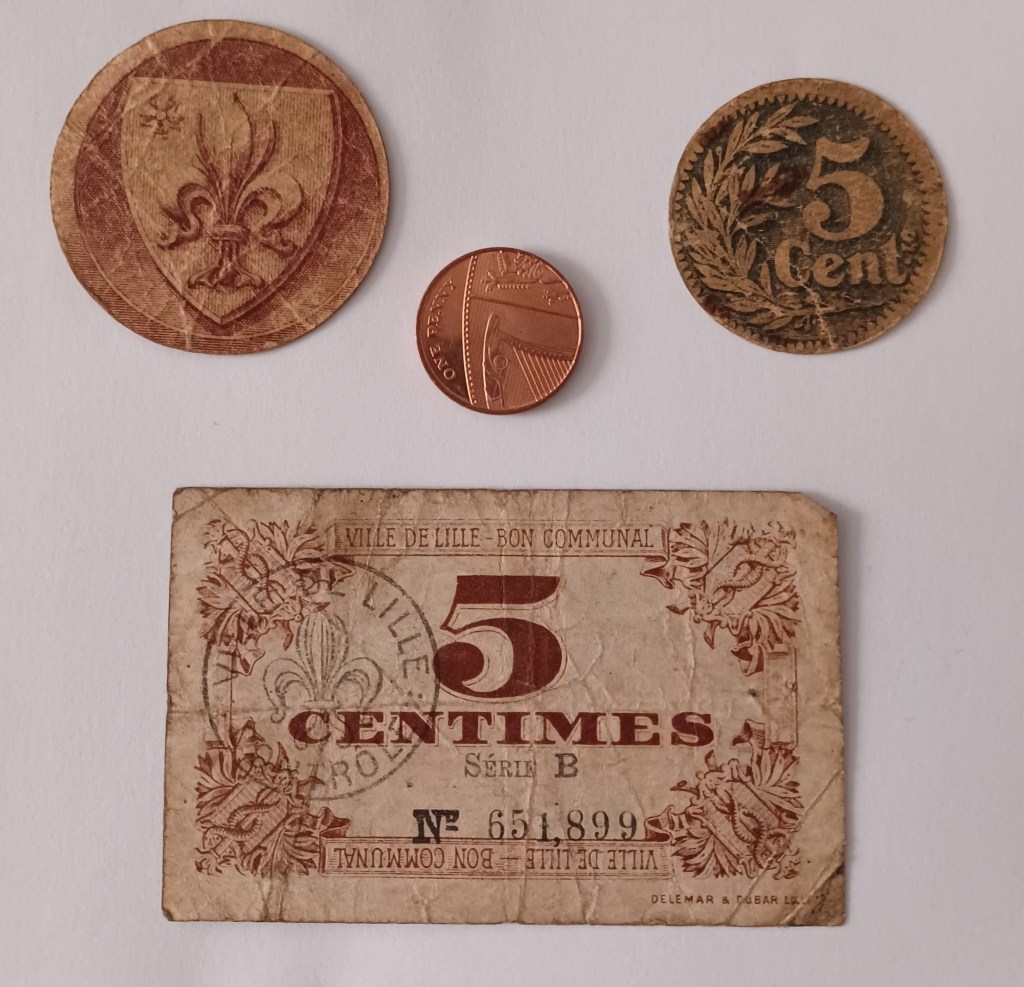
Soon thereafter other Chambers of Commerce around France would begin to issue bonds in a similar manner to the one in Paris. The specimens added to my collection hailing from the town of Lille which sits close to the Belgian border.

The bonds would be issued for 5 years after which they would be swapped to more durable materials, such as bronze plated aluminium, as paper was not able to withstand the constant handling of day to day life. The last paper issues were phased out in most of France by 1921.

Revolution is in the air…

Bonjour mes amis.

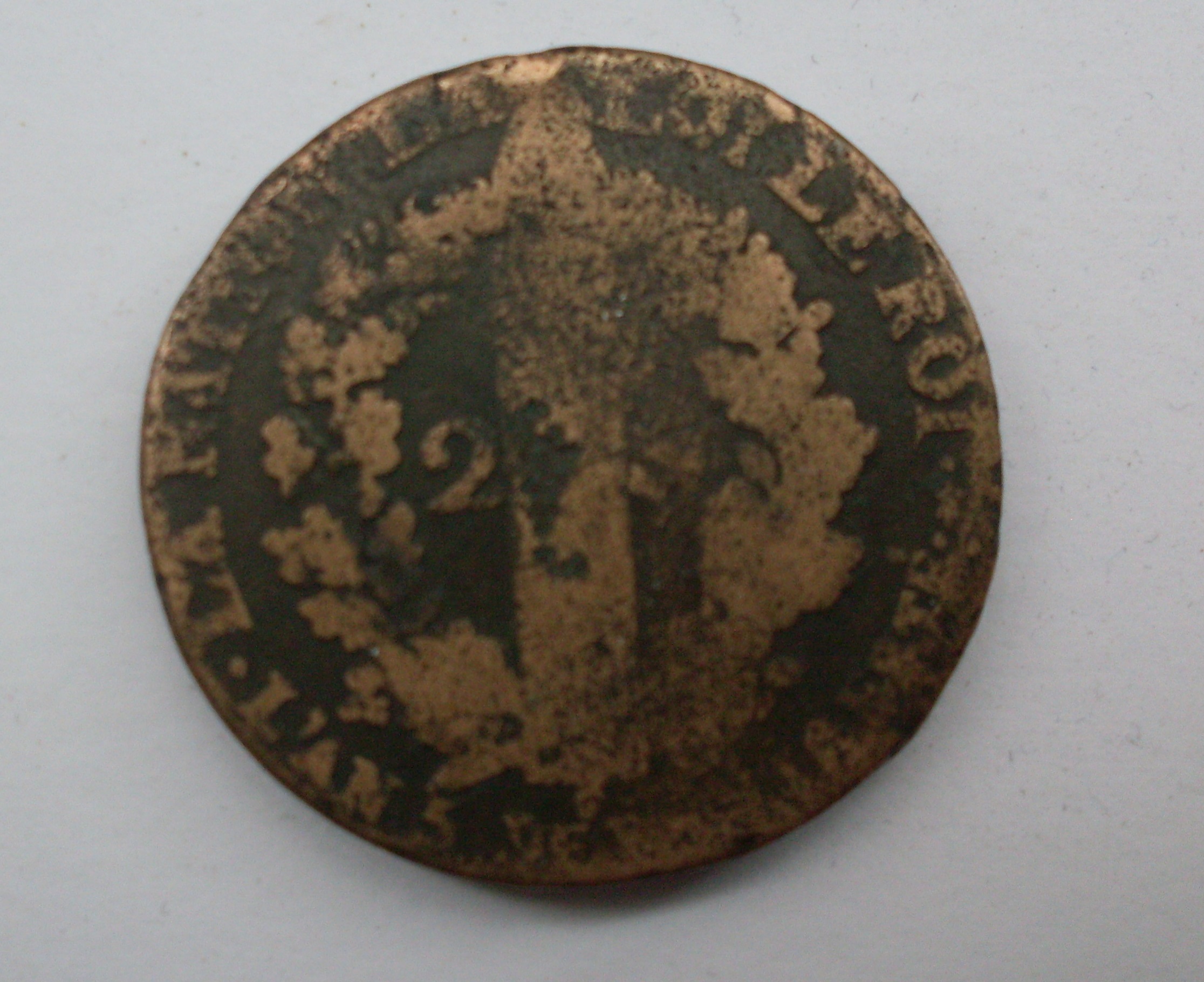
This month for my collection update we travel to revolutionary France of the late 18th century.  Dating from 1793, the piece I have recently acquired is a 2 Sol coin.  Made out of bronze, and highly worn.

SDC12952

Now the more historically knowledgeable of you are asking “Wait, why is Louis’ portrait on the coin when he was executed in 1793?”  And that is a very good question.  Although Louis was beheaded in January 1793, the revolutionary government would still issue coins with the king’s portrait on them.  Along with keeping the same weight and value of the coins.  They would also keep Louis’ titles such as ‘king of the French’ but they would be featured alongside revolutionary mottos on the reverse.
Towards the end of 1793, there would be a continuation of the monetary system of the old regime but the portrait of Louis would be removed, along with his titles, and be replaced by a stylised figure along with the value of the coin.

SDC12951

Eventually by 1795 the Republican authorities replaced the old monetary units that were in use (which were almost identical to the pounds, shilling, and pence of the UK) with a more rationalised decimal system.  Gone were the livres, sols, and deniers.  They were succeeded by centimes, decimes, and francs.  The original franc in 1795 was set as 5g of 90% silver, which was similar to the old livre.  However, the struggling republic was unable to ensure such a quality for it’s coinage, and instead was reduced to issuing paper ‘Assignats’ at a much depreciated value.

Assignats were a sort of paper bond issued by the revolutionary government backed by precious metals they had in the treasury.  It was an effort to reduce cost and keep the economy going during the subsequent crises which befell France in the following years.

Assignats themselves were issued during 1791-97 when Revolutionary France found itself attacked on all sides by the other European powers.  Forced to use what precious metal it had to fund the ongoing wars, the reliance on the paper assignats increased where eventually they became compulsory paper money.  By 1796, the number of assignats were twenty times that of the current value of precious metals the government had to back up the value of the issues.  This led to an increase in prices, with many items seeing a 500% price rise compared to what they were in 1790.

The financial situation would not stabilise until Napoleon would start winning conquests in neighbouring countries and send the captured loot back to France.