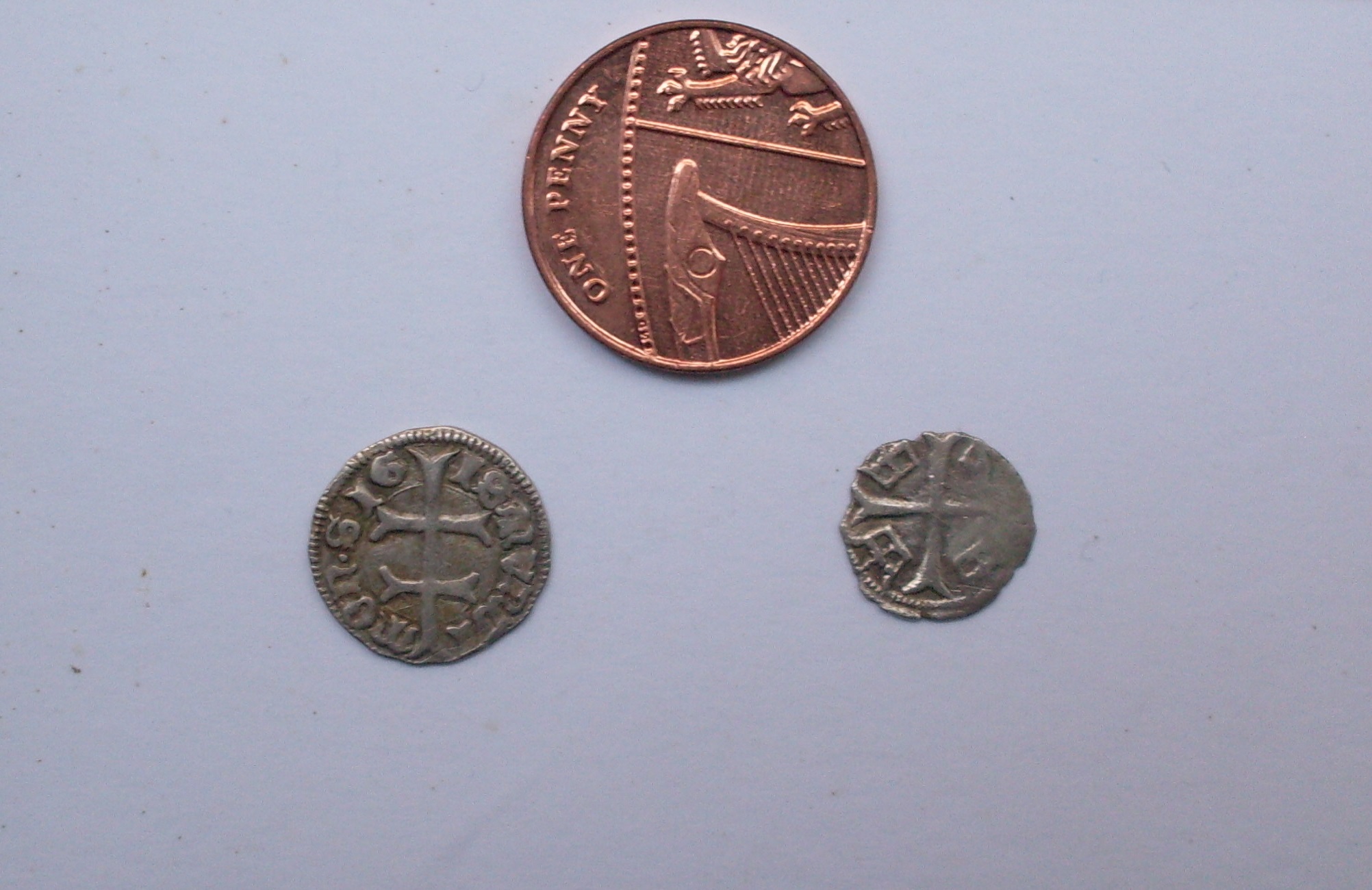
A return to central Europe this November, as this month I have managed to obtain a small silver coin from Hungary dating to the middle of the 16th Century.
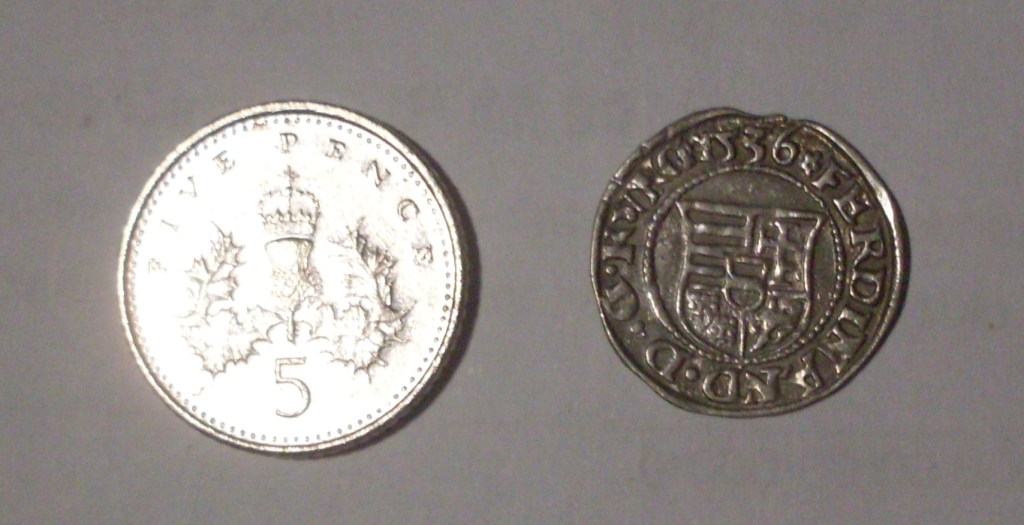
Dating from 1536, this small silver coin was struck in Kremnica (in modern day Slovakia) during the reign of Ferdinand I. Held to the value of 1 denar, this coin would constitute 1/180th of a full thaler which was the main silver currency of much of central Europe, starting around the year 1500.
On the obverse of the coin is the quartered coat of arms of Hungary, with a small shield in the middle denoting the main crest of Austria (which was the main holdings of Ferdinand prior to ascension to Holy Roman Emperor in 1556). This central design is surrounded by the legend * FERDINAND · D · G · R · VNG * 1536 translating to Ferdinand, by the grace of God, King of Hungary.
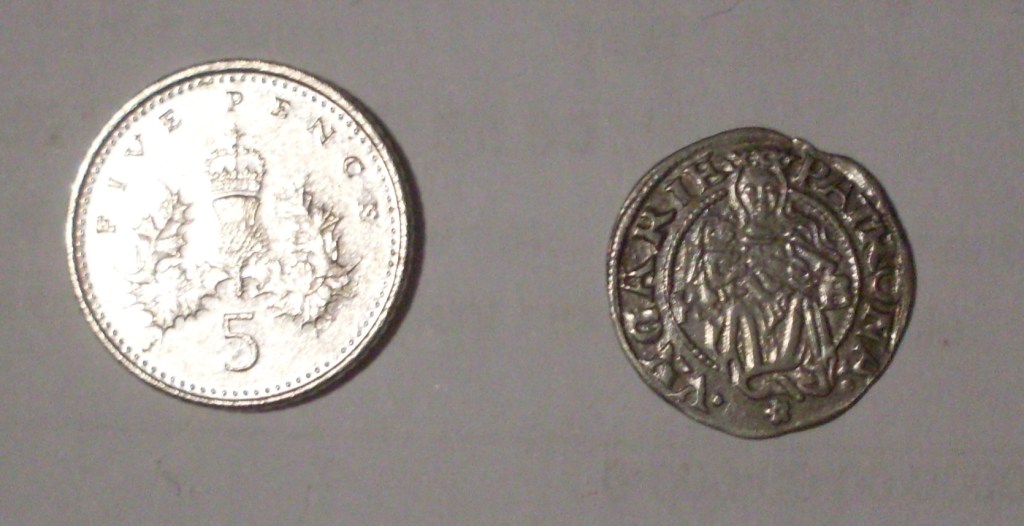
The reverse of the coin depicts a crowned image of Madonna with child, with the figure sitting between the letters KB denoting the mint where the coin was struck. The legend around the edge is PATRONA * * VNGARIE translating to Patroness of Hungary.
Ferdinand was born into the Habsburg family in 1503, but he wouldn’t take control of the family’s Austrian lands until 1519 when his brother, Charles, would ascend to the German imperial throne after the death of their grandfather Maximillian I. However, he would not fully inherit the title Archduke of Austria until 1521.
In 1526, upon the death of his brother-in-law Louis II, Ferdinand would become king of Hungary. His rule however would be disputed by John Zapolya the Voivode of Transylvania. This dispute came about due to the nature of Louis II’s death, which occurred during the battle of Mohacs against invading Ottoman forces.
The victory of the Ottomans at Mohacs would lead to a split in Hungary with a pro-Ottoman half being led by Zapolya, and the opposite being led by Ferdinand. Due to this split, Zapolya would be declared king by the nobility under Ottoman influence.
Ferdinand’s reign of Hungary would be overshadowed by this dispute with Zapolya and his wars to remove Ottoman influence from the country. Even with Zapolya’s death in 1540 his son, John II Sigismund, would continue his dispute with Ferdinand gaining support from the Ottoman ruler Suleiman the Magnificent. Eventually John II Sigismund would become king of Eastern Hungary, a vassal state under Ottoman rule, and would reign until his death in 1570.
Ferdinand would never remove Ottoman influence from Hungary, and despite Hungary losing around 70% of it’s territory to the Ottomans it would remain the small economic powerhouse of all of Ferdinand’s lands, outstripping those he held in Austria and Bohemia. Even after he ascended to the Imperial throne after his brother’s abdication in 1556.
 Numismatic Exploits