After last months trip to China we are heading back further west this month. This time to the Ilkhanid Khanate.
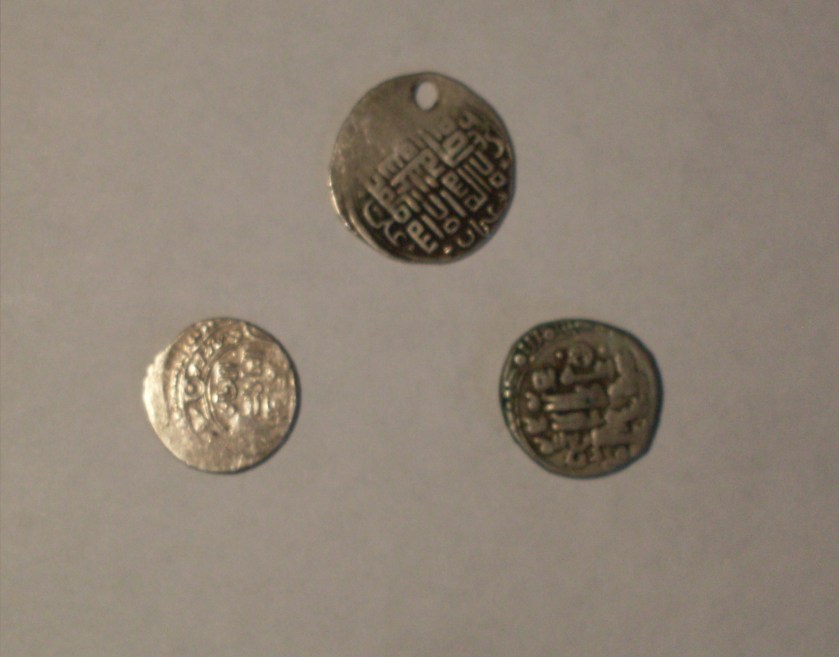
From the pictures you can see I got my hands on three silver coins from the Ilkhanid Khanate this month. All three are hammered coins, and date from the mid-14th century. Minted under the Sultan Abu Sa’id Khan, he reigned the Ilkhanate from 1316 until 1335.
The Ilkhanid Khanate primarily occupied the region what we now call Iran, Azerbaijan, and most of Turkey, but it’s borders at it’s peak also stretched into Iraq, Afghanistan, Turkmenistan, Georgia, Pakistan, and parts of Tajikistan. The first Khan of the Ilkhanate was Hulagu Khan, who was the great grandson of Genghis Khan, and brother of Kublai Khan.
The Ilkhanate itself was not a stable entity, and would spend the majority of it’s existence fighting conflicts outside and inside itself. The first 50 years after it’s founding would see the Ilkhanate at constant odds with the Golden Horde and the Mamluks.

During it’s brief existence, the Ilkhanate would convert to Islam in 1295, but the majority of the Khans, and eventually, Sultans took little to no effort at all to proselytise the new religion. In fact, Christianity, Buddhism, and even Shamanism would be tolerated. However, despite the Ilkhanate’s conversion to Islam it would maintain hostile relationships with many of it’s neighbours.
In 1316 Abu Sa’id Khan would succeed to the throne, and immediately would foster rebellions within the Khanate in 1318. He would also subsequently be invaded by the Golden horde. Stability was eventually hard fought and won, but it was soon proven fragile as an outbreak of the Black Death in the 1330’s ravaged the Khanate. Abu Sa’id and his sons would die of the Plague in 1335. He was followed by a very quick succession of succeeding Khans until 1338. ‘Little’ Hassan who survived this quick succession would prove to be the final Khan of the Ilkhanate when it was finally overrun and conquered by Jani Beg of the Golden Horde in 1357.
 Numismatic Exploits