Ashmolean Museum

This week, to celebrate my birthday, I spent it this year in Oxford. Whilst there I got a chance to visit the Ashmolean museum, which has been on my to do list for a while now since I graduated from university. As well as seeing some Anglo-Saxon artefacts I have been wanting to see since my days of study, I also got the chance to visit the museum’s coin gallery.
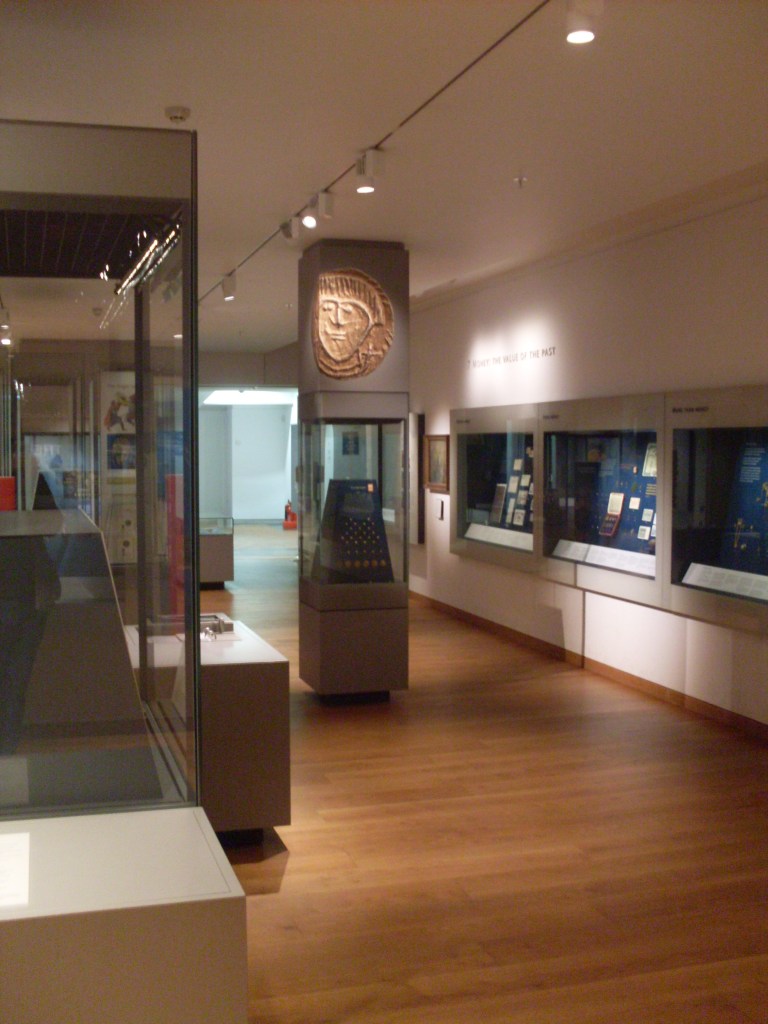
The coin gallery of the museum was not particularly large, encompassing a small hallway about 20 metres long. Similar to one of the rooms in the Kunsthistoriche Museum I visited in Vienna back in 2017.

Along one side of the hall there was a series of displays explaining the different types of coins and the evolution of coinage throughout history. Ranging from the weird and wonderful shaped coins from the early history of China, to modern banknotes and the eventual digitisation of currency.
Within the displays there was also examples of non-conformal types of currency, such as the infamous stone rings from the Isle of Yap to bundles of cloth from Nigeria. There was also a brief mention of fiat currencies which have been used by countries during periods of hyperinflation and the extreme devaluation of the national currency. Germany was the main example used here.

On the opposite side of the hall was a running timeline of coins throughout history showing multiple examples of pieces from different periods. Of course with a heavy focus on the British Isles.
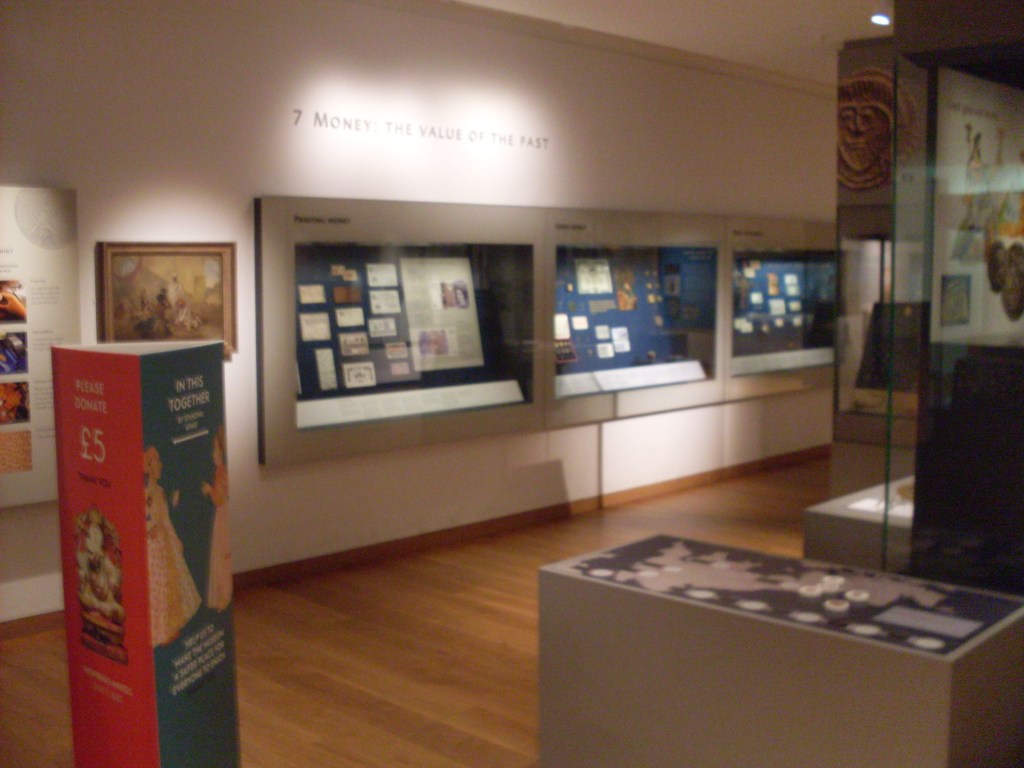
Along the centre were multiple display cabinets showing influential coins and hoards found throughout the British Isles. These varied from parts of the Cuerdale Hoard (the majority of which is in the British Museum in London) to gold galleons from the reign of Henry VIII.
There was also interactive exhibits showing a variety of topics such as where coins have been minted, how they are designed and made, to games that were often played in the past here in the UK (see picture below).

Overall, the coin hall of the Ashmolean was not the worst I have seen, but was far from the best. I understand that the main aim of the museum is a broader depth of history rather than just coins. So of course it would fall far short of those presented by the likes of the museums I visited in Tokyo, Frankfurt, Brussels, etc which were run and operated by the country’s central bank. However, on the scale it has presented the information seem more involved and described that what I have seen in Vienna, Helsinki, and London.
Although not something I would suggest you would go out of your way to visit. It makes a nice small addition to the rest of the museum if you ever find yourself in Oxford. Furthermore, the Ashmolean is free to enter which makes the option to visit even more enticing.

German Bundesbank Money Museum

SDC12921

At the start of this month I recently went to Germany to visit some friends for my birthday.  Whilst there I finally had a chance to visit the Bundesbank Money museum in Frankfurt.

I should start off by saying how great this museum actually is.  It is far larger than any other money museum I have visited so far, although I will admit that the number of items on display are far fewer than others I have been to, in terms of actual historical items.

The museum is split into 4 general areas.  Two of which actually showcase the variety of coins and banknotes globally and within Germany itself, drawing examples out from monetary history.  The other two sections of the museum deal with finance itself and the role money has in society as well as how the banking sector works.


These last two sections were completely new to me.  Well, to be more honest, new in the sense that the information presented was a lot more wide-ranging and complete compared to other museums.  Often monetary policy and economic theory is just a small afterthought in most money museums.  The sections start by showing how money had evolved from the simple exchange of goods to precious metals, to the more modern equivalents of balance transfers and electronic accounts.  It goes through the history of banks, and how many ideas still used today in modern financial institutions were started back in medieval Italy and Venice.

Once through this section, visitors then get to come to grips to the more heady topics of inflation, printing of money, price exchanges between different currencies etc.  Quite heavy topics to the uninitiated, and to most quite boring (one of the main complaints from a friend who visited the museum with me).  I will admit, although have some interest in the area of economics, I did gloss over a lot of it (But to those with a keen interest, I do wholly recommend a visit).

Of course, sprinkled throughout the museum, including the economic sections on monetary policy, Germany’s financial history is explored.  With the hyperinflation of the early 20th century being a great showcase into understanding some of the more heavier topics discussed in the later sections.

SDC12918

Overall, I fully enjoyed the museum.  There was a dearth of information (written in both English and German) explaining a wide range of topics within the hobby itself.  Of course most relating to Germany and the Eurozone.  A definite must see if you happen to be in the Frankfurt area, with the added incentive being that it is completely free to enter!

SDC12924

Museum of the National Bank of Belgium

So recently I had a small long weekend away to Brussels.  Whilst there I managed to have a chance to visit the National bank of Belgium currency museum just on the fringes of the city centre.

On first visiting the museum, the exterior is nothing too impressive.  In fact, it is quite easy to miss the entrance to the museum, as the building itself is rather nondescript.  The interior however more than makes up for a seemingly grey and lifeless building.

SDC12785

Once through the security checkpoint, you emerge out into a large hall separating both halves of the museum.  On the ground floor, you are taken through the history of coinage in Belgium, with a look at combating counterfeiting and how Belgian bankers fought to keep inflation in check during the late 19th and early 20th centuries.  It also explores the creation of the Belgian currency during the early parts of the 19th century, as the modern nation state as we now know it did not exist until 1830.  Alongside this exploration, a section is also devoted to the Euro (which Belgium adopted in 2002), which shows all the security measures featured on the current banknotes in circulation.

SDC12786

On the second floor, you are taken through a timeline of all the coins used throughout the region which would become Belgium from antiquity until modern times.  Detailed explanations, and the history of the period is given throughout in French, German, and English.  A small area is also dedicated to what I like to class as ‘funny money’, or items which have been used as coins but really don’t fit into how we traditionally see them.  These ranged from Native American shells, Chinese tea bricks, Swedish copper plates, bronze cannons from Brunei, and the infamous large stones from the islands of Yap.

Overall the museum was very good.  It certainly ranks amongst the top of all the numismatic museums I have visited so far.  What certainly puts it out ahead of some of the other museums I have visited would be the fact that information presented was translated into multiple languages so nothing was lost to any visitors regardless of triviality.  Despite the fact other museums have had much more items on display.  The fact this museum was also free to enter was simply just icing on the cake.

Bank of Japan Currency Museum

So I have finally had a chance to visit another numismatic venue.  This time travelling to the other side of the world to Japan.  Two things stood out when I first entered the museum.  The first was the price, apart from the British museum, this is the only other museum which has a numismatic section to be completely free.  Secondly, and more frustratingly (although understandable), photography was forbidden inside the building.  So I had to make do with a picture of the sign outside and one showing the floor-plan from the pamphlet I got.

SDC12508

When entering the museum on the ground floor (the actual exhibition room is up a flight of stairs), you are greeted by a team of security guards and a metal detector.  They are quite adamant that nothing stray enters the building, as I can attest there are some very valuable pieces on display which could easily be ‘acquired’ by the less discerning members of the public.

Another thing which happened during the check-in was when I was given a small bright red folder which had a brief translation and break-down of all the exhibition’s cases.  The need for this became apparent when reaching the exhibition hall as everything was purely in Japanese.

The museum itself is not very large, but comparable in size to others I have been to.  So that of itself was no big issue.  It was definitely far better laid out than others though, with more space than the British museum, and some ordered progression throughout the room when compared to Vienna’s Kunsthistoriches Museum or Helsinki’s Kansallismuseo.  The exhibit takes you through a certain route and journey through the history and evolution of Japan’s coinage.  From the earliest coins copying those from China, to the more modern coins in circulation and the advent of paper money.

SDC12565

There were some well preserved and fantastic pieces on display throughout the exhibition.  From basic copper coins, through silver to gold.  It was sad that the guide I was reduced to using was only a summary, as not being a native Japanese speaker I missed out on a dearth of information provided on the individual pieces on display.

As well as Japanese pieces on display, other nations coins and banknotes were sprinkled throughout the exhibit helping to explain Japans economic history. Also being used as examples to explain design decisions the Japanese mint took when producing their own.  Again, the quality of the pieces chosen were of prime condition.  I was also amused to find a 9th century Anglo-Saxon coin mixed in amongst the collection.  To think something that old from England had travelled so far tickled me.

The exhibit also had a section on how Japanese people have attempted to forge the currency, as well as the mints attempts to tackle counterfeits.  I have only found one other museum to do this, again referring back to the British Museum in London.  Although, compared to London, the Bank of Japan museum focuses mainly on endeavours in Japan rather than a more worldwide effort the British museum approaches.

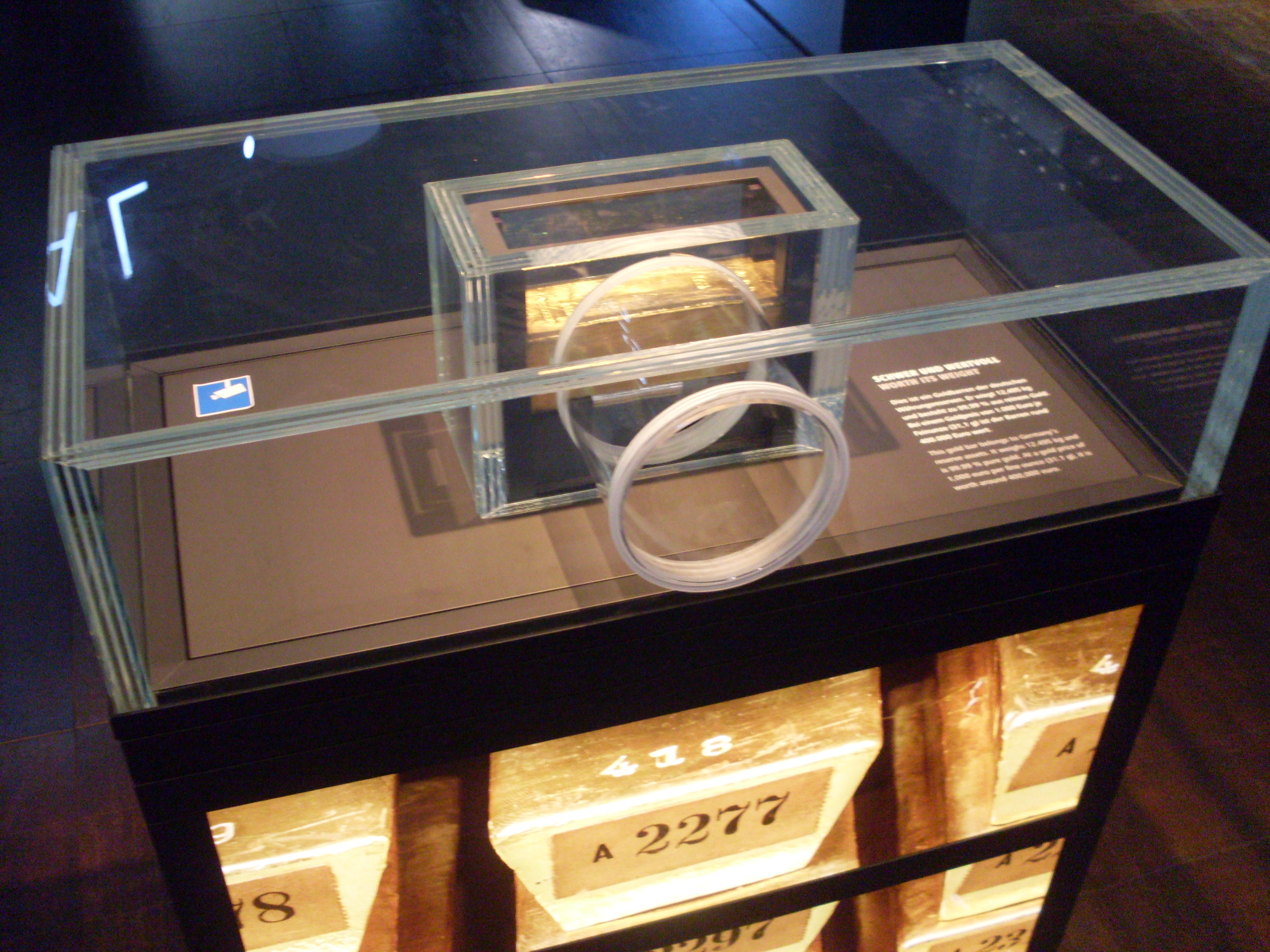
The museum also contains many hands-on exhibits within the space.  Visitors are able to touch 1 million yen in bills to see how large the stack would be (and the chance to feel that much money haha).  They also had a heavily chained wooden case filled with enough pure gold ingots to allow visitors to feel the weight of several millions yens worth of pure gold.  I just managed to get the case off the table.

Finally, my favourte part of the exhibit was tucked away in the corner at the back of the room.  It was several electronic shelves built into the wall with an electric keypad locking system.  Visitors were able to type in a code printed on the wall, and the shelves in the case would switch out and present different types of coins or banknotes with a specific theme in mind.  I managed to see German Notgeld, Japanese occupation money from the Second World War, and medieval clan tokens before my control of the keypad was wrested unwillingly from me to a group of schoolgirls on a field trip.

In short, the Bank of Japan currency museum was certainly one of the more well thought out and well designed musems on the topic of numismatics I have gone to.

Vienna and Bratislava

Last week I had a small weekend away to Vienna, Austria, as well as a small excursion to the next country over, Slovakia.  Whilst in both Vienna and Bratislava I came across some sections of two museums which have been devoted to the subject of numismatics.  I thought it would be a good chance to share my thoughts and experiences of both places here on my blog.

Kunsthistorisches Museum, Vienna

SDC12261

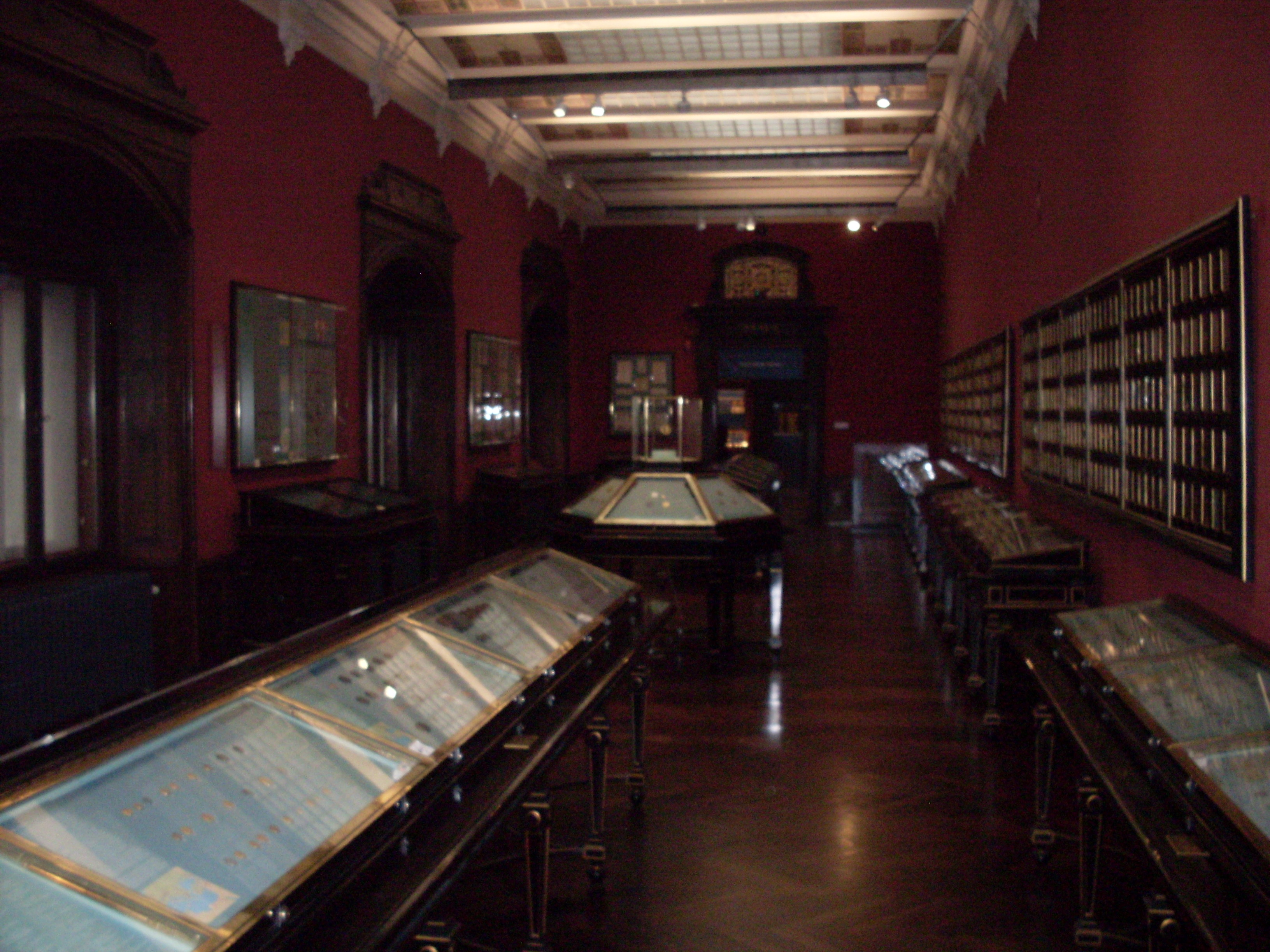
The coin galleries of the Kunsthistorisches Museum only comprise a small section of the third floor of the building, and during my visit, don’t actually command a high turnout of people wanting to see them.  However, the collection itself is spread over three rooms, with the first being dedicated to medallions, and their development in Austria over time.  As the picture above shows, the layout of the rooms were pretty formal, with many clear examples on display.  The pictures on the wall are something unrelated to the field of numismatics, but are a collection of images which were collected by Archduke Ferdinand of Austria-Tyrol comprising of over 1000 likenesses of European notables dating from after 1579.

The collection has been one of the main displays of the museum since it was opened to the public in 1891, and it’s initial focus was exclusively on coins, medals, and orders of merit pertaining to Austria.  In the early part of the twentieth century, the focus shifted and the collection cast a wider net, and sought to envision the development of coins and monetary systems as a whole, internationally, rather than just Austria.  Examples of pre-monetary forms of currency on show, as well as die stamps, scales and weights, hoard vessels and so on.

SDC12262

It goes without saying a dearth of examples were on show in just 3 meagre rooms.  With many international examples being readily available.  My one true bugbear however was the descriptions near all the samples shown.  I understand they are not going to print the information in a language the natives don’t speak, so my first port of call was the pamphlet in my language readily available to the side of the main entrance of the gallery.  What I didn’t expect was to be carrying a hefty tome to rival even the most extensive dictionary in print today.  Lugging that thing for the time it takes to explore the gallery completely is a herculean task I am not used to performing.  However, in spite of carrying a book heavy enough to kill someone, the information contained within was flawless.  The amount of knowledge, detail and throw-away trivia was astounding.  So I must give kudos to whoever wrote it, they knew their stuff.  I just wish it wasn’t so darned heavy!

Bratislava Castle

Bratislava castle is a site which has been occupied for thousands of years, so a wealth of history is ripe to be exploited from the get go, something which is well under way.  The castle itself, although as a building has occupied the site for about 800 years, has undergone extensive restoration and reconstruction since 2008.  This is in an effort to repair the failing and dilapidated building which once occupied the site.  Much of the grandeur of the 18th century building has been restored and walking the sweeping rooms and galleries of the building imparts a simple sense of awe as you gaze out of the myriad number of windows looking at the views of the city and surround landscape.  Much of the building is taken over to exploring the history of Slovakia, and Bratislava itself.  One part through which we will explore is the small section of Celtic life presented in the pre-Roman part of Slovakia’s history in the castles catacombs.

SDC12281

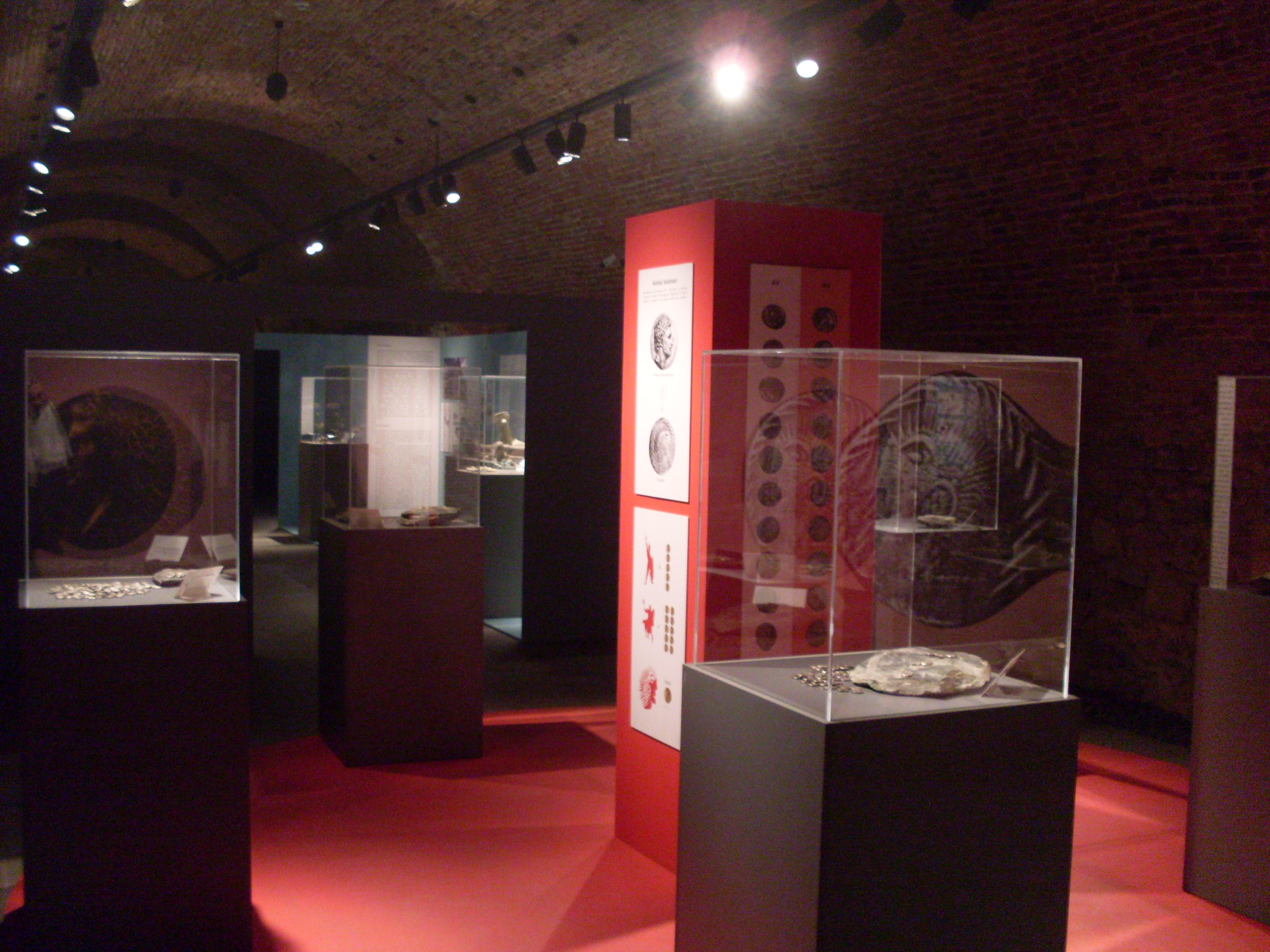
Although not very large, the small section dealing with coins was very interesting.  As you can see from the photo above, it is limited to a small column and a few glass cases.  Behind the black screen in the back of the photo there was also a small part detailing how the ancient Celts minted the silver coins they used for trade, with some early Roman examples of coin molds being on display.  This really caught my attention as I have never had a chance to see one in person before.  I lament however a proper picture couldn’t be taken due to technical difficulties, and an overzealous museum guide decrying ‘No photos!’  Although sparse on any actual information (what little presented is in either Slovakian or German), there was a kind woman available to explain everything about the displays to me.  It turned out, she was the main researcher for the coins found, and wrote much of the information presented in the museum.  A book detailing all the information I wished to know was available written by her.  A instant purchase by me if there ever was one, unfortunately, no English copy was available.  In fact, in the castle shop there was a multitude of literature devoted to the field of numismatics ranging from site reports to small pamphlets, all reasonably priced too.  However, all of them were in Slovakian.  I did ask if there would be a chance of an English translation, but the closest clear answer I got was ‘maybe sometime in the future, but nothing is in the works right now’.  A shame, as I feel a lot of the information on offer could spark further interest from further afield.  Either way, I will be watching and hoping something does come along…