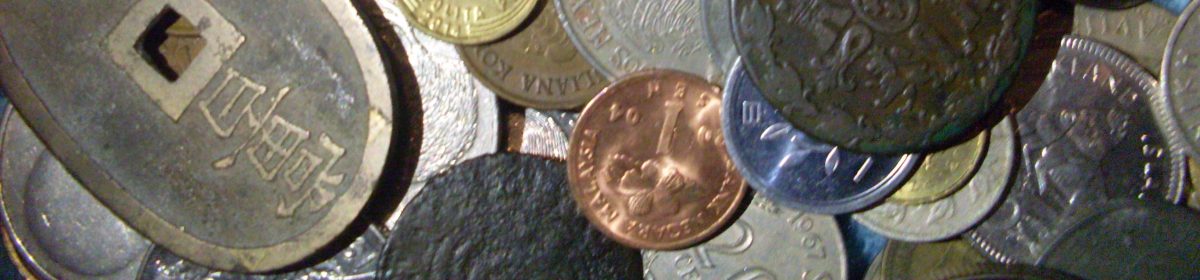
So being the final blog entry of 2017, it gives one a chance to reflect on what I, as a collector and enthusiast have achieved over the last twelve months. This year I have acquired many different types of coins, with an aim of finding new and unusual pieces for my collection. This has caused me to start focusing on coins beyond the 20th century, or from countries which as a British person sound far-flung and exotic. The number of coins in my collection dating from before the turn of the 20th century has significantly increased. I feel I have attained more coins from the late 18th and early 19th centuries than I have done in the last 20 years.
This pursuit of acquiring older and older coins has yielded some fruit, and I have attained some coins dating back significantly further. With last months post about the coins from India being a prime example.
So apart from diversifying my collection, what have I actually learnt? I would say the one thing which comes to mind instantly is the blog entry on British token coinage I did back in the summer. My studies at university rarely ventured beyond the early medieval period, so knowledge of numismatics beyond that and the 20th century are rudimentary at best. Finding that Britain thought minting low value coinage as a stain on it’s integrity was novel in of itself. Pursuing this, led me to finally acquire a Cartwheel Penny, something I have mildly wanted since first seeing them in the British Museum many years ago. Through discovering this new type of token coinage, my own interest in alternative monetary systems has increased. As understanding the cultural significance of money has always been a keen personal project. As evidenced by a post I dedicated to Notgeld towards the start of this year. Hopefully in 2018, I will be able to continue to acquire older and older pieces, but also discover more token coinage and other alternatives people have used to facilitate trade.
Speaking of acquiring things. This month I have continued with the theme of pursuing pieces from Asia. This time from Japan:

From the picture above we can see a cast lead-bronze Japanese 100 Mon piece. Dating from the late Edo and early Meiji era, it was cast some time between 1835 and 1870. Most pieces were cast in either Tokyo, Osaka or Fukagawa, but there is evidence more provincial mints also produced samples. It features on the rim, on the long oval side, two cherry blossom stamps. In line with the central square hole.
Japan during this period went from a long period of peace and prosperity in the long running Edo period (1600-1858), during which it was ruled by the Tokugawa shogunate which enforced a policy of isolationism. This seclusion would later be ended, and Japan opened up to the rest of the world after the American Perry expedition in 1854-3. It was through the Meiji period (1868-1912) that Japan would receive plenty of Western influences and would begin to industrialise. With power transferred back to the Emperor after the fall of the Shogunate in 1868, Japan was free to expand it’s influence and it’s Empire.
 Numismatic Exploits