An Uncivil War

A small and tiny coin enters my collection this month. Minted during a period of great political upheaval which resulted in a brief span of time which is seen as a small blip in the status quo of my country’s history.

This period from 1649-1660 is often referred to as the Commonwealth when a series of small civil wars broke out here in England leading to the trial and execution of the king and the appointment of a man to lead the country who is every bit as politically and historically controversial as Margaret Thatcher.

With the nominal value of 1 pence, this small silver coin is just 14mm in diameter and 1mm thick.
On the reverse of the coin are twin shields bearing the St George’s cross and Irish harp respectively, whilst above them is the roman numeral denoting the value of the coin. On the obverse is a single shield with the St George’s cross surrounded by a laurel wreath.
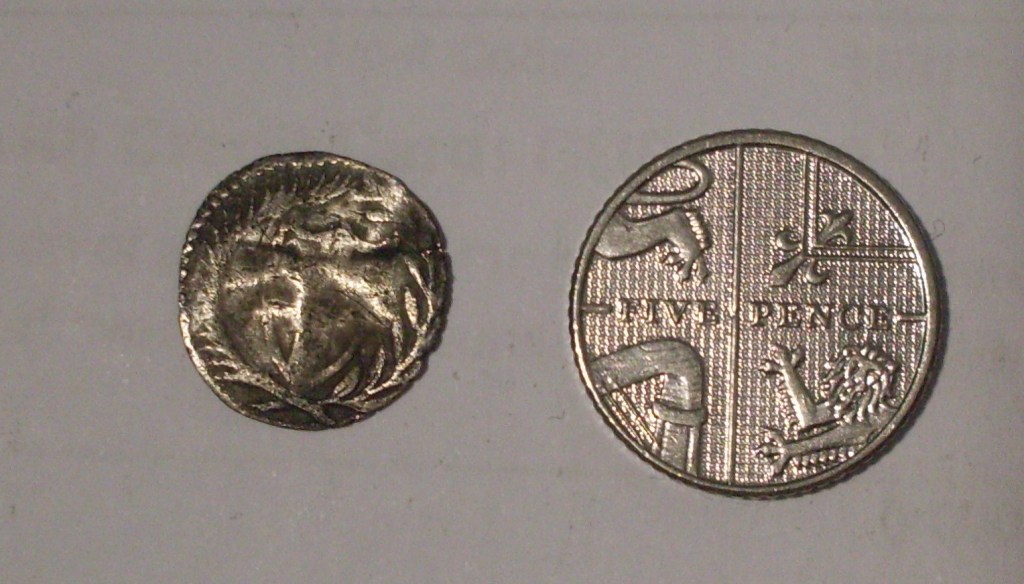
Breaking away with the more traditional designs this coin does not bear the royal coat of arms which was usual for English coinage at the time. A clear indication of the turmoil the country was going through when it was struck.

The Commonwealth was the political structure created by parliament in England and Wales after the execution of Charles I in 1649. Although the king was deposed, fighting would continue within the British Isles, most notably in Scotland and Ireland. This would continue until 1653 when Oliver Cromwell was pronounced Lord Protector of all four constituent nations after parliament was dissolved.

Cromwell’s place is severely contentious in the annals of history of these islands. Ranging as someone who would promote religious tolerance amongst the different Christian groups (Except Catholics) to a bloodthirsty warmonger who would carry out almost genocidal acts in Ireland.
Cromwell has been a figure of much debate by both contemporaries and historians alike. Some often portray him as an opportunistic hypocrite motivated by power, whilst others have described him as an “energetic campaigner for liberty of conscience.”
He would pursue an effective aggressive foreign policy which was aimed at trying to limit the economic powerhouse which was the Netherlands. With Jews finally being allowed to return to England after over 350 years of banishment by king Edward I. This was in hope that they would help speed up the economic recovery of the country after a decade of civil war.
Cromwell would also sign the Treaty of Paris in 1657, which would ally Britain with France against the Spanish. The terms would cede the ports of Mardyck and Dunkirk to Britain to help reduce the activity of corsairs and privateers which infested the Channel during this period.

Cromwell would be offered the crown of England in 1657, but he would stick to his principles and decline it due to being the arch-principle who brought down the previous king. However, the office would take on more of the trappings of the monarchy as time wore on, and it would be similar in all but name.

Cromwell would die of natural causes in 1658, and his son Richard would take over as Lord Protector. Richard was a poor substitute for his father and in 1660 would go into exile on the continent when the monarchy was restored that year under Charles II.

Cromwell has a very lasting legacy which is still felt amongst many who live here. The abolishment of the monarchy, although for a brief period of time, would allow more powers and freedoms to be granted to those outside of the system. When Charles II was crowned as king he would do so with much reduced powers than those enjoyed by his father, Charles I. Never again would parliament be dissolved at the whim of the monarch and the people of England (although still miniscule at this point in history) would gain a little say on how things would be run.
Big Trouble in Little Hungary

A return to central Europe this November, as this month I have managed to obtain a small silver coin from Hungary dating to the middle of the 16th Century.

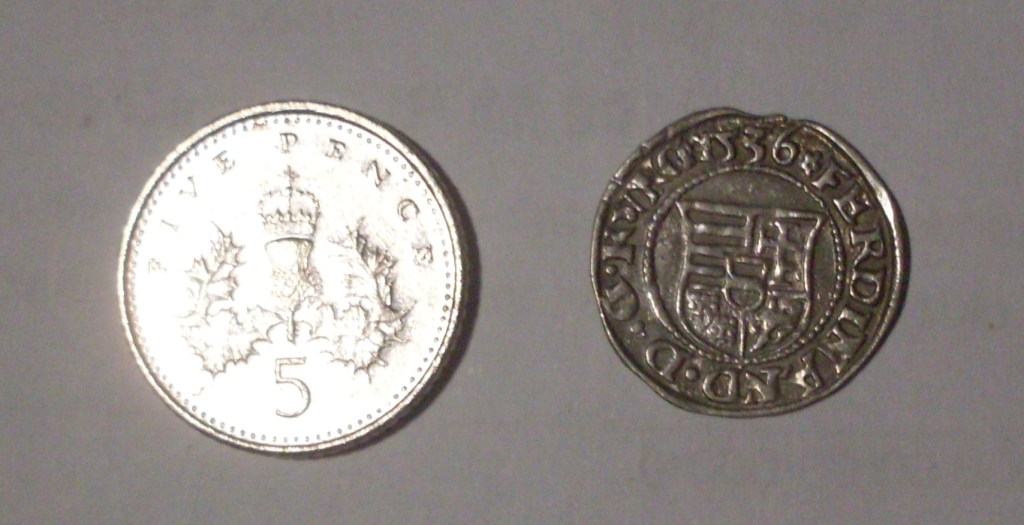
Dating from 1536, this small silver coin was struck in Kremnica (in modern day Slovakia) during the reign of Ferdinand I. Held to the value of 1 denar, this coin would constitute 1/180th of a full thaler which was the main silver currency of much of central Europe, starting around the year 1500.

On the obverse of the coin is the quartered coat of arms of Hungary, with a small shield in the middle denoting the main crest of Austria (which was the main holdings of Ferdinand prior to ascension to Holy Roman Emperor in 1556). This central design is surrounded by the legend * FERDINAND · D · G · R · VNG * 1536 translating to Ferdinand, by the grace of God, King of Hungary.
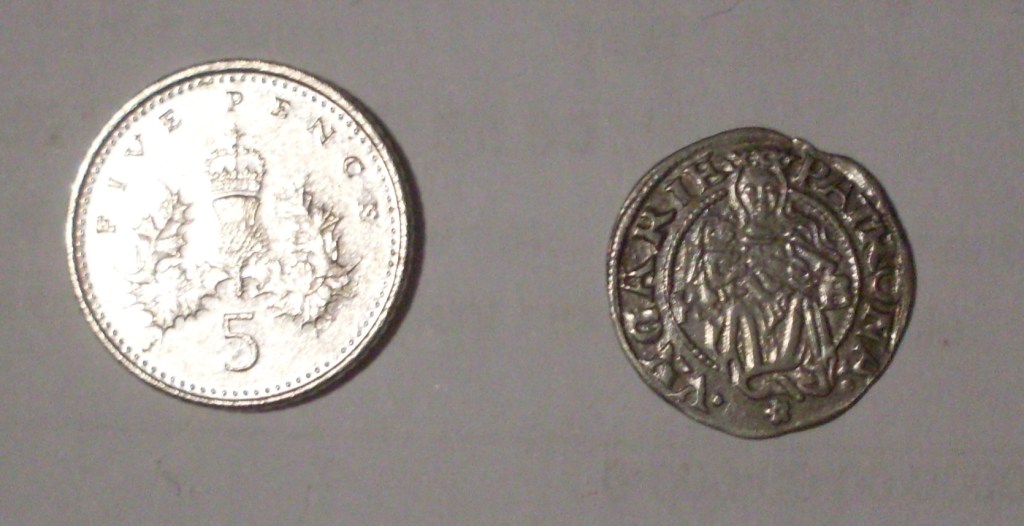
The reverse of the coin depicts a crowned image of Madonna with child, with the figure sitting between the letters KB denoting the mint where the coin was struck. The legend around the edge is PATRONA * * VNGARIE translating to Patroness of Hungary.

Ferdinand was born into the Habsburg family in 1503, but he wouldn’t take control of the family’s Austrian lands until 1519 when his brother, Charles, would ascend to the German imperial throne after the death of their grandfather Maximillian I. However, he would not fully inherit the title Archduke of Austria until 1521.
In 1526, upon the death of his brother-in-law Louis II, Ferdinand would become king of Hungary. His rule however would be disputed by John Zapolya the Voivode of Transylvania. This dispute came about due to the nature of Louis II’s death, which occurred during the battle of Mohacs against invading Ottoman forces.
The victory of the Ottomans at Mohacs would lead to a split in Hungary with a pro-Ottoman half being led by Zapolya, and the opposite being led by Ferdinand. Due to this split, Zapolya would be declared king by the nobility under Ottoman influence.

Ferdinand’s reign of Hungary would be overshadowed by this dispute with Zapolya and his wars to remove Ottoman influence from the country. Even with Zapolya’s death in 1540 his son, John II Sigismund, would continue his dispute with Ferdinand gaining support from the Ottoman ruler Suleiman the Magnificent. Eventually John II Sigismund would become king of Eastern Hungary, a vassal state under Ottoman rule, and would reign until his death in 1570.

Ferdinand would never remove Ottoman influence from Hungary, and despite Hungary losing around 70% of it’s territory to the Ottomans it would remain the small economic powerhouse of all of Ferdinand’s lands, outstripping those he held in Austria and Bohemia. Even after he ascended to the Imperial throne after his brother’s abdication in 1556.

Not worth the paper it’s printed on…

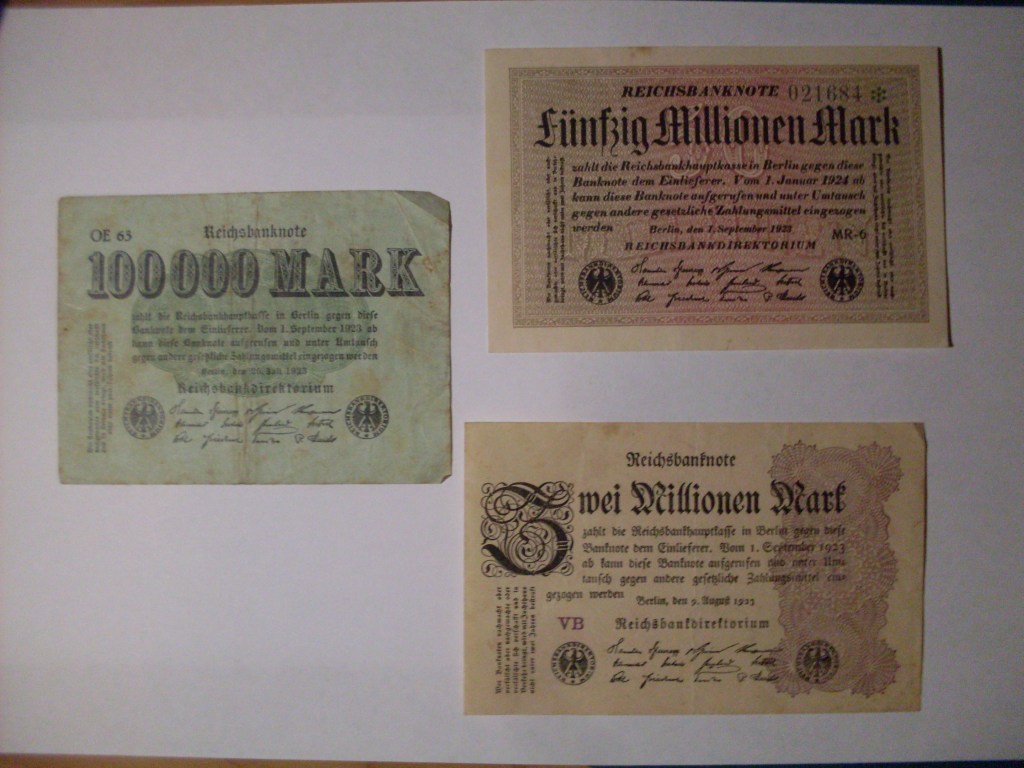
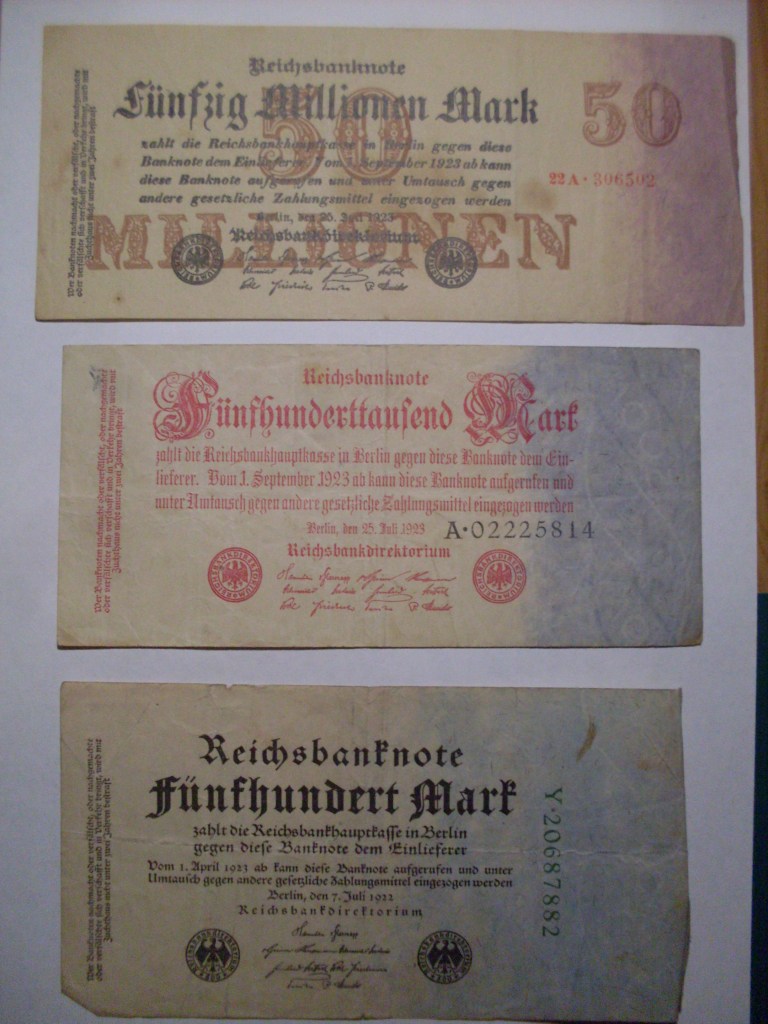
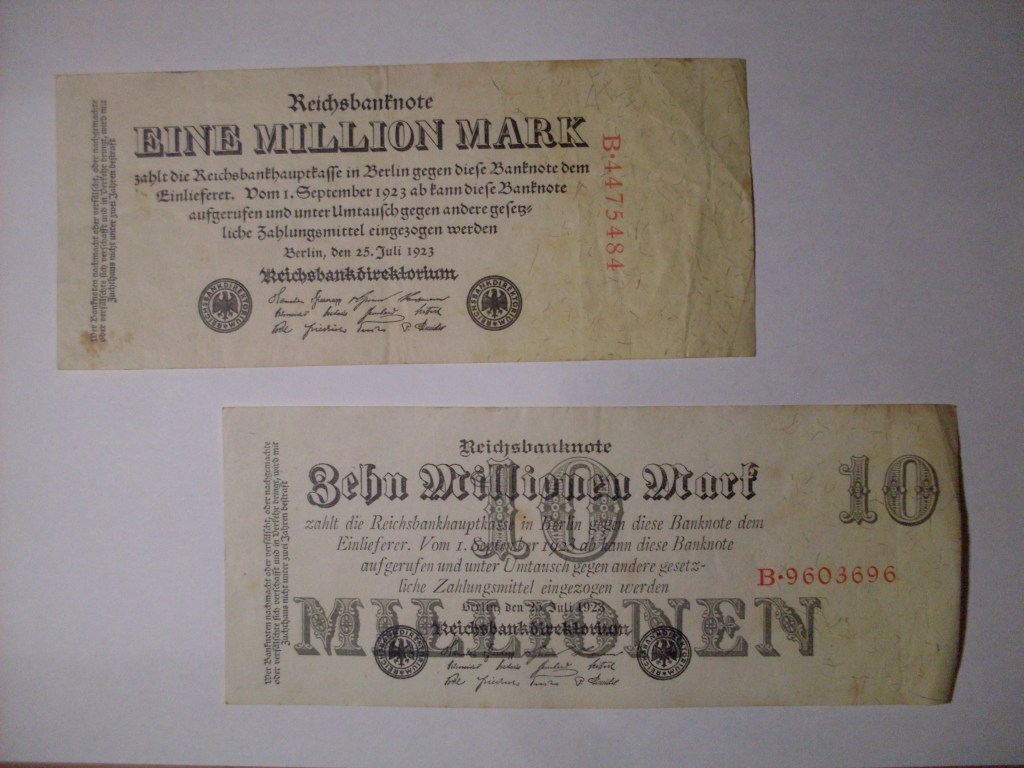
For September we return to Germany to look at some banknotes from a period in the country’s history which is heavily studied. Especially by those learning history here in the UK.

This period defined the inter-war years for Germany. It weakened the new Weimar Republic which emerged after the horrors of WWI and the overthrow of the Kaiser. This brief period of hyperinflation would set the scene and help sow the seeds for a much darker regime to follow.

When Germany lost the war in 1918, it was saddled with massive debts due to the increased borrowing the Kaiser and his government undertook to fund it’s effort during the conflict. Exacerbated further by the harsh conditions imposed upon Germany by the Treaty of Versailles in 1919. Despite some economic relief provided by the Young Plan, the debt burden was worsened by the printing of money with no economic resources to back it. Reparations as set out in the Versailles Treaty accelerated a decline in the German Mark as more money was printed to meet these obligations. By the end of 1919 it would take 48M to equal just $1 in value.

By the time Germany was to meet it’s first reparation payment in June 1921, the value of the Mark had slipped further with 330M now needed to just meet $1. As the reparations had to be paid in hard currency rather than the slowly falling ‘Papiermark’ (Paper money), the German government began to exchange marks for foreign currency at any value. This action would further destabilise the currency as it was seen by many as the German government selling their own currency in preference for foreign. Thus weakening the trust in it’s value.

1922 would mark the beginning of the rapid decline in the value of the German currency. By June of that year a conference organised by investment banker J.P Morgan tried to solve the situation and organise reparation repayments. Since no workable solution was able to be found, the inflation would continue to skyrocket. By the years end, 7200M would equal $1. The strategy employed by Germany was to mass print new banknotes in order to buy foreign currency to pay the reparations. This of course destabilised the economy greatly, with much of the banknotes now not being worth the paper they were printed on.

By 1923, Germany was no longer able to make it’s reparation payments and the French would respond by occupying the Ruhr valley, Germany’s main industrial region. The German government would encourage the workers of the region to adopt a policy of passive resistance by not helping the invading French in any way. The workers though would need to be supported financially during this ‘strike’ against the French occupation. Thus leading to more banknotes being printed.

By the end of 1923, new plans were proposed by the central German bank to tackle the crumbling economy and rein in the continual rising prices. A new currency was to be introduced in Germany, the Rentenmark, back by bonds indexed to the physical value of gold. In parallel to this, a new bank was set up to control this currency called the Rentenbank. The new bank would refuse credit to the government and currency speculators in an attempt to create value for the new currency.

Over the course of 1924, the new Rentenmark would be expanded in scale until it would be formally adopted as the de facto currency in Germany in August of that year. By the time of it’s formal adoption the value of the currency would be 4.2 rentenmarks to a single dollar. Conversion values between the old Mark and the new Rentenmark would be set at 1-trillion marks to 1 rentenmark.

Overall, hyperinflation in Germany would reach it’s peak around November 1923 with the average price of a loaf of bread at the time coming to 200,000,000,000 Marks. The economy would stabilise and prices would return to normal relatively quickly with the introduction of the Rentenmark. Despite being separate events, many Germans would conflate the hyperinflation of the 1920’s along with the Great Depression and see both together as one large economic crisis.

Under Lock and Key

This month I had some long-awaited time off work, and due to the current pandemic hitting everywhere I did some day trips to other places here within the UK (A chance to see somewhere different from the small town I live in). One of these places was the city of York. A place I haven’t visited in about 10 years, and it has always been a charming city to visit for those who love history.

Whilst wandering the streets of York I came across an antique centre a stones throw away from the minster, and with time to kill before my train, I decided to have a look around.

Whilst perusing the cabinets I was more than tempted by the coins they had on offer, however in the last room at the back of the building I stumbled across what this month’s blog post will be about. At first, I dismissed it, but I found as I kept looking through the cabinets I was constantly drawn back to this item. It is nothing special or unique, but I found that by the end of the day I just had to have it.

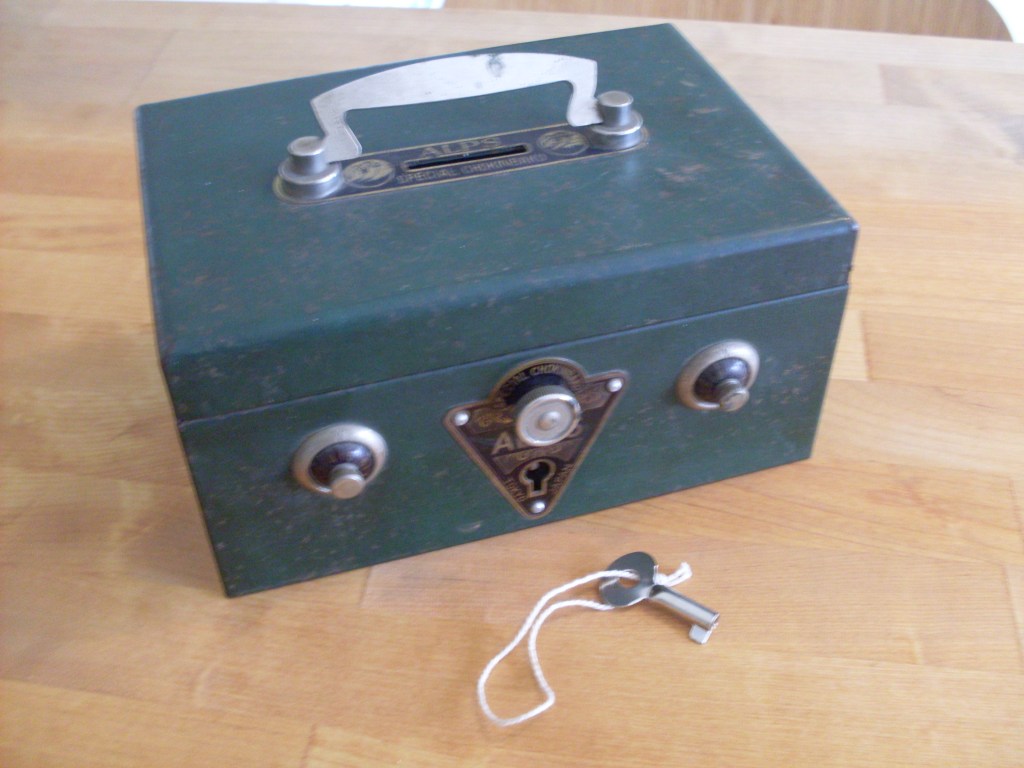
The item in question, although not a coin itself, is related to coins and money. A little drab, and the years have not been too kind, but this early Showa Era (1926 – 1989) Japanese money box had a charm of it’s own.

The box is made of metal and has a dial and key type lock. Both dials have to be set to the correct combination and the lock has to be opened by the key before the lid is able to be opened by the knob found just above the keyhole.

Made between 1926-1936, this moneybox was manufactured under the Alps brand in Tokyo. Other such brands exist at the time showing similar designs and lock mechanisms. Brands such as Mitsuba, Star, Mitsuwa, High Class, and Dial also look very similar to the Alps brand I purchased.


The word Chokinbako (貯金箱) can be translated into moneybox, money bank, or loosely for Western tastes “Piggy-bank.” So it can be assumed this was an item to save up money.

In the West, the oldest money box which has been discovered dates from the 2nd century BC at the site of the Greek colony of Priene in Asia Minor. Money boxes have also been excavated at Pompeii and Herculaneum, and soon make an appearance across much of the late Roman Empire. It is believed that in the west the popularity of the ‘piggy-bank’ originates in Germany where pigs were revered as a symbol of good luck. The oldest German piggy-bank dates from the 13th century and was discovered during construction work in Thuringia.
In Asia, we can find the earliest known pig shaped container dating from the 12th century. It was discovered on the island of Java in Indonesia. Further pig shaped money boxes were also found in archaeological excavations in Trowulan, a village in the province of East Java and is believed to be the possible site of the capital of the ancient Majapahit Empire.


The term “piggy-bank” itself is in dispute with the earliest known use dating from the 1940’s. The earliest known use of “pig-bank” in English dates from 1903, which describes them as a Mexican souvenir. In Mexico piggy-banks are called ‘alcancia’ which originates from Andalusian Arabic.

George and the Dragon

Today is the 23rd April, and although not as well recognised globally nor as celebrated as St Patrick, it is St Georges Day. Holding some significance here in the UK, well England to be be more precise, St George is the patron saint of the country lending his coat of arms as the national flag of England.

Being the patron saint of the country, it is of course inevitable that he would appear on some of the coin minted here during our long history. However, surprisingly it would not be until 1817 that it would be realised. First appearing on the gold sovereign, the design was created by famed gem cutter and engraver Benedetto Pistrucci. The same Pistrucci of the much maligned bull headed portrait of King George III (I made a post showcasing this design back in May 2017).

Given another chance, Pistrucci would create a design which has now become recognised by the coin collecting community the world over. By the late 19th century, the design would also feature on silver crowns:

With only one year (1935, shown in the centre) not featuring Pistrucci’s design. The 1935 crown was to celebrate the 25th anniversary of the accession of George V and an art deco style rendering of St George slaying the dragon was used instead.

By 1952 there was no circulating coin featuring Saint George in the UK, but in 1957 it was reintroduced with the reminting of gold sovereigns. The design would also find itself being struck on proof, brilliant uncirculated, and bullion versions of the coin.

Saint George does not only feature on British coins. He is the patron saint of many countries around the world. Ethiopia, Portugal, Brazil, Malta, Bulgaria, Serbia, Montenegro, and Georgia. He is also the patron saint of the Swiss Guard, the city of Moscow, Catalonia, Beirut, and the Kerala region in India. This list is by no means exhaustive.

Therefore examples of his image can be found on coins from Bulgaria, Russia, and Lithuania. His coat of arms have featured on Portuguese coins, and the earliest known example of his image on a coin dates from the start of the 11th century in the medieval Kingdom of Georgia (Kvirike III 1010-1037/39).

50 years since D-Day

Today (15th Feb) marks the 50th anniversary of D-Day. Well Decimalisation Day that is.

Back in 1971, on this day, the UK changed it’s currency system from the old “pound, shilling, and pence” system to the one it uses today. The old system, although often associated with the UK due to it being the last user of the system within Europe, was first standardised and introduced by Charlemagne in the mid-8th century. Charlemagne would popularise the system across much of Europe due to the expanse of the Carolingian Empire. King Offa of Mercia would be the first king in the British Isles to adopt the system in the late 8th century.

The names of the coins were based on Roman coins, those of the ‘librae’, ‘solidi’, and ‘denarii’. Which led to the well known abbreviations L, s, d. With a stylised ‘L’ forming the symbol for the British currency to this day (£).

The way the system worked was that there were 12 pennies to one shilling. 20 shillings to a pound, which meant that there were 240 pennies to one pound. With a pound also corresponding to the actual weight in silver of 240 pennies. Although of course, due to debasement and re-striking of coins, this would not last throughout much of the lifespan of the system.

Despite it’s name, there were also a multitude of other coins used which enabled easier transactions to be done throughout the period of use. Farthings made up one quarter of a penny, and this coin would be discontinued in 1960. Whereas the halfpenny would last a little longer, being demonetised in 1969. Other coins such as guinea was produced, and originally was minted to correspond to be worth exactly one pound (20 shillings) monetary value in gold. However, due to the fluctuations in the price of gold, it’s value varied wildly until it was fixed at the value of 21 shillings. The first guinea was produced in 1663, and would last until it’s demonetisation in 1814.

With the spread of colonialism, the system also made it’s way to other countries around the world. Many of these countries would quickly abandon the system after independence, with the USA quickly adopting a decimal system in 1792. Others would continue to use it a while longer, with Australia changing to a decimal system in 1966, 65 years years after gaining independence. Nigeria was the last country in the world to use the pre-decimal system, finally abandoning the Nigerian pound in 1973.

There were also similar systems based on Roman coinage such as the ‘livres tournois’ system in France which was adopted during the Middle Ages, and the system in Spain which used 20 maravedis to 1 real, and 20 reals to 1 duro (5 pesetas).

Getting the measure

We are returning to Russia again this month and with something slightly different from the norm. Now in the picture above we see a perfect copper replica of the Russian half-poltinnik which originally was minted in silver during the reign of Czar Alexei Mikhailovich (1645-1676). However, it is not a forgery. It is actually a coin weight used to measure the quality of the afore-mentioned half-poltinnik.

Coin weights themselves were often made of a variety of materials, ranging from metals to glass. Most often bore an inscription of the coin they were supposed to represent, or were straight up copies like the one I have acquired.

Not limited to the medieval period, the history of coin weights date back to ancient Ptolemaic and Byzantine times, and there is significant evidence that they were also used in ancient China.

(The inscription reads: “Czar and Grand Prince Feodor Alexeyevich of all Rus”)

This coin weight was minted during a period of monetary reform in Russia. In the middle of the 17th century there was signs of a strengthening of monetary currency, growth of the Russian internal market, reinforcement of Russian state power, and the annexation of the Ukraine in 1654 made monetary reform a necessity. These reforms were carried out in 1654 with the aim of introducing a new set of small and large denomination coins to replace the silver wire kopecks previously in circulation. Inspiration was drawn from Western currencies, with the new silver Rouble taking it’s ideas from the West European thaler. Many of the new silver roubles were made by simply counter-marking existing thalers (or other coins of the same weight and value). Half-poltinniks were made by simply cutting these Western thalers into quarters.

However, there was much public mistrust over this new coinage due in part to unfamiliarity and the way the coins were issued to the population. Thus, just a year later in 1655, the reforms were abandoned. This was shortly followed by a mass striking of new copper coins using the old denga and kopeck system, with many of the designs modelled on the old familiar silver wire kopecks.

Ironically the mass striking of the new coins led to inflation quite quickly, and with the sharp rising of prices, the economy in disruption, the Copper Riot of 1662 happened in Moscow. This led to the eventual nullification of all copper coins in 1663 and would not see a reintroduction until much later.

The Khanate Can-can

SDC13429

After last months trip to China we are heading back further west this month.  This time to the Ilkhanid Khanate.

From the pictures you can see I got my hands on three silver coins from the Ilkhanid Khanate this month.  All three are hammered coins, and date from the mid-14th century.  Minted under the Sultan Abu Sa’id Khan, he reigned the Ilkhanate from 1316 until 1335.

The Ilkhanid Khanate primarily occupied the region what we now call Iran, Azerbaijan, and most of Turkey, but it’s borders at it’s peak also stretched into Iraq, Afghanistan, Turkmenistan, Georgia, Pakistan, and parts of Tajikistan.  The first Khan of the Ilkhanate was Hulagu Khan, who was the great grandson of Genghis Khan, and brother of Kublai Khan.

The Ilkhanate itself was not a stable entity, and would spend the majority of it’s existence fighting conflicts outside and inside itself.  The first 50 years after it’s founding would see the Ilkhanate at constant odds with the Golden Horde and the Mamluks.

SDC13430

During it’s brief existence, the Ilkhanate would convert to Islam in 1295, but the majority of the Khans, and eventually, Sultans took little to no effort at all to proselytise the new religion.  In fact, Christianity, Buddhism, and even Shamanism would be tolerated.  However, despite the Ilkhanate’s conversion to Islam it would maintain hostile relationships with many of it’s neighbours.

In 1316 Abu Sa’id Khan would succeed to the throne, and immediately would foster rebellions within the Khanate in 1318.  He would also subsequently be invaded by the Golden horde.  Stability was eventually hard fought and won, but it was soon proven fragile as an outbreak of the Black Death in the 1330’s ravaged the Khanate.  Abu Sa’id and his sons would die of the Plague in 1335.  He was followed by a very quick succession of succeeding Khans until 1338.  ‘Little’ Hassan who survived this quick succession would prove to be the final Khan of the Ilkhanate when it was finally overrun and conquered by Jani Beg of the Golden Horde in 1357.

Hungry, Hungry, Hungarians

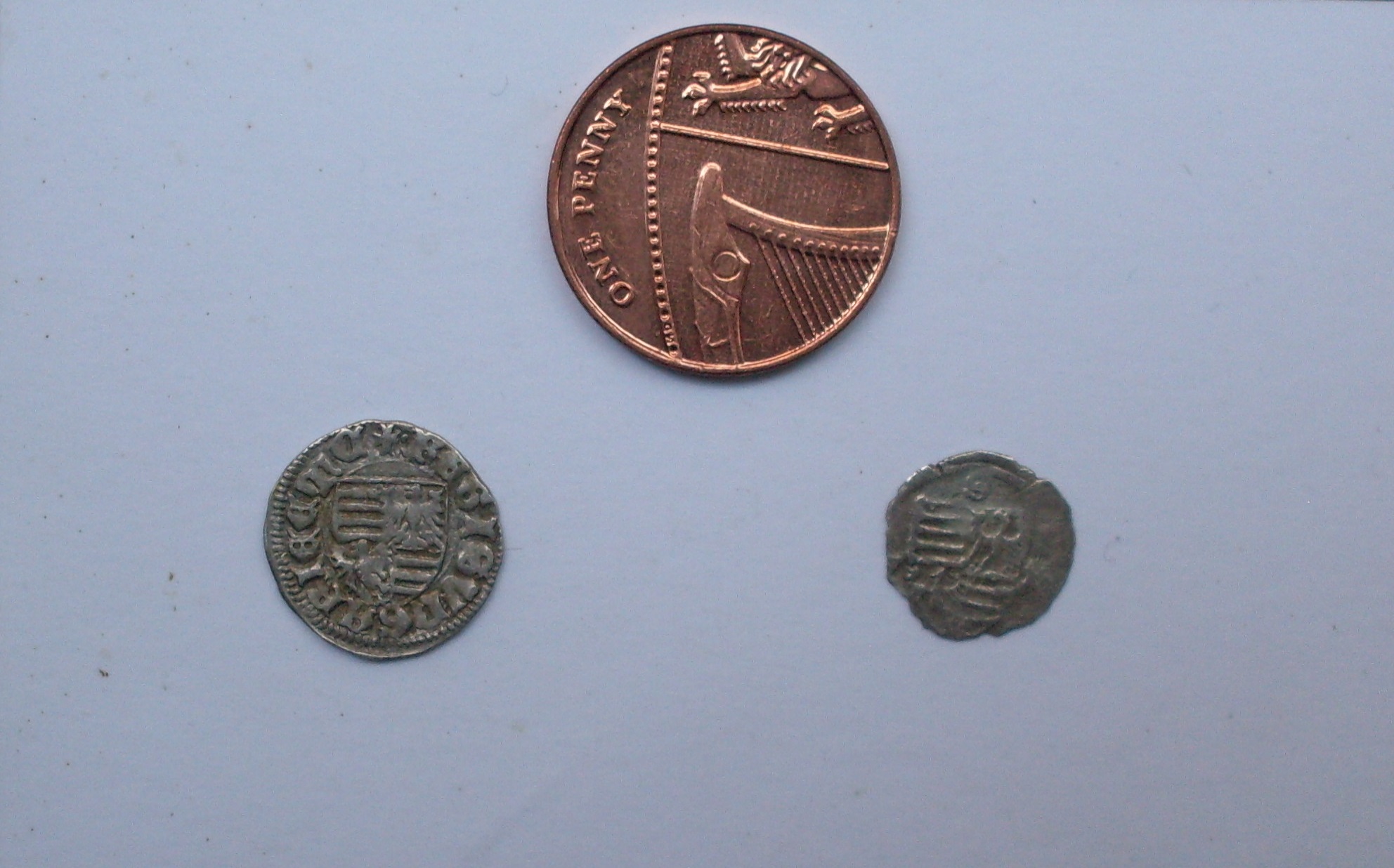
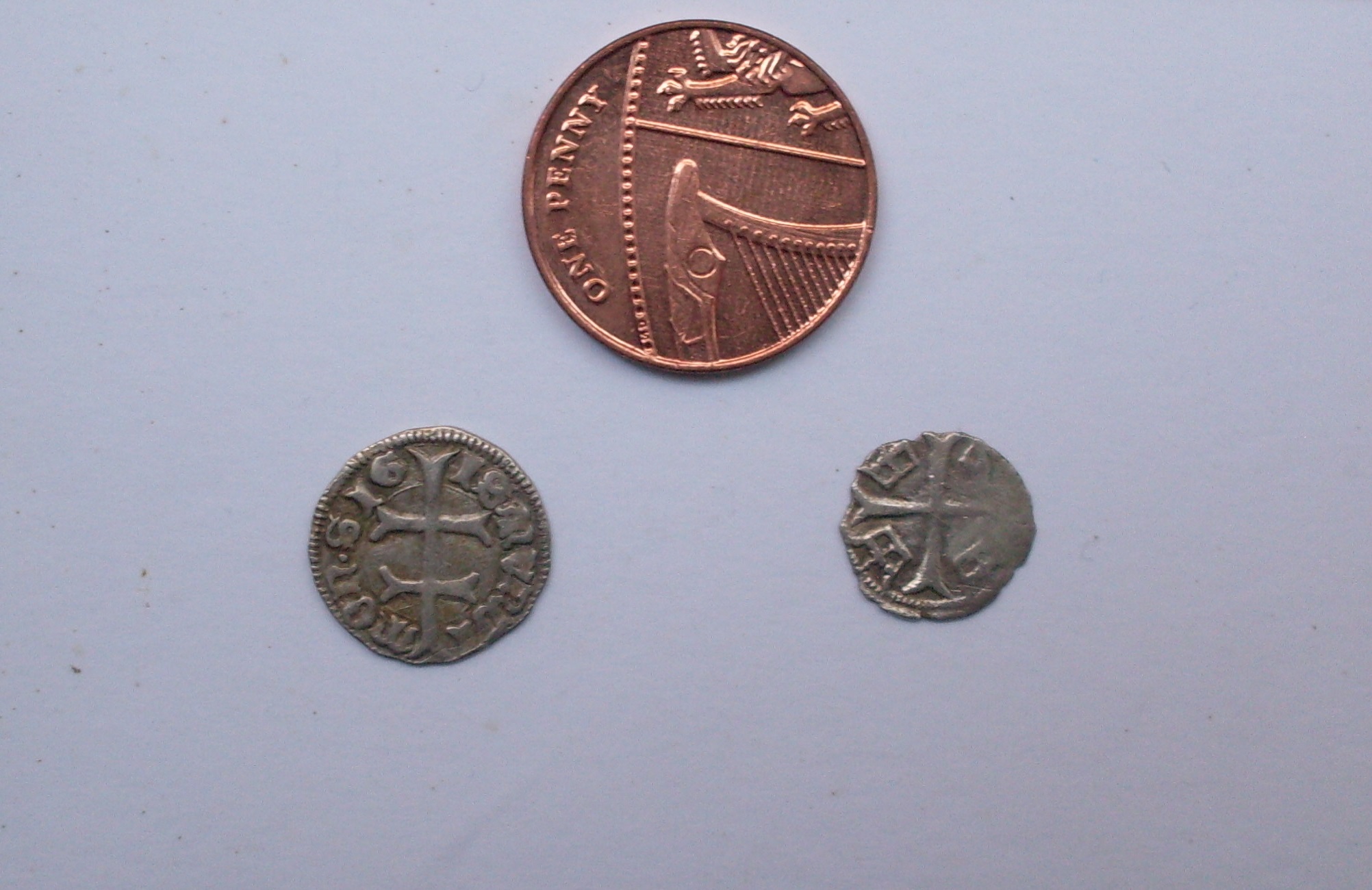
A new blog post finally after a month absence due to some difficulty in getting some new additions to my collection.  Particularly due to the vents happening globally right now.  However, this month I have managed to attain some new medieval coins to add to my display case.SDC13418

From the picture you can see two small silver coins from the Kingdom of Hungary.  Both were minted under the King Sigismund I, who ruled Hungary from 1387 – 1437.  There are no actual dates on the coins themselves, so the closest I can get is the reign of Sigismund himself.  The coin on the left is a Dinar and weighs 0.17g, whilst the coin on the right is a Parvus and weighs just a measly 0.23g.  You may also notice that the coins are quite small, especially when put in comparison to a penny.  The dinar measures 13.5mm and the parvus is 11mm.  Both are roughly 1mm thick.

Now Sigismund was not just the ruler of Hungary, but was also the King of Croatia (which was incorporated into the Kingdom of Hungary at this time), King of Germany, King of Bohemia, King of Italy, and Holy Roman Emperor.  But since the coins I got this month are from Hungary, I will just discuss a little history in regards to that part of his life.

Sigismund became king of Hungary in 1387 when his betrothed, Mary, on the death of her father, became Queen of Hungary.  His kingship of Hungary was not peaceful, as he would spend the first nine years after his coronation in a ceaseless struggle to keep hold of the title as the Kingdom itself was very unstable.

Much of the struggle came from trying arrest power back from the local elite who had been administering much of Hungary.  Sigismund had paid over much of the power the Kingship held to the local nobility to keep them loyal when he ascended the throne.  The restoration of the authority of the central administration took decades of work. The bulk of the nation headed by the House of Garai was with him; but in the southern provinces between the Sava and the Drava rivers, the Horvathys with the support of King Tvrtko I of Bosnia, Mary’s maternal uncle, proclaimed as their king Ladislaus, King of Naples, son of the murdered Charles II of Hungary.  It was not until 1395, that the pressure from these nobles had been suppressed

SDC13417

Meeting the greats

Ave readers!

Today I will be talking abut one of the more famous Roman emperors.  His fame (or infamy) is on par with other emperors such as Augustus, Nero, Caligula, Aurelian, Hadrian, and Claudius.  He is well known as legitimising Christianity throughout the Roman empire, as well as founding the city of Constantinople (modern day Istanbul).  He reformed the Roman Empire, and reigned it as sole emperor after the dismantling of the Tetrarchy created by Diocletian to end the Third Century Crisis.

You have by now guessed the emperor I am talking about, so I guess I should get on with this months blog post about Constantine I, also known as the ‘Great’.

SDC13240

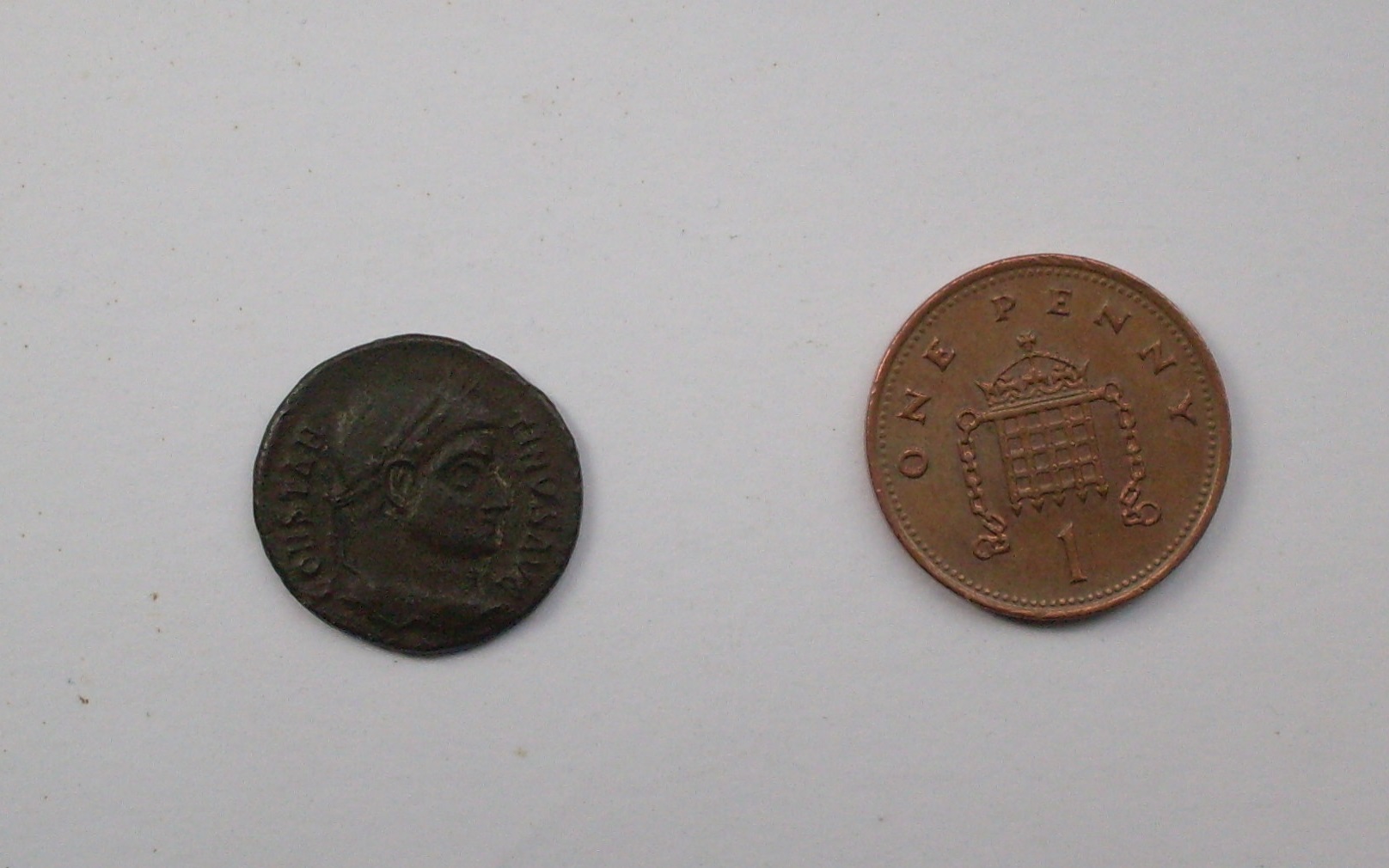
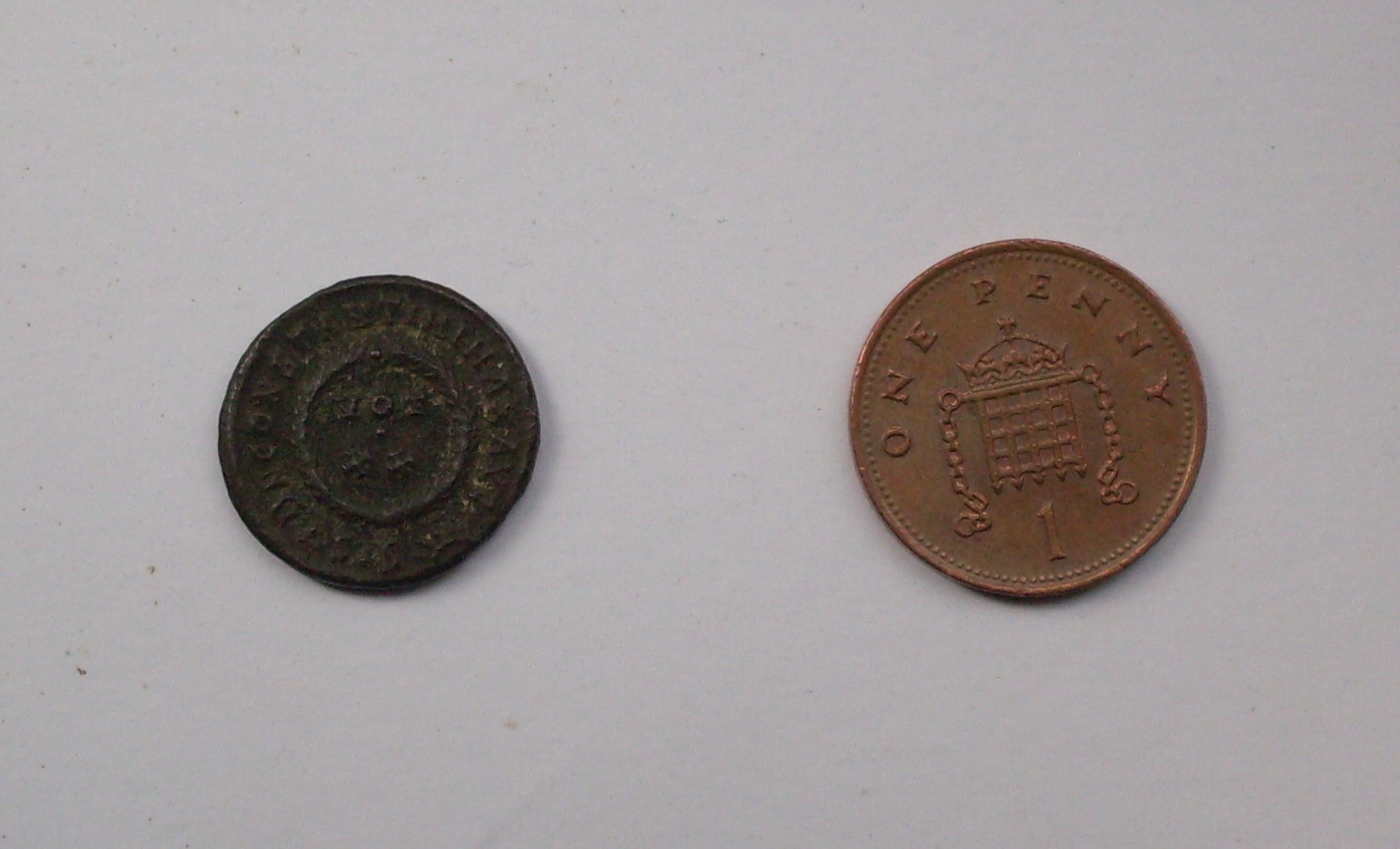
The coin I have added to my collection this month is a bronze Follis of Constantine I.  Dating from around 307 (when he became emperor of the Western Roman Empire) to 337 (when he died as emperor of the whole Roman Empire).  The mint mark on the reverse tells me it was minted in Siscia, which is now modern day Sisak in Croatia.  From the pictures you can see the coin itself is not very large, and due to the passage of time it about 1mm thick.

SDC13241

The life of Constantine the Great is too detailed and would require many blog posts to do it any justice.  So I will just have to suffice with a summary of the more notable events which occurred during his life.

Constantine was born in Naissus (which is the modern day city of Niš in Serbia) and would grow up in a military lifestyle.  He would rise up through the ranks during many campaigns in the Eastern empire, eventually reaching the title of Tribune.  The Emperor Galerius would bestow the title of ‘Augustus’ on him, and he would be sent to Britannia to campaign under his father, Flavius.  After his father’s death in 306, Constantine was proclaimed emperor by the army at Eboracum (York).  He would march south to claim his title, and after his victory over Maxentius at the Battle of the Milvian Bridge in 312, Constantine was proclaimed emperor of the Western Roman Empire.  Several years later he would wage campaigns against Licinius, who was the Emperor of the Eastern Roman Empire.  Constantine would emerge victorious in 324 after the Battle of Chrysopolis, and would become the sole emperor of the whole Roman Empire.

As emperor, Constantine reorganised much of the empire.  He enacted administrative, financial, social, and military reforms in attempts to strengthen the empire.  Restructuring the government by separating civil and military authorities.  To reduce inflation, which was endemic at the time, he introduced a new gold coin called the Solidus.  The coin itself would become a standard for Byzantine and European coinage for the next thousand years.

More famously though, Constantine was known as the emperor who legitimised the Christian faith throughout the Empire.  He is known as the first Christian emperor, converting on his deathbed to the religion.  During his reign he made life in the empire more palatable to Christians.  He was highly influential in the declaration of the Edict of Milan in 313 which declared religious tolerance for Christians and Christianity, and in 325 he called the First Council of Nicaea which produced the Nicene Creed.  Finally, upon his orders, he had the Church of the Holy Sepulchre built in Jerusalem upon the supposed resting place of Jesus Christ.

He reigned for 31 years, dying of illness in 337 in Nicomedia.  Combining his years as both co-ruler and sole ruler, Constantine was the second longest reigning ruler of the Roman Empire after Augustus.  His body was interred in the Church of the Holy Apostles in Constantinople.