Something about Elagabalus

So it has been a while since I last posted an update here.

My collection in the last few years has certainly been growing, and I think it is about time I start posting updates again.

This month is a Roman coin from one of Roman Empire’s more … divisive emperors. Even though he is often forgotten. Ruling the empire from 218-222 AD, although short, it was an interesting reign. This update, I will be breifly talking about the Roman Emperor Elegabalus.
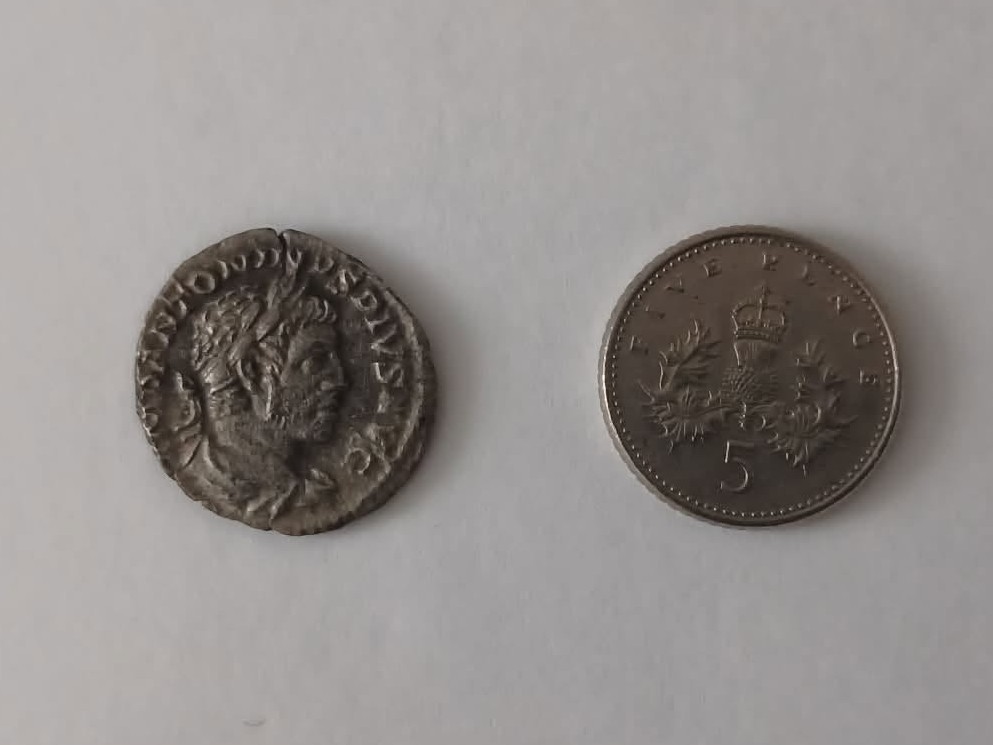
The coin this month is a silver denarius showing a profile of Elagabalus on the obverse, and a depiction of Victory on the reverse.
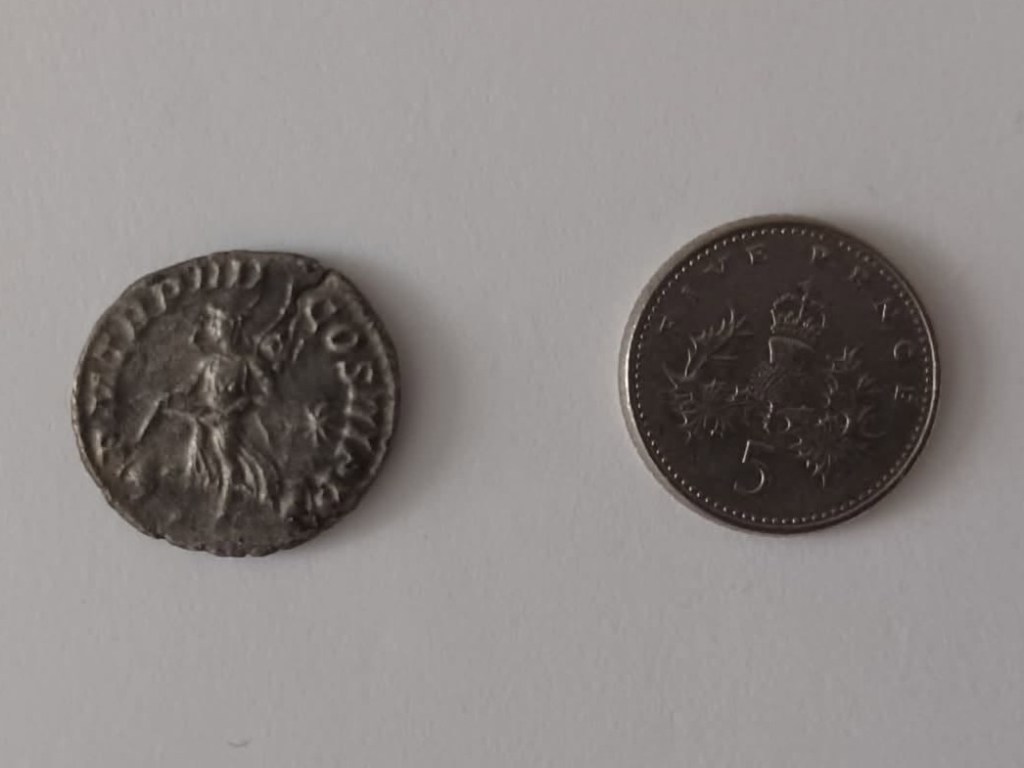
A lot of our information about Elagabalus comes from contemporary accounts from the Roman senator Cassio Dio, who quite frankly, was very hostile towards him. This has lead to historical views of Elagabalus to be quote biased against him. The venerable Edward Gibbon set the trend in his seminal work The History of the Decline and Fall of the Roman Empire by cementing the scandalous reputation of the Emperor and his reign.

Elagabalus was originally the head priest of a sun god cult in Emesa (nowadays Homs in Syria), at the age of 14, a revolt by the army against the emperor Macrinus instigated by his grandmother thrust him to the imperial throne.

During his reign he showed much disregard to many of the religious beliefs in Rome at the time, instead importing the cult he was the head of to the city with him from Syria. Still being the head priest, he forced many of the more prominent members of the Roman government to participate in the religious rites celebrating his deity.
According to the accounts of Cassius Dio, he married four women, including a Vestal Virgin, in addition to lavishing favours on male courtiers they suggested to have been his lovers, and prostituted himself. His behaviour estranged the Praetorian Guard, the Senate, and the common people alike. Amidst growing opposition, at just 18 years of age he was assassinated and replaced by his cousin Severus Alexander in March 222.

Modern historians are beginning to question the unfavourable reputation. Some have questioned the accuracy of Roman accounts of his reign, with suggestions that the reports of his salacious behaviour and sexual excess likely reflected a desire to politically discredit him in the immediate aftermath of his death, as well as reflecting Roman stereotypes regarding people from the Orient as effeminate.
Historian Warwick Ball paints Elagabalus as a child forced to become emperor who, as expected of the high-priest of a cult, continued his rituals even after becoming emperor. Ball asserts Elagabalus’s lasting influence in the sense that his deity would be welcomed by Rome in its Sol Invictus form 50 years later. Ball claims that Sol Invictus came to influence the monotheist Christian beliefs of Constantine, asserting that this influence remains in Christianity to this day.
Meeting the greats

Ave readers!

Today I will be talking abut one of the more famous Roman emperors.  His fame (or infamy) is on par with other emperors such as Augustus, Nero, Caligula, Aurelian, Hadrian, and Claudius.  He is well known as legitimising Christianity throughout the Roman empire, as well as founding the city of Constantinople (modern day Istanbul).  He reformed the Roman Empire, and reigned it as sole emperor after the dismantling of the Tetrarchy created by Diocletian to end the Third Century Crisis.

You have by now guessed the emperor I am talking about, so I guess I should get on with this months blog post about Constantine I, also known as the ‘Great’.

SDC13240

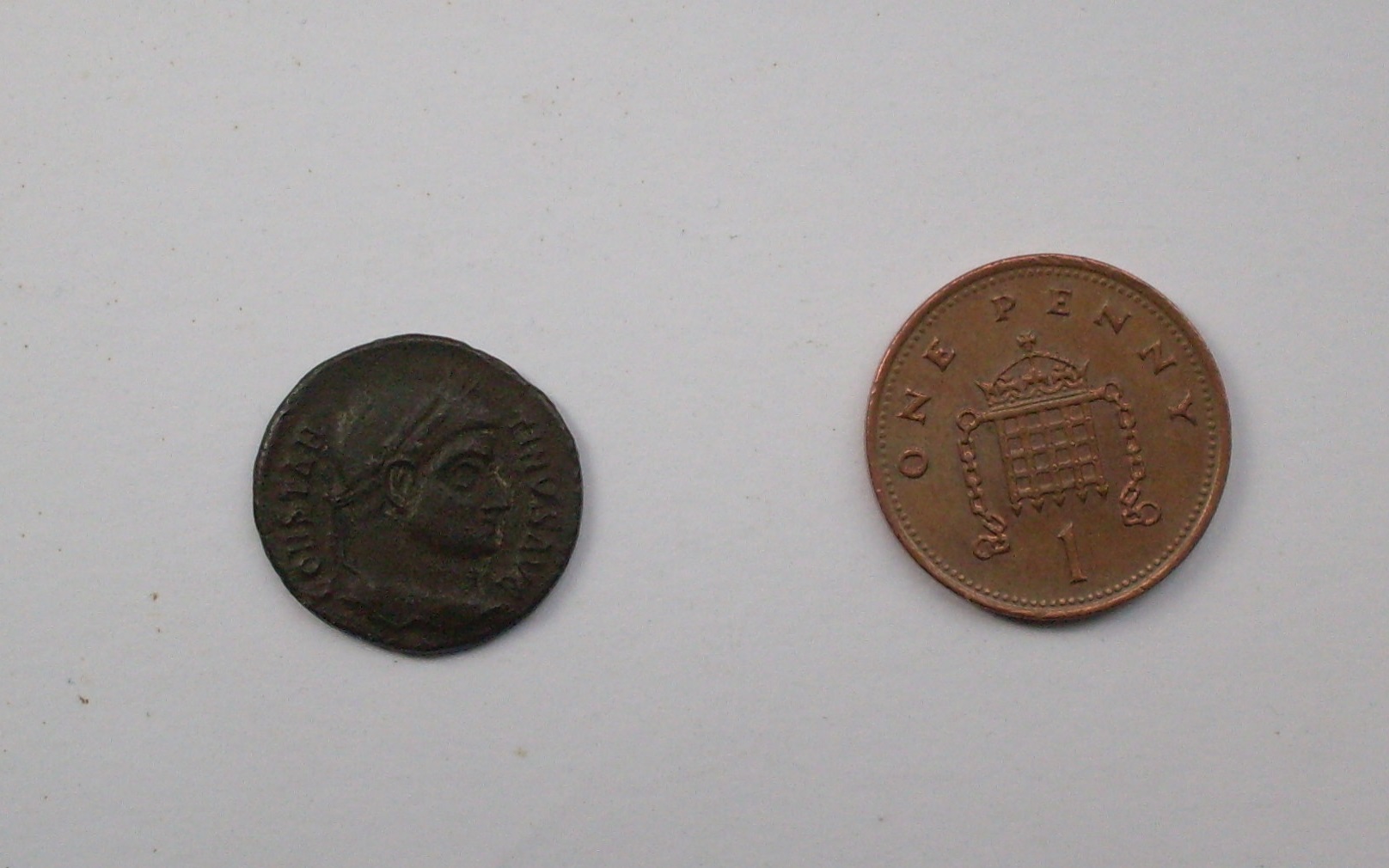
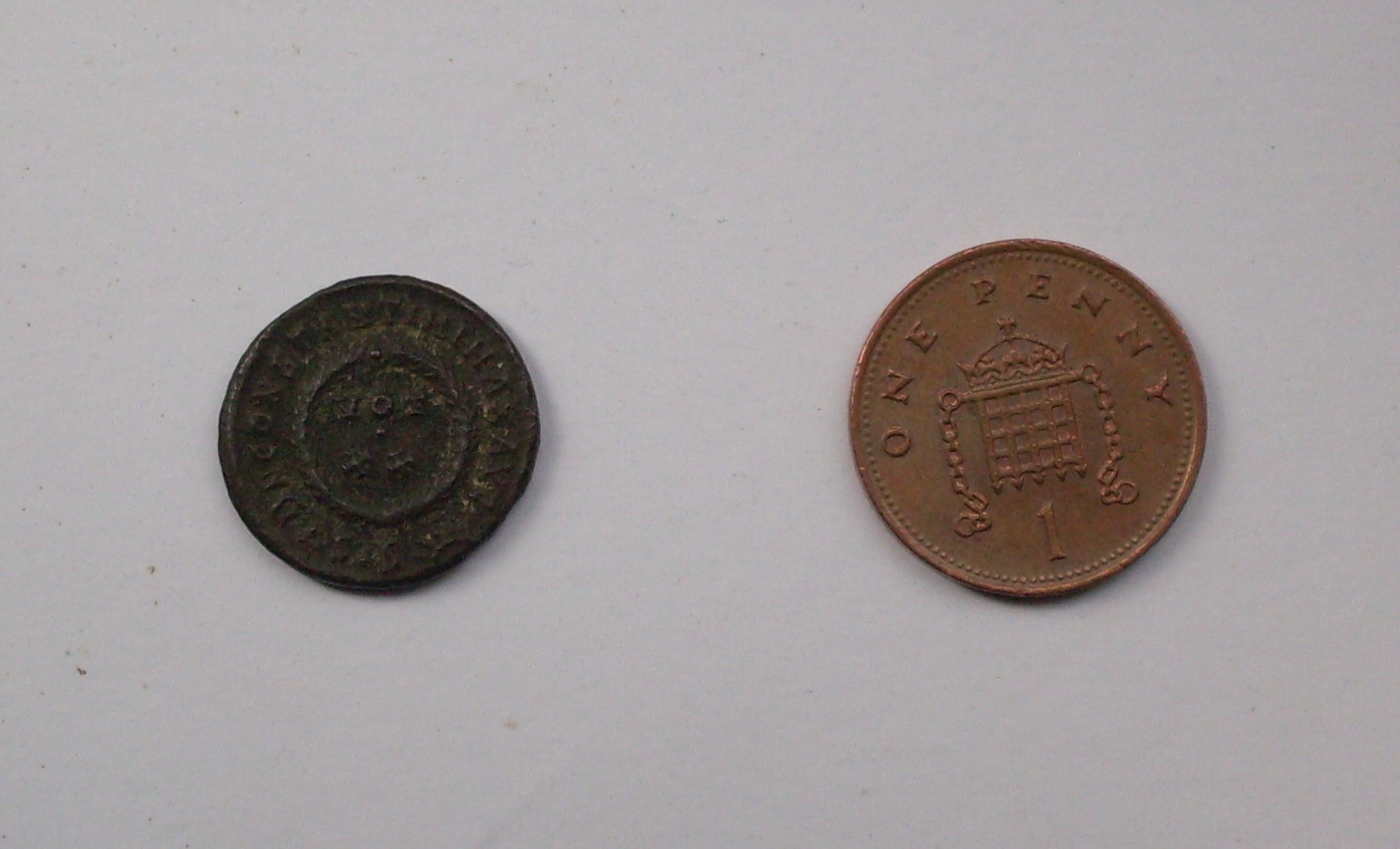
The coin I have added to my collection this month is a bronze Follis of Constantine I.  Dating from around 307 (when he became emperor of the Western Roman Empire) to 337 (when he died as emperor of the whole Roman Empire).  The mint mark on the reverse tells me it was minted in Siscia, which is now modern day Sisak in Croatia.  From the pictures you can see the coin itself is not very large, and due to the passage of time it about 1mm thick.

SDC13241

The life of Constantine the Great is too detailed and would require many blog posts to do it any justice.  So I will just have to suffice with a summary of the more notable events which occurred during his life.

Constantine was born in Naissus (which is the modern day city of Niš in Serbia) and would grow up in a military lifestyle.  He would rise up through the ranks during many campaigns in the Eastern empire, eventually reaching the title of Tribune.  The Emperor Galerius would bestow the title of ‘Augustus’ on him, and he would be sent to Britannia to campaign under his father, Flavius.  After his father’s death in 306, Constantine was proclaimed emperor by the army at Eboracum (York).  He would march south to claim his title, and after his victory over Maxentius at the Battle of the Milvian Bridge in 312, Constantine was proclaimed emperor of the Western Roman Empire.  Several years later he would wage campaigns against Licinius, who was the Emperor of the Eastern Roman Empire.  Constantine would emerge victorious in 324 after the Battle of Chrysopolis, and would become the sole emperor of the whole Roman Empire.

As emperor, Constantine reorganised much of the empire.  He enacted administrative, financial, social, and military reforms in attempts to strengthen the empire.  Restructuring the government by separating civil and military authorities.  To reduce inflation, which was endemic at the time, he introduced a new gold coin called the Solidus.  The coin itself would become a standard for Byzantine and European coinage for the next thousand years.

More famously though, Constantine was known as the emperor who legitimised the Christian faith throughout the Empire.  He is known as the first Christian emperor, converting on his deathbed to the religion.  During his reign he made life in the empire more palatable to Christians.  He was highly influential in the declaration of the Edict of Milan in 313 which declared religious tolerance for Christians and Christianity, and in 325 he called the First Council of Nicaea which produced the Nicene Creed.  Finally, upon his orders, he had the Church of the Holy Sepulchre built in Jerusalem upon the supposed resting place of Jesus Christ.

He reigned for 31 years, dying of illness in 337 in Nicomedia.  Combining his years as both co-ruler and sole ruler, Constantine was the second longest reigning ruler of the Roman Empire after Augustus.  His body was interred in the Church of the Holy Apostles in Constantinople.

Collection Update Mar’ 2019

Ave Imperator!  Another ancient coin added to my collection this month, this time of the Roman variety.

SDC12928

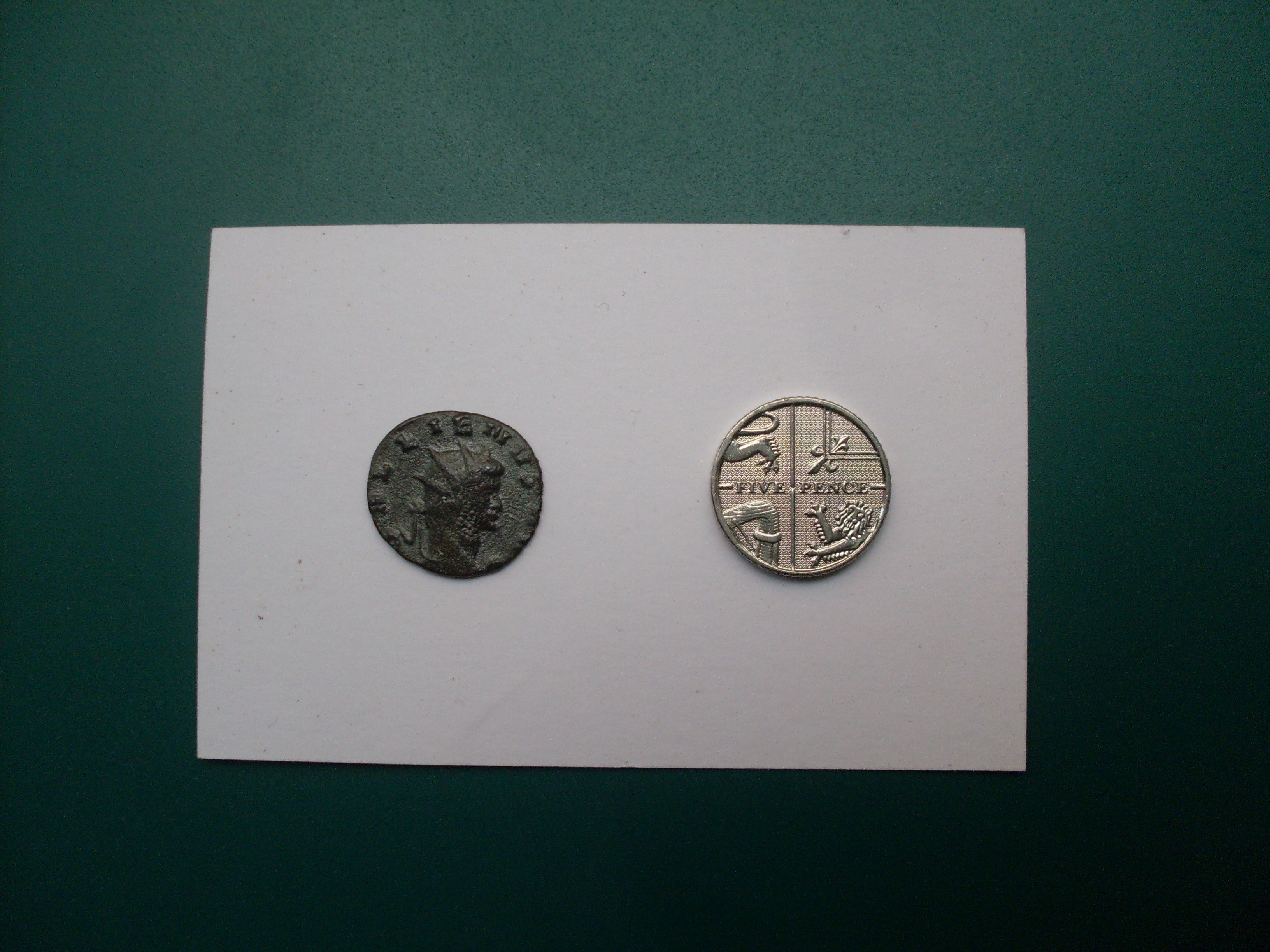
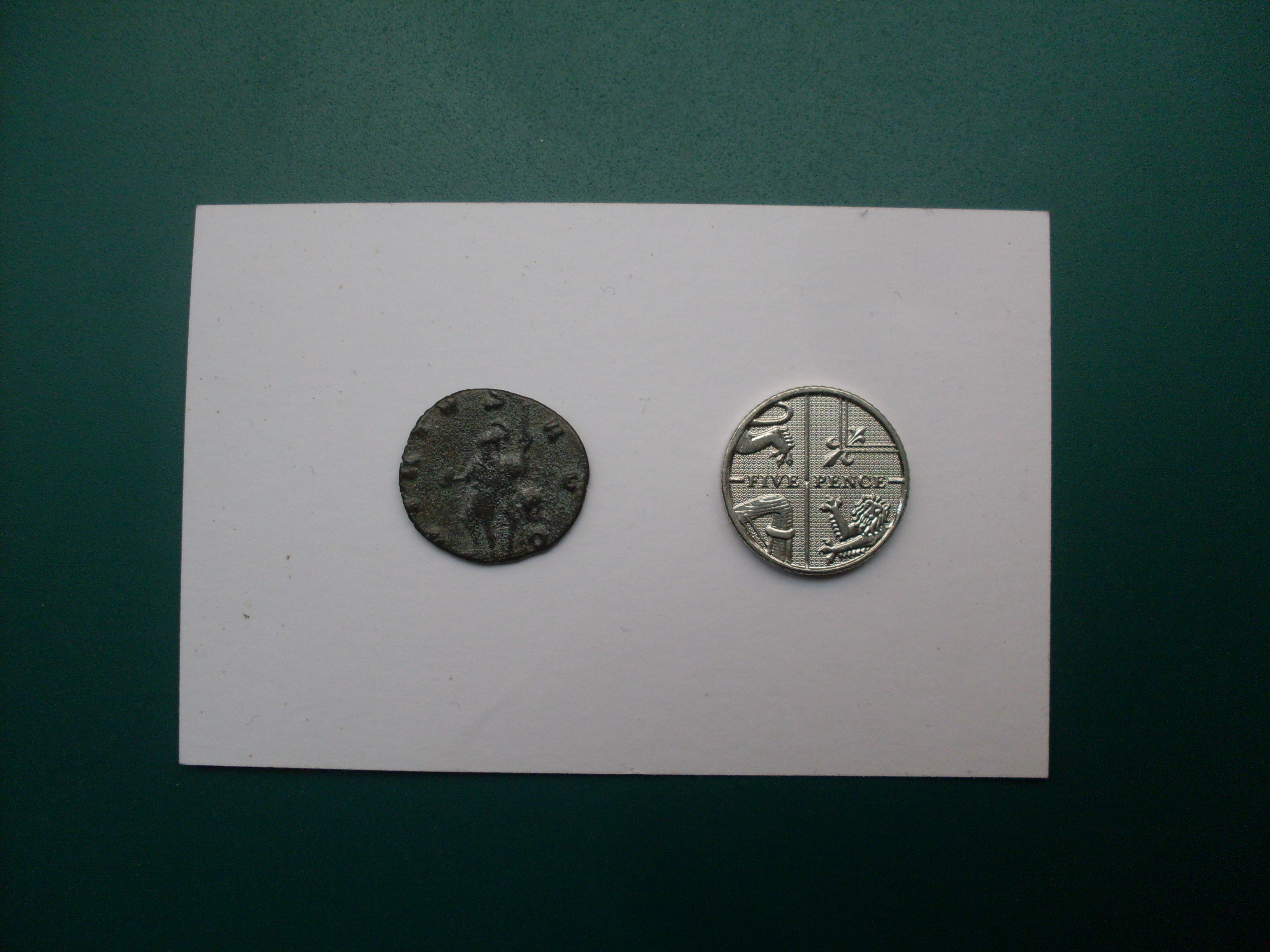
The coin showcased this month is a billon antoninianus from the Roman emperor Gallienus, who reigned as Roman Emperor from 253-268AD.  For the first seven years of his reign he ruled jointly with his father Valerian, who split the empire in half.  With Valerian ruling in the east, and his son Gallienus ruling in the West.  Gallienus would become sole ruler in 260 when his father was defeated and captured by the Sasanian Empire at the battle of Edessa (Now known as Urfa in the South-eastern part of Turkey).  After Valerian’s capture several usurpers to the imperial throne would rise up and declare themselves independent from Rome.  Civil war soon broke out.

Gallienus would have some success in defeating the usurpers, most notably the ones who arose in the eastern parts of the Empire.  He would fail however to put down those in the West, which would later form the Gallic empire under the Roman general Postumus.  Gallienus would die in 268 whilst being besieged in Mediolanum (modern day Milan) when one of his soldiers would stab him to death as part of a conspiracy.

Gallienus reigned during what is known as the ‘Crisis of the Third Century’ when barbarian migrations, political turmoil, civil wars, and peasant revolts would almost cause the collapse of the Roman empire.  The period would start in 235 with the assassination of the emperor Severus Alexander by his own troops.  With many claimants to the title of Emperor (around 26) during the next half century, many of whom were Roman army generals.  The Crisis would culminate in the Empire splitting into three distinct competing provinces.  With the Gallic Empire in the west, the Roman Empire centred on Rome in the centre, and the Palmyrene Empire in the east.

The emperor Aurelian would unite the fractured empire in the early 270’s, and the crisis would end under the rule of Diocletian in 284 with many much needed political, social and economic reforms.

SDC12927

During this period, due to the increased military activity, the coinage of the Empire grew more and more debased.  As can be clearly seen with the acquisition I got this month.  The antoninianus is thought to have the nominal value of two denarii and was initially silver.  But over time more and more copper would find itself into the coin (which of course caused hording of the older and more pure denarii and inflation in line with the decreased perceived value of the new issues) leading to an almost doubling in size of the coin during the reign of emperor Aurelian in an attempt to arrest inflation.  The debasement would continue till the coin itself would be wholly copper.  The coin I have seems to be towards the end of this transition as it still has a very faint silvery sheen to it, unfortunately not seen clearly in the photo’s.  The term to describe coins with this type of debasement are known as ‘billon’, and would not be limited to the Romans.  Examples of billon coins can be found starting from the ancient Greeks right through to the Middles Ages.