After my last collection update which featured some emergency banknotes from Vietnam, I am returning to the region, but to Vietnam’s neighbour of Laos.
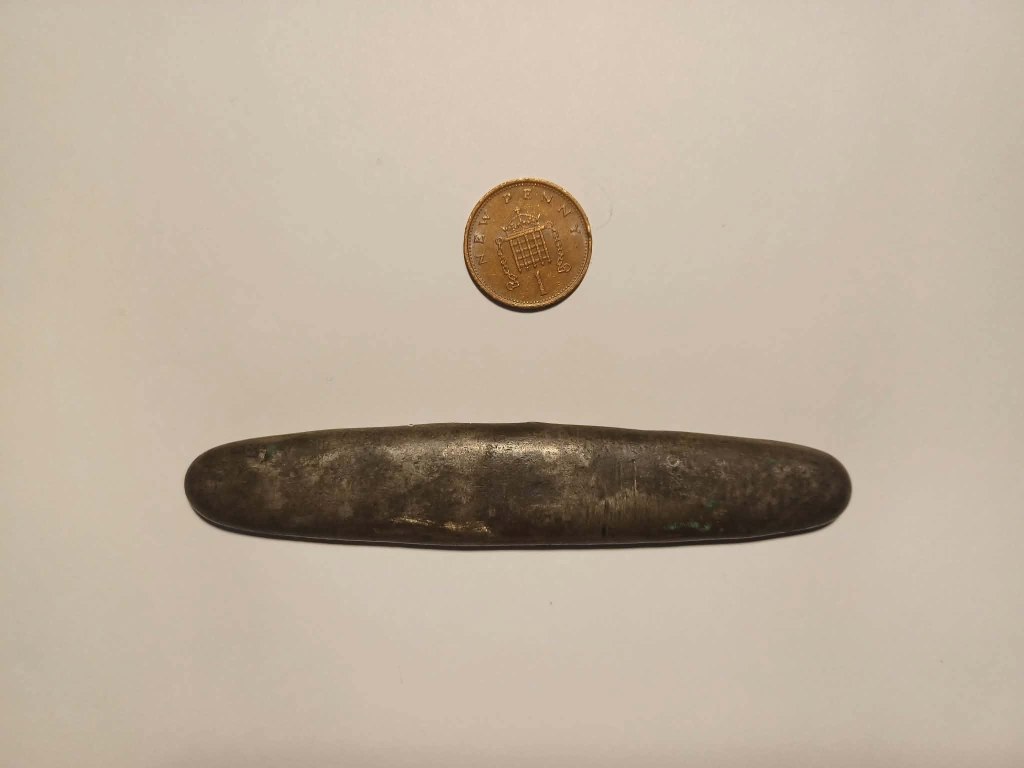
The most recent addition to my collection is a 1 1/2 Tamlung silver ingot from the Lao Kingdom of Vientiane. Dating from around the early 18th century to mid 19th century this ingot features a unique raised bumpy pattern over one side. Thus giving it’s affectionate name of “Tiger Tongue” by many in the numismatic community.
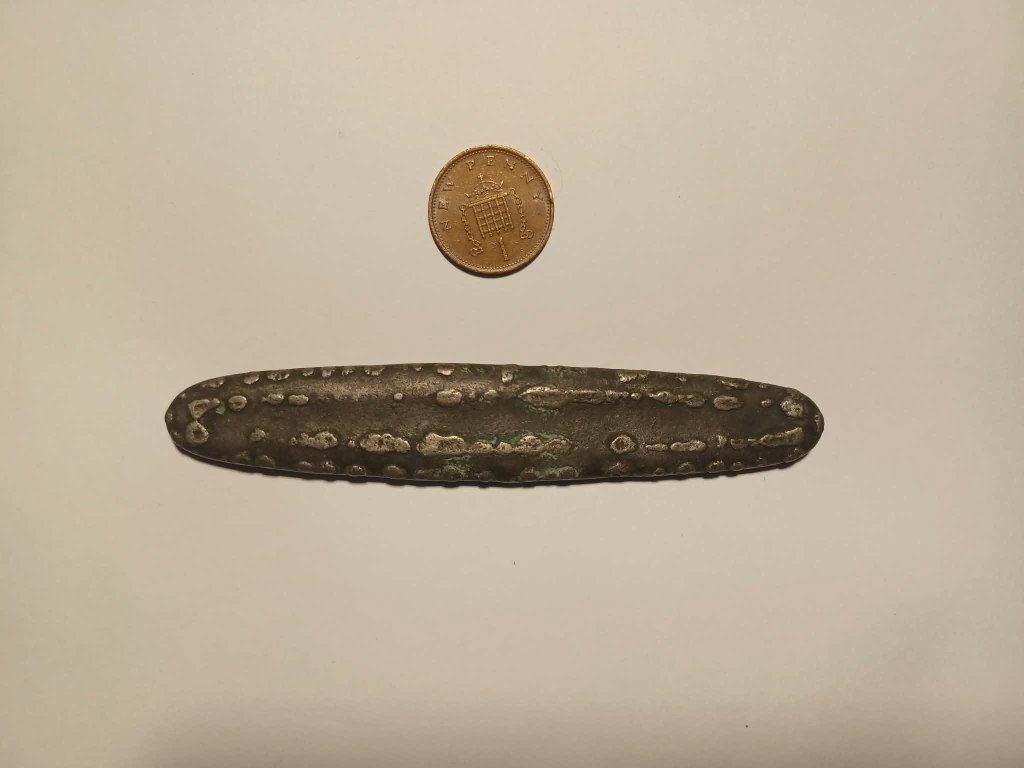
Officially known as Lat money or Hoi money, the distinctive markings over the top of the ingot is a subject of much debate amongst historians and researchers of Laos’ monetary history. The most prevalent theory is that during the casting process the distinctive raised bumps were formed by scattering live ants on to the cooling metal, and the resultant formic acid causing them to be created.
These coins were first minted after the Kingdom of Lan Xang was split into two kingdoms after a small series of succession wars in 1707. These wars were caused by several invasions from the neighbouring Burmese kingdom. Luang Phrabang and Vientiane would be the successor states.
Both kingdoms would eventually be subordinated to the Kingdom of Siam, with the Siamese exerting much control over the region until Western Colonial powers, predominantly France but also Great Britain, would start to interfere in the region’s stability.
The Kingdom of Vientiane would pass to French rule in 1893. The city of Vientiane would become the capitol city of the French protectorate of Laos in 1899. Independence would not come to the country until 1953 when Civil War would break out. Several years later Laos would be drawn into the Vietnam war when parts of it’s territory was invaded by North Vietnamese troops. A further Civil War would also break out in the mid 1970’s which saw the Royalist Government overthrown and a Communist state set up in December 1975 under Kaysone Phomvihane. Peace would be quickly sought with Vietnam, with a treaty ratified in 1977.

