From the last couple of posts it is quite clear I have had a recent trip to the Low Countries, specifically the Netherlands and Luxembourg. It is of course, during this trip I added some more coins to my collection and this post is to have a brief discussion about the newest additions.
The first pair of coins I bought during my trip were two Gulden coins from the Netherlands roughly 100 years apart in age.
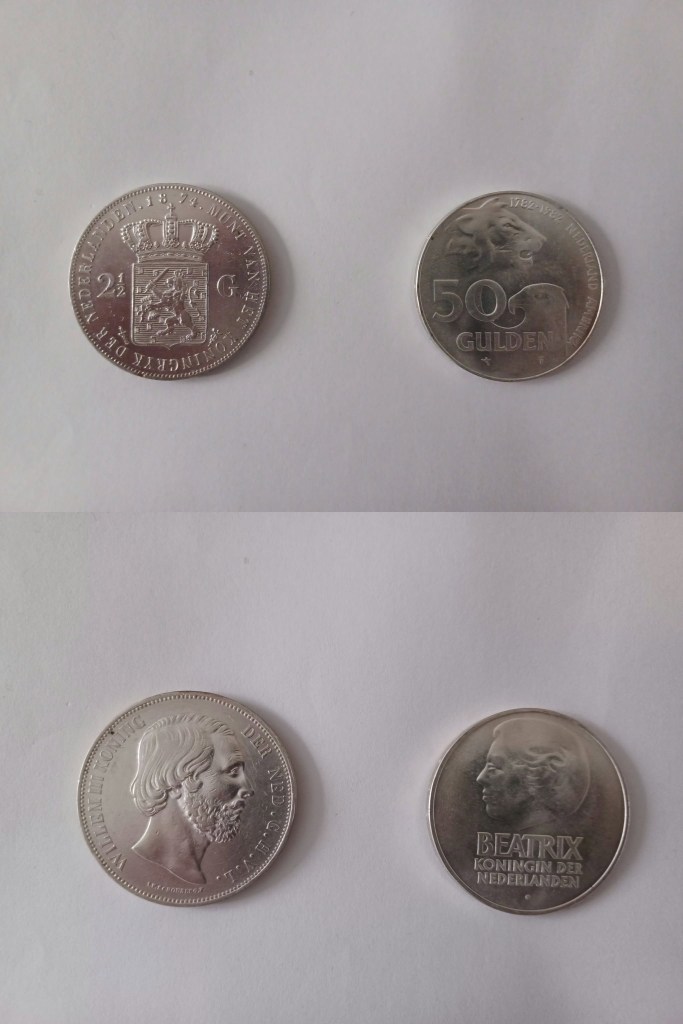
The first coin is a 2 1/2 Gulden from 1874 issued during the reign of William III. A king who presided over the Luxembourg Crisis in 1867 which led to the second Treaty of London guaranteeing the independence of Luxembourg as a country. He was a king well known for his scandals (which are equalled by those of the UK’s own Edward VII) and political chaos of his reign. He would die at the Het Loo palace in Apeldoorn in 1890.
The second coin is a 50 Gulden coin from 1982 commemorating the 200th anniversary of Dutch-American friendship after the USA gained independence from the UK.
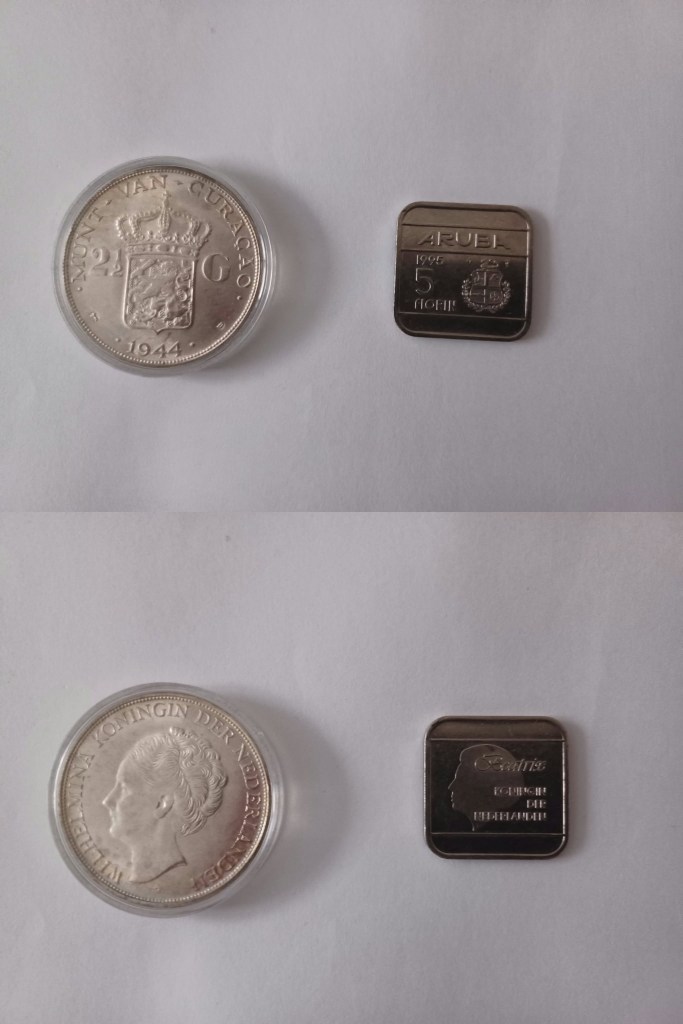
The next pair of coins are from two Dutch colonies, that from Curaçao and Aruba. Both colonies are islands in the Caribbean not far from the coat of Venezuela. Both islands were colonised originally by the Spanish, but after the Eighty Years War they were taken over by the Dutch, primarily by the Dutch West Indian Company (The Dutch East India Company’s less famous brother).
Due to their location within the Caribbean the islands, particularly Curaçao, became centres of the Dutch Atlantic slave trade. Both islands were used for growing cash crops, and would become the staging point for the Dutch to eventually expand their colonial ambitions to the mainland in South America leading to the colonisation of Suriname.
It wouldn’t be until 1863 that the Dutch would abolish slavery, and although free, many of the now emancipated slaves would have few places to go. Some would emigrate to other islands in the Caribbean such as Cuba, or to the Netherlands itself, whilst many would continue working on the farms they were slaves on but this time leasing the land from their former masters.
For Aruba, there was significant efforts made to obtain independence in the 1980’s with an agreement being made in 1983 to start a slow step process. However the main advocate of the deal in Aruba, Betico Croes, would suffer a severe car accident and would later die in 1986. This coupled with the economic downturn experienced on the islands in the mid to late 80’s it was thus agreed in 1990, and then put into practice in 1995, that independence for Aruba would be postponed until a successful referendum result could be obtained.
Curaçao meanwhile would seek independence at the same time as Aruba, but would experience further economic hardships throughout the 80’s and 90’s due to the volatility of the oil market at the time. With the main Shell refinery on the island being the cause of many economic and legal disputes. In 2007 it was voted that Curaçao would become an independent country within the Kingdom of the Netherlands with a majority of voters supporting the move in a referendum in 2009.
In 2010, Curaçao gained that independence with the Netherlands being only responsible for the island’s defence and foreign policy.
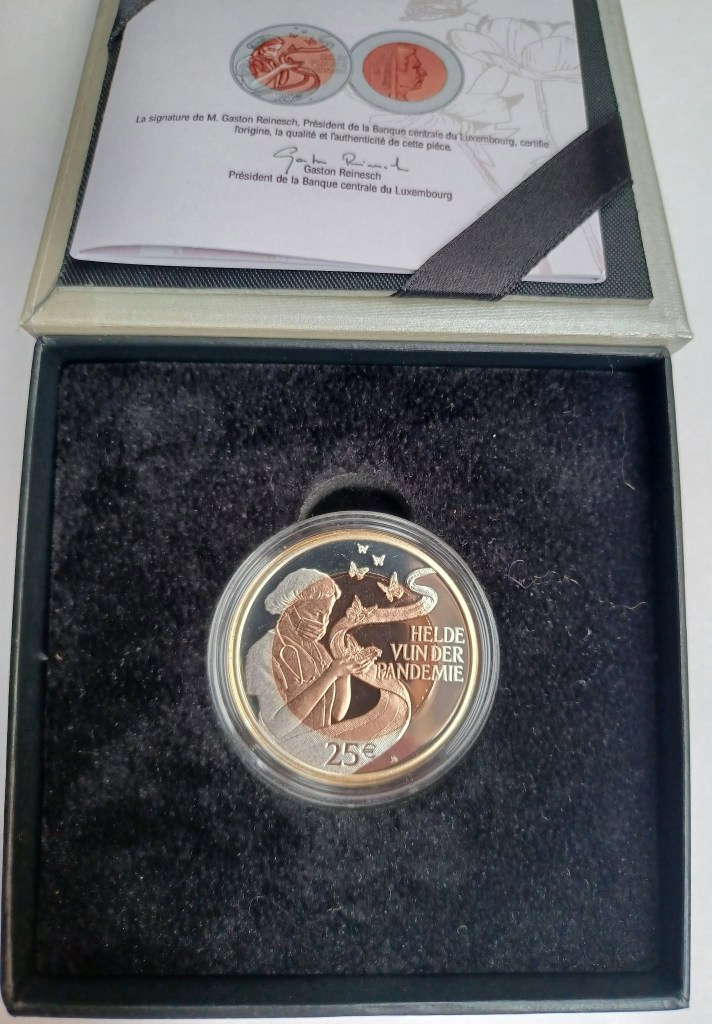
Finally, the last coin which was added to my collection was a 25 euro commemorative coin from Luxembourg which is part of a series remembering the heroes of the global pandemic which raged from 2019-2021. This particular coin of the series commemorates the doctors, nurses, and other health workers.

